Event submissions
Published
This submission belongs to the session S2. Forest Biodiversity, Ecosystem Services, and Earth Observations of the event The 4th International Electronic Conference on Forests
Published date
19 Sep, 2024
Academic Editor
'%3e%3cpath%20d='M12.6657%2010.9104C12.4185%2010.325%2012.0599%209.79327%2011.6097%209.34482C11.1609%208.89508%2010.6293%208.5365%2010.0442%208.28888C10.0389%208.28626%2010.0337%208.28495%2010.0285%208.28233C10.8446%207.69279%2011.3752%206.73249%2011.3752%205.64904C11.3752%203.8542%209.92103%202.39999%208.1262%202.39999C6.33136%202.39999%204.87715%203.8542%204.87715%205.64904C4.87715%206.73249%205.40774%207.69279%206.22393%208.28364C6.21869%208.28626%206.21345%208.28757%206.20821%208.29019C5.62129%208.5378%205.09463%208.89284%204.64265%209.34613C4.1929%209.79493%203.83432%2010.3266%203.58671%2010.9117C3.34345%2011.4845%203.21226%2012.0987%203.20023%2012.7209C3.19988%2012.7349%203.20233%2012.7488%203.20744%2012.7619C3.21255%2012.7749%203.22022%2012.7867%203.22998%2012.7968C3.23975%2012.8068%203.25142%2012.8147%203.26431%2012.8202C3.2772%2012.8256%203.29105%2012.8284%203.30504%2012.8284H4.09109C4.14874%2012.8284%204.19459%2012.7825%204.1959%2012.7262C4.2221%2011.7148%204.62823%2010.7676%205.34617%2010.0497C6.08899%209.30683%207.0755%208.89808%208.1262%208.89808C9.17689%208.89808%2010.1634%209.30683%2010.9062%2010.0497C11.6242%2010.7676%2012.0303%2011.7148%2012.0565%2012.7262C12.0578%2012.7838%2012.1037%2012.8284%2012.1613%2012.8284H12.9474C12.9613%2012.8284%2012.9752%2012.8256%2012.9881%2012.8202C13.001%2012.8147%2013.0126%2012.8068%2013.0224%2012.7968C13.0322%2012.7867%2013.0398%2012.7749%2013.0449%2012.7619C13.0501%2012.7488%2013.0525%2012.7349%2013.0522%2012.7209C13.0391%2012.0947%2012.9094%2011.4855%2012.6657%2010.9104ZM8.1262%207.9024C7.52486%207.9024%206.9589%207.6679%206.53312%207.24211C6.10733%206.81633%205.87283%206.25037%205.87283%205.64904C5.87283%205.0477%206.10733%204.48174%206.53312%204.05596C6.9589%203.63018%207.52486%203.39567%208.1262%203.39567C8.72753%203.39567%209.29349%203.63018%209.71927%204.05596C10.1451%204.48174%2010.3796%205.0477%2010.3796%205.64904C10.3796%206.25037%2010.1451%206.81633%209.71927%207.24211C9.29349%207.6679%208.72753%207.9024%208.1262%207.9024Z'%20fill='%235D1EE1'/%3e%3c/g%3e%3c/svg%3e) Giorgos Mallinis
Giorgos MallinisCitation
Varsha Pandey, Hari Om Saxena, Anil Kumar Yadav, Influence of different pre-sowing seed treatments on the germination and growth performance of Sida cordifolia Linn., in Proceedings of The 4th International Electronic Conference on Forests, 23 September–25 September 2024, MDPI: Basel, Switzerland
Share
Email
Facebook
Twitter
LinkedIn
Influence of different pre-sowing seed treatments on the germination and growth performance of Sida cordifolia Linn.
'%3e%3cpath%20d='M12.6647%2010.9104C12.4176%2010.325%2012.0589%209.7933%2011.6088%209.34485C11.16%208.89511%2010.6283%208.53653%2010.0432%208.28891C10.038%208.28629%2010.0327%208.28498%2010.0275%208.28236C10.8437%207.69282%2011.3743%206.73252%2011.3743%205.64907C11.3743%203.85423%209.92005%202.40002%208.12522%202.40002C6.33038%202.40002%204.87618%203.85423%204.87618%205.64907C4.87618%206.73252%205.40677%207.69282%206.22296%208.28367C6.21772%208.28629%206.21248%208.2876%206.20724%208.29022C5.62031%208.53783%205.09365%208.89287%204.64167%209.34616C4.19192%209.79496%203.83334%2010.3266%203.58573%2010.9117C3.34247%2011.4846%203.21128%2012.0987%203.19925%2012.721C3.1989%2012.735%203.20135%2012.7489%203.20646%2012.7619C3.21157%2012.7749%203.21924%2012.7868%203.22901%2012.7968C3.23877%2012.8068%203.25045%2012.8148%203.26334%2012.8202C3.27623%2012.8256%203.29007%2012.8284%203.30406%2012.8284H4.09012C4.14776%2012.8284%204.19362%2012.7825%204.19493%2012.7262C4.22113%2011.7148%204.62726%2010.7676%205.34519%2010.0497C6.08802%209.30686%207.07452%208.89811%208.12522%208.89811C9.17592%208.89811%2010.1624%209.30686%2010.9052%2010.0497C11.6232%2010.7676%2012.0293%2011.7148%2012.0555%2012.7262C12.0568%2012.7839%2012.1027%2012.8284%2012.1603%2012.8284H12.9464C12.9604%2012.8284%2012.9742%2012.8256%2012.9871%2012.8202C13%2012.8148%2013.0117%2012.8068%2013.0214%2012.7968C13.0312%2012.7868%2013.0389%2012.7749%2013.044%2012.7619C13.0491%2012.7489%2013.0515%2012.735%2013.0512%2012.721C13.0381%2012.0947%2012.9084%2011.4856%2012.6647%2010.9104ZM8.12522%207.90243C7.52388%207.90243%206.95792%207.66793%206.53214%207.24215C6.10636%206.81636%205.87185%206.2504%205.87185%205.64907C5.87185%205.04773%206.10636%204.48177%206.53214%204.05599C6.95792%203.63021%207.52388%203.3957%208.12522%203.3957C8.72655%203.3957%209.29252%203.63021%209.7183%204.05599C10.1441%204.48177%2010.3786%205.04773%2010.3786%205.64907C10.3786%206.2504%2010.1441%206.81636%209.7183%207.24215C9.29252%207.66793%208.72655%207.90243%208.12522%207.90243Z'%20fill='%235D1EE1'/%3e%3c/g%3e%3c/svg%3e)
Varsha Pandey 1,2
Hari Om Saxena 1,2
Anil Kumar Yadav 1,2
1. ICFRE-Tropical Forest Research Institute Jabalpur, Madhya Pradesh , India
2. Non Wood Forest Division, Silviculture, Forest Management and Agroforestry Division, ICFRE- Tropical Forest Research Institute, Jabalpur, Madhya Pradesh Pin code-482021, India
Abstract
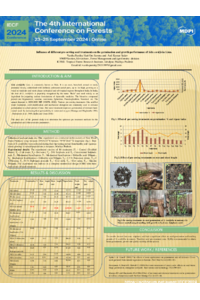
Sida cordifolia is an erect, branched, annual or rarely perennial woody, undershrub with stellately pubescent aerial parts, up to 1m high belonging to the family Malvaceae. It is locally called as Bala. It grows as a weed on roadsides and waste places in tropical and sub-tropical regions throughout India. The annual demand of S. cordifolia is 1000-2000 MT. This study was carried out to determine the effects of different pre-sowing seed treatments on the germination and growth performance of Sida cordifolia. The seeds were collected from healthy and vigorous plants growing in natural populations of Anuppur Forest division, Madhya Pradesh India. The experiments were conducted in NWFP nursery of ICFRE – TFRI, Jabalpur. The following treatments were used:T1 (control)T2(cold water) T3 (hot water),T4 (20% sulphuric acid), T5 (conc. sulphuric acid), T6 (mechanical scarification), T7 (mechanical scarification + GA 100ppm), T8 (mechanical scarification + GA 500ppm), T9 (0.2% potassium nitrate), T10 (2% thiourea), T11 (30% hydrogen peroxide), T12 (cow milk), T13 (cow urine) and T14 (kinetin 500ppm). Experiments were performed with 14 treatments and 3 replications in completely randomized design. Days to initiate germination, final germination, and germination % were determined as germination indices. Root and shoot length, vigour index, fresh and dry weight were evaluated as growth factors. The results revealed that various pre sowing seed treatments affected significantly the seed germination process. Initiation of germination was shown earlier in T4 in 7 days where as late germination was found in T1. The maximum germination percentage was recorded in T4 (79.71%) which was significantly superior over other treatments whereas lowest (12%) was recorded in T1. The highest root length, shoot length, fresh weight, dry weight, and vigour index was found in T5. The results revealed that seeds pre-treated with T4 showed the better germination and better-quality seedlings of S. cordifolia.
Keywords
Sida cordifolia
Germination
Medicinal plant
Pre-sowing treatment
Seed
Poster
sciforum-099985_Varsha Pandey.pdf
Genome downsize insight into plant biodiversity conservation: a case study of polyploid Morus spp.
Enabling Actions and Leverage Points for Governing Conifer Invasions in NW Patagonia