Event submissions
Published
This submission belongs to the session S2. Forest Biodiversity, Ecosystem Services, and Earth Observations of the event The 4th International Electronic Conference on Forests
Published date
19 Sep, 2024
Academic Editor
'%3e%3cpath%20d='M12.6657%2010.9104C12.4185%2010.325%2012.0599%209.79327%2011.6097%209.34482C11.1609%208.89508%2010.6293%208.5365%2010.0442%208.28888C10.0389%208.28626%2010.0337%208.28495%2010.0285%208.28233C10.8446%207.69279%2011.3752%206.73249%2011.3752%205.64904C11.3752%203.8542%209.92103%202.39999%208.1262%202.39999C6.33136%202.39999%204.87715%203.8542%204.87715%205.64904C4.87715%206.73249%205.40774%207.69279%206.22393%208.28364C6.21869%208.28626%206.21345%208.28757%206.20821%208.29019C5.62129%208.5378%205.09463%208.89284%204.64265%209.34613C4.1929%209.79493%203.83432%2010.3266%203.58671%2010.9117C3.34345%2011.4845%203.21226%2012.0987%203.20023%2012.7209C3.19988%2012.7349%203.20233%2012.7488%203.20744%2012.7619C3.21255%2012.7749%203.22022%2012.7867%203.22998%2012.7968C3.23975%2012.8068%203.25142%2012.8147%203.26431%2012.8202C3.2772%2012.8256%203.29105%2012.8284%203.30504%2012.8284H4.09109C4.14874%2012.8284%204.19459%2012.7825%204.1959%2012.7262C4.2221%2011.7148%204.62823%2010.7676%205.34617%2010.0497C6.08899%209.30683%207.0755%208.89808%208.1262%208.89808C9.17689%208.89808%2010.1634%209.30683%2010.9062%2010.0497C11.6242%2010.7676%2012.0303%2011.7148%2012.0565%2012.7262C12.0578%2012.7838%2012.1037%2012.8284%2012.1613%2012.8284H12.9474C12.9613%2012.8284%2012.9752%2012.8256%2012.9881%2012.8202C13.001%2012.8147%2013.0126%2012.8068%2013.0224%2012.7968C13.0322%2012.7867%2013.0398%2012.7749%2013.0449%2012.7619C13.0501%2012.7488%2013.0525%2012.7349%2013.0522%2012.7209C13.0391%2012.0947%2012.9094%2011.4855%2012.6657%2010.9104ZM8.1262%207.9024C7.52486%207.9024%206.9589%207.6679%206.53312%207.24211C6.10733%206.81633%205.87283%206.25037%205.87283%205.64904C5.87283%205.0477%206.10733%204.48174%206.53312%204.05596C6.9589%203.63018%207.52486%203.39567%208.1262%203.39567C8.72753%203.39567%209.29349%203.63018%209.71927%204.05596C10.1451%204.48174%2010.3796%205.0477%2010.3796%205.64904C10.3796%206.25037%2010.1451%206.81633%209.71927%207.24211C9.29349%207.6679%208.72753%207.9024%208.1262%207.9024Z'%20fill='%235D1EE1'/%3e%3c/g%3e%3c/svg%3e) Giorgos Mallinis
Giorgos MallinisCitation
Svetlana Sultson, Andrey Goroshko, Pavel Михайловна Mikhailov, Denis Александрович Demidko, Olga Slinkina, Natalia Khizhniak, Methodological Bases for Predicting Siberian Moth Outbreaks in Dark-Coniferous Forests of Central Siberia, in Proceedings of The 4th International Electronic Conference on Forests, 23 September–25 September 2024, MDPI: Basel, Switzerland
Share
Email
Facebook
Twitter
LinkedIn
Methodological Bases for Predicting Siberian Moth Outbreaks in Dark-Coniferous Forests of Central Siberia
'%3e%3cpath%20d='M12.6647%2010.9104C12.4176%2010.325%2012.0589%209.7933%2011.6088%209.34485C11.16%208.89511%2010.6283%208.53653%2010.0432%208.28891C10.038%208.28629%2010.0327%208.28498%2010.0275%208.28236C10.8437%207.69282%2011.3743%206.73252%2011.3743%205.64907C11.3743%203.85423%209.92005%202.40002%208.12522%202.40002C6.33038%202.40002%204.87618%203.85423%204.87618%205.64907C4.87618%206.73252%205.40677%207.69282%206.22296%208.28367C6.21772%208.28629%206.21248%208.2876%206.20724%208.29022C5.62031%208.53783%205.09365%208.89287%204.64167%209.34616C4.19192%209.79496%203.83334%2010.3266%203.58573%2010.9117C3.34247%2011.4846%203.21128%2012.0987%203.19925%2012.721C3.1989%2012.735%203.20135%2012.7489%203.20646%2012.7619C3.21157%2012.7749%203.21924%2012.7868%203.22901%2012.7968C3.23877%2012.8068%203.25045%2012.8148%203.26334%2012.8202C3.27623%2012.8256%203.29007%2012.8284%203.30406%2012.8284H4.09012C4.14776%2012.8284%204.19362%2012.7825%204.19493%2012.7262C4.22113%2011.7148%204.62726%2010.7676%205.34519%2010.0497C6.08802%209.30686%207.07452%208.89811%208.12522%208.89811C9.17592%208.89811%2010.1624%209.30686%2010.9052%2010.0497C11.6232%2010.7676%2012.0293%2011.7148%2012.0555%2012.7262C12.0568%2012.7839%2012.1027%2012.8284%2012.1603%2012.8284H12.9464C12.9604%2012.8284%2012.9742%2012.8256%2012.9871%2012.8202C13%2012.8148%2013.0117%2012.8068%2013.0214%2012.7968C13.0312%2012.7868%2013.0389%2012.7749%2013.044%2012.7619C13.0491%2012.7489%2013.0515%2012.735%2013.0512%2012.721C13.0381%2012.0947%2012.9084%2011.4856%2012.6647%2010.9104ZM8.12522%207.90243C7.52388%207.90243%206.95792%207.66793%206.53214%207.24215C6.10636%206.81636%205.87185%206.2504%205.87185%205.64907C5.87185%205.04773%206.10636%204.48177%206.53214%204.05599C6.95792%203.63021%207.52388%203.3957%208.12522%203.3957C8.72655%203.3957%209.29252%203.63021%209.7183%204.05599C10.1441%204.48177%2010.3786%205.04773%2010.3786%205.64907C10.3786%206.2504%2010.1441%206.81636%209.7183%207.24215C9.29252%207.66793%208.72655%207.90243%208.12522%207.90243Z'%20fill='%235D1EE1'/%3e%3c/g%3e%3c/svg%3e)
Svetlana Sultson 1
Andrey Goroshko 1
Pavel Михайловна Mikhailov 1
Denis Александрович Demidko 1
Olga Slinkina 1
Natalia Khizhniak 1
1. Reshetnev Siberian State University of Science and Technology, 660037 Krasnoyarsk, Russia
Abstract
Introduction
The Siberian moth Dendrolimus sibiricus Tschetverikov (Lepidoptera: Lasiocampidae) is a significant threat to the taiga forest ecosystem in Siberia. It has already caused extensive damage to forests dominated by Siberian fir Abies sibirica, Siberian spruce Picea obovata, and Siberian pine Pinus sibirica (also known as dark-coniferous taiga). Evergreen trees are unable to tolerate severe defoliation, which ultimately leads to their death.
The current insect pest monitoring system fails to provide the necessary tools for the timely implementation of measures aimed at eliminating the outbreak at its earliest stage.
The objective of the present study was to refine the forest pathology monitoring system by developing a spatial model to predict the primary areas of the Siberian moth outbreak in dark-coniferous stands of Central Siberia.
Methods
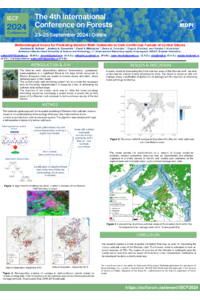
The methodological approach to the spatial modelling of Siberian moth outbreak areas is based on an understanding of the ecology of the pest, the characteristics of site conditions and landform, and remote sensing data. The algorithm was developed through a retrospective analysis of previous outbreaks.
Results
The model facilitates the identification of at-risk areas within the dark coniferous forests, which require close monitoring. The map provides an illustrative representation of the potential outbreak areas. The forecast model's overall accuracy is estimated at 75%. Nevertheless, the accuracy of this figure is contingent upon the specific set of predictors and the extent of the area in question.
Conclusions
The research yielded a model of spatial distribution that may be used for forecasting the primary outbreak areas of the Siberian moth.
The research was carried out within the framework of the project "Methodological bases for assessment of forest pathology risks in southern Central Siberia" (№ FEFE-2024-0016) under the state order of the Ministry of Science and Higher Education of the Russia for implementation by the Scientific Laboratory of Forest Health.
Keywords
dark-coniferous stands
Siberian moth (Dendrolimus sibiricus Tschetverikov)
defoliation
prediction
outbreak area
monitoring
Poster
sciforum-095406_Svetlana Sultson.pdf
Preparation and Evaluation of Lignin and Phytogenic Protein (Mustard Oil Cake)-based Bioadhesive
Fagus sylvatica L. sap flux is affected by soil moisture variability along a steep hillslope in Central Italy