Event submissions
Published
This submission belongs to the session S2. Forest Biodiversity, Ecosystem Services, and Earth Observations of the event The 4th International Electronic Conference on Forests
Published date
19 Sep, 2024
Academic Editor
'%3e%3cpath%20d='M12.6657%2010.9104C12.4185%2010.325%2012.0599%209.79327%2011.6097%209.34482C11.1609%208.89508%2010.6293%208.5365%2010.0442%208.28888C10.0389%208.28626%2010.0337%208.28495%2010.0285%208.28233C10.8446%207.69279%2011.3752%206.73249%2011.3752%205.64904C11.3752%203.8542%209.92103%202.39999%208.1262%202.39999C6.33136%202.39999%204.87715%203.8542%204.87715%205.64904C4.87715%206.73249%205.40774%207.69279%206.22393%208.28364C6.21869%208.28626%206.21345%208.28757%206.20821%208.29019C5.62129%208.5378%205.09463%208.89284%204.64265%209.34613C4.1929%209.79493%203.83432%2010.3266%203.58671%2010.9117C3.34345%2011.4845%203.21226%2012.0987%203.20023%2012.7209C3.19988%2012.7349%203.20233%2012.7488%203.20744%2012.7619C3.21255%2012.7749%203.22022%2012.7867%203.22998%2012.7968C3.23975%2012.8068%203.25142%2012.8147%203.26431%2012.8202C3.2772%2012.8256%203.29105%2012.8284%203.30504%2012.8284H4.09109C4.14874%2012.8284%204.19459%2012.7825%204.1959%2012.7262C4.2221%2011.7148%204.62823%2010.7676%205.34617%2010.0497C6.08899%209.30683%207.0755%208.89808%208.1262%208.89808C9.17689%208.89808%2010.1634%209.30683%2010.9062%2010.0497C11.6242%2010.7676%2012.0303%2011.7148%2012.0565%2012.7262C12.0578%2012.7838%2012.1037%2012.8284%2012.1613%2012.8284H12.9474C12.9613%2012.8284%2012.9752%2012.8256%2012.9881%2012.8202C13.001%2012.8147%2013.0126%2012.8068%2013.0224%2012.7968C13.0322%2012.7867%2013.0398%2012.7749%2013.0449%2012.7619C13.0501%2012.7488%2013.0525%2012.7349%2013.0522%2012.7209C13.0391%2012.0947%2012.9094%2011.4855%2012.6657%2010.9104ZM8.1262%207.9024C7.52486%207.9024%206.9589%207.6679%206.53312%207.24211C6.10733%206.81633%205.87283%206.25037%205.87283%205.64904C5.87283%205.0477%206.10733%204.48174%206.53312%204.05596C6.9589%203.63018%207.52486%203.39567%208.1262%203.39567C8.72753%203.39567%209.29349%203.63018%209.71927%204.05596C10.1451%204.48174%2010.3796%205.0477%2010.3796%205.64904C10.3796%206.25037%2010.1451%206.81633%209.71927%207.24211C9.29349%207.6679%208.72753%207.9024%208.1262%207.9024Z'%20fill='%235D1EE1'/%3e%3c/g%3e%3c/svg%3e) Giovanna Battipaglia
Giovanna BattipagliaCitation
Melkamu Mekonen, Yonas Derebe Derso, Mulugeta Tamer Asres, Amsalu Nigatu Alamerew, Bahiru Gedamu, Etsegenet Emiru Bezabih, Tessema Astatkie, Meseret Chanie, Vegetation composition, structure, distribution and growth performance of natural forest patches across agro-ecologies in Northwestern Ethiopia, in Proceedings of The 4th International Electronic Conference on Forests, 23 September–25 September 2024, MDPI: Basel, Switzerland
Share
Email
Facebook
Twitter
LinkedIn
Vegetation composition, structure, distribution and growth performance of natural forest patches across agro-ecologies in Northwestern Ethiopia

Melkamu Mekonen 1
'%3e%3cpath%20d='M12.6647%2010.9104C12.4176%2010.325%2012.0589%209.7933%2011.6088%209.34485C11.16%208.89511%2010.6283%208.53653%2010.0432%208.28891C10.038%208.28629%2010.0327%208.28498%2010.0275%208.28236C10.8437%207.69282%2011.3743%206.73252%2011.3743%205.64907C11.3743%203.85423%209.92005%202.40002%208.12522%202.40002C6.33038%202.40002%204.87618%203.85423%204.87618%205.64907C4.87618%206.73252%205.40677%207.69282%206.22296%208.28367C6.21772%208.28629%206.21248%208.2876%206.20724%208.29022C5.62031%208.53783%205.09365%208.89287%204.64167%209.34616C4.19192%209.79496%203.83334%2010.3266%203.58573%2010.9117C3.34247%2011.4846%203.21128%2012.0987%203.19925%2012.721C3.1989%2012.735%203.20135%2012.7489%203.20646%2012.7619C3.21157%2012.7749%203.21924%2012.7868%203.22901%2012.7968C3.23877%2012.8068%203.25045%2012.8148%203.26334%2012.8202C3.27623%2012.8256%203.29007%2012.8284%203.30406%2012.8284H4.09012C4.14776%2012.8284%204.19362%2012.7825%204.19493%2012.7262C4.22113%2011.7148%204.62726%2010.7676%205.34519%2010.0497C6.08802%209.30686%207.07452%208.89811%208.12522%208.89811C9.17592%208.89811%2010.1624%209.30686%2010.9052%2010.0497C11.6232%2010.7676%2012.0293%2011.7148%2012.0555%2012.7262C12.0568%2012.7839%2012.1027%2012.8284%2012.1603%2012.8284H12.9464C12.9604%2012.8284%2012.9742%2012.8256%2012.9871%2012.8202C13%2012.8148%2013.0117%2012.8068%2013.0214%2012.7968C13.0312%2012.7868%2013.0389%2012.7749%2013.044%2012.7619C13.0491%2012.7489%2013.0515%2012.735%2013.0512%2012.721C13.0381%2012.0947%2012.9084%2011.4856%2012.6647%2010.9104ZM8.12522%207.90243C7.52388%207.90243%206.95792%207.66793%206.53214%207.24215C6.10636%206.81636%205.87185%206.2504%205.87185%205.64907C5.87185%205.04773%206.10636%204.48177%206.53214%204.05599C6.95792%203.63021%207.52388%203.3957%208.12522%203.3957C8.72655%203.3957%209.29252%203.63021%209.7183%204.05599C10.1441%204.48177%2010.3786%205.04773%2010.3786%205.64907C10.3786%206.2504%2010.1441%206.81636%209.7183%207.24215C9.29252%207.66793%208.72655%207.90243%208.12522%207.90243Z'%20fill='%235D1EE1'/%3e%3c/g%3e%3c/svg%3e)
Yonas Derebe Derso 1
Mulugeta Tamer Asres 1
Amsalu Nigatu Alamerew 1
Bahiru Gedamu 1
Etsegenet Emiru Bezabih 1
Tessema Astatkie 2
Meseret Chanie 3
1. Department of Forestry and Climate Science, College of Agriculture, Food and Climate Science, Injibara University, 25140
2. Faculity of Agriculture, Dalhousie University, Canada
3. School of Economics, Hunan Agricultural University, China
Abstract
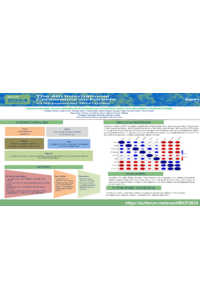
There is an urgent need for conservation measures and a management plan because the natural forest resources in northwest Ethiopia are currently in danger. Although we have a limited understanding of these dynamics, these forests' vegetation is changing in terms of growth performance and distribution. The necessity of looking into the underlying causes of these changes and their implications for conservation and sustainable forest management programs is highlighted by this information gap. Furthermore, only a few site-specific studies on vegetation changes in relation to environmental variations have been done. Consequently, this study aimed to examine the existing state of these resources to apply sustainable forest management practices. To achieve this, transects with 200 square plots measuring 400 m2 were set up at nine forest patches with 200m spacing between plots and transects. Vegetation and environmental data were collected and analyzed using R version 4.1. Significant variations (p 0.008) were found in vegetation features along the slope, forest patches, and agro-ecology. When compared to other forest patches, highland and mid-altitude forest patches had the highest species diversity (2.48) and stocking (2578 trees ha-1). The gentle slope has the most species diversity (2.83). The species similarity between highland and mid-altitude forest habitats was found to be significant (69%). The vegetation cover in the mid-altitude forest patches was also high (abundance: 5–12%). In all of the forest patches examined, tree life forms exceeded shrubs, climbers, and herbs. According to the study's findings, the state of forest resources varies considerably across different environmental variations. Despite the impression of entire forest patches from the outside, the interiors are open, with only huge and mature trees covering the canopy. This state has been triggered by deforestation, degradation, and inappropriate human and grazing operations.
Keywords
floristic diversity
vegetation structure
vegetation distribution
forest patches
environmental patterns
Poster
sciforum-083515_Melkamu Kassaye Mekonen.pdf
Celebration of Landscapes in Indian Tribes Culture: Study of Baiga Tribe in Madhya Pradesh
Environmental Memetics: Exploring Public Perception of Invasive Conifers in NW Patagonia