Event submissions
Published
This submission belongs to the session S4. Global Nutrition Trends: Shaping Health and Athletic Performance of the event The 4th International Electronic Conference on Nutrients
Published date
11 Oct, 2024
Academic Editor
'%3e%3cpath%20d='M12.6657%2010.9104C12.4185%2010.325%2012.0599%209.79327%2011.6097%209.34482C11.1609%208.89508%2010.6293%208.5365%2010.0442%208.28888C10.0389%208.28626%2010.0337%208.28495%2010.0285%208.28233C10.8446%207.69279%2011.3752%206.73249%2011.3752%205.64904C11.3752%203.8542%209.92103%202.39999%208.1262%202.39999C6.33136%202.39999%204.87715%203.8542%204.87715%205.64904C4.87715%206.73249%205.40774%207.69279%206.22393%208.28364C6.21869%208.28626%206.21345%208.28757%206.20821%208.29019C5.62129%208.5378%205.09463%208.89284%204.64265%209.34613C4.1929%209.79493%203.83432%2010.3266%203.58671%2010.9117C3.34345%2011.4845%203.21226%2012.0987%203.20023%2012.7209C3.19988%2012.7349%203.20233%2012.7488%203.20744%2012.7619C3.21255%2012.7749%203.22022%2012.7867%203.22998%2012.7968C3.23975%2012.8068%203.25142%2012.8147%203.26431%2012.8202C3.2772%2012.8256%203.29105%2012.8284%203.30504%2012.8284H4.09109C4.14874%2012.8284%204.19459%2012.7825%204.1959%2012.7262C4.2221%2011.7148%204.62823%2010.7676%205.34617%2010.0497C6.08899%209.30683%207.0755%208.89808%208.1262%208.89808C9.17689%208.89808%2010.1634%209.30683%2010.9062%2010.0497C11.6242%2010.7676%2012.0303%2011.7148%2012.0565%2012.7262C12.0578%2012.7838%2012.1037%2012.8284%2012.1613%2012.8284H12.9474C12.9613%2012.8284%2012.9752%2012.8256%2012.9881%2012.8202C13.001%2012.8147%2013.0126%2012.8068%2013.0224%2012.7968C13.0322%2012.7867%2013.0398%2012.7749%2013.0449%2012.7619C13.0501%2012.7488%2013.0525%2012.7349%2013.0522%2012.7209C13.0391%2012.0947%2012.9094%2011.4855%2012.6657%2010.9104ZM8.1262%207.9024C7.52486%207.9024%206.9589%207.6679%206.53312%207.24211C6.10733%206.81633%205.87283%206.25037%205.87283%205.64904C5.87283%205.0477%206.10733%204.48174%206.53312%204.05596C6.9589%203.63018%207.52486%203.39567%208.1262%203.39567C8.72753%203.39567%209.29349%203.63018%209.71927%204.05596C10.1451%204.48174%2010.3796%205.0477%2010.3796%205.64904C10.3796%206.25037%2010.1451%206.81633%209.71927%207.24211C9.29349%207.6679%208.72753%207.9024%208.1262%207.9024Z'%20fill='%235D1EE1'/%3e%3c/g%3e%3c/svg%3e) Mauro Lombardo
Mauro LombardoCitation
Gordana Kenđel Jovanović, Greta Krešić, Elena Dujmić, Sandra Pavičić Žeželj, Young male and highly physically active university students have higher animal-sourced protein intake and greenhouse gas emissions, in Proceedings of The 4th International Electronic Conference on Nutrients, 16 October–18 October 2024, MDPI: Basel, Switzerland
Share
Email
Facebook
Twitter
LinkedIn
Young male and highly physically active university students have higher animal-sourced protein intake and greenhouse gas emissions
'%3e%3cpath%20d='M12.6647%2010.9104C12.4176%2010.325%2012.0589%209.7933%2011.6088%209.34485C11.16%208.89511%2010.6283%208.53653%2010.0432%208.28891C10.038%208.28629%2010.0327%208.28498%2010.0275%208.28236C10.8437%207.69282%2011.3743%206.73252%2011.3743%205.64907C11.3743%203.85423%209.92005%202.40002%208.12522%202.40002C6.33038%202.40002%204.87618%203.85423%204.87618%205.64907C4.87618%206.73252%205.40677%207.69282%206.22296%208.28367C6.21772%208.28629%206.21248%208.2876%206.20724%208.29022C5.62031%208.53783%205.09365%208.89287%204.64167%209.34616C4.19192%209.79496%203.83334%2010.3266%203.58573%2010.9117C3.34247%2011.4846%203.21128%2012.0987%203.19925%2012.721C3.1989%2012.735%203.20135%2012.7489%203.20646%2012.7619C3.21157%2012.7749%203.21924%2012.7868%203.22901%2012.7968C3.23877%2012.8068%203.25045%2012.8148%203.26334%2012.8202C3.27623%2012.8256%203.29007%2012.8284%203.30406%2012.8284H4.09012C4.14776%2012.8284%204.19362%2012.7825%204.19493%2012.7262C4.22113%2011.7148%204.62726%2010.7676%205.34519%2010.0497C6.08802%209.30686%207.07452%208.89811%208.12522%208.89811C9.17592%208.89811%2010.1624%209.30686%2010.9052%2010.0497C11.6232%2010.7676%2012.0293%2011.7148%2012.0555%2012.7262C12.0568%2012.7839%2012.1027%2012.8284%2012.1603%2012.8284H12.9464C12.9604%2012.8284%2012.9742%2012.8256%2012.9871%2012.8202C13%2012.8148%2013.0117%2012.8068%2013.0214%2012.7968C13.0312%2012.7868%2013.0389%2012.7749%2013.044%2012.7619C13.0491%2012.7489%2013.0515%2012.735%2013.0512%2012.721C13.0381%2012.0947%2012.9084%2011.4856%2012.6647%2010.9104ZM8.12522%207.90243C7.52388%207.90243%206.95792%207.66793%206.53214%207.24215C6.10636%206.81636%205.87185%206.2504%205.87185%205.64907C5.87185%205.04773%206.10636%204.48177%206.53214%204.05599C6.95792%203.63021%207.52388%203.3957%208.12522%203.3957C8.72655%203.3957%209.29252%203.63021%209.7183%204.05599C10.1441%204.48177%2010.3786%205.04773%2010.3786%205.64907C10.3786%206.2504%2010.1441%206.81636%209.7183%207.24215C9.29252%207.66793%208.72655%207.90243%208.12522%207.90243Z'%20fill='%235D1EE1'/%3e%3c/g%3e%3c/svg%3e)
Gordana Kenđel Jovanović 1,2
Greta Krešić 3
Elena Dujmić 4
Sandra Pavičić Žeželj 1,2
1. Department of Health Ecology, Teaching Institute of Public Health of Primorsko-Goranska County,
Rijeka, Croatia
2. Department of Health Ecology, Faculty of Medicine, University of Rijeka, Rijeka, Croatia
3. Department of Food and Nutrition, Faculty of Tourism and Hospitality Management, University of Rijeka, Opatija, Croatia
4. Center for Projects, Faculty of Tourism and Hospitality Management, University of Rijeka, Opatija, Croatia
Abstract
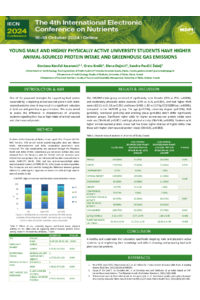
Introduction: One of the proposed strategies for supporting food system sustainability is replacing animal-sourced protein with plant-sourced proteins since it may result in a significant reduction in land use and greenhouse gas emissions. This study aimed to assess the difference in characteristics of university students regarding their low or high intake of animal-sourced and plant-sourced protein.
Methods: Students at the University of Rijeka, Croatia aged 19 to 27 years (N=224, 46% females, 53% junior) noted sociodemographic data and dietary intake. Anthropometric and body composition parameters were measured. The diet sustainability was assessed through the Planetary Heath Diet Index (PHDI). Greenhouse gas emissions (GHGE) data were obtained from the literature with the SU-EAT method. Students were divided into two groups: high animal-sourced/low plant-sourced protein intake (HAP/LPP) (N=36, 16%), and low animal-sourced/high plant-sourced protein intake (LAP/HPP) (N=34, 15%), based on intake quartiles. The chi-square test was used for testing the difference between groups differences, while logistic regression to assess the odds for high animal-sourced protein intake.
Results: The LAP/HPP intake group consisted of significantly more females (59% vs 25%; p=0.004), and moderately physically active students (54% vs 31%; p=0.004), and had higher PDHI scores (62.21 vs 51.53; p<0.001) and lower GHGE (1.82 vs 2.57 kg CO2/1000 kcal; p<0.001), compared to the HAP/LPP group. Age (p=0.216), university degree (p=0.836), BMI (p=0.069), nutritional (p=0.345) and smoking status (p=0.885) did not differ significantly between groups. Significant higher odds for higher animal-sourced protein intake were male sex (OR=16.40, p<0.001) and high physical activity (OR=3.46, p=0.005). Students with higher animal-sourced protein intake had five-times-higher chances of higher GHGE than those with higher plant-sourced protein intake (OR=4.83, p=0.002).
Conclusions: A healthy and sustainable diet education specifically targeting male and physically active students by strengthening their knowledge and skills in choosing and preparing food with plant-sourced proteins.
Keywords
carbon footprint
greenhouse gas
Planetary Health Diet
protein
students
sustainable diet
Poster
sciforum-101330-KENĐEL JOVANOVIĆ.pdf
NUTRITION KNOWLEDGE, ATTITUDES, AND DIETARY PRACTICES AMONG FOOTBALLERS AT LEAD CITY FOOTBALL ACADEMY
Cognitive-function-improving effects of Tanacetum vulgare hydroalcoholic extract in rats with scopolamine-induced amnesia