Event submissions
Published
This submission belongs to the session S3. Diet and Chronic Disease Management of the event The 4th International Electronic Conference on Nutrients
Published date
11 Oct, 2024
Academic Editor
'%3e%3cpath%20d='M12.6657%2010.9104C12.4185%2010.325%2012.0599%209.79327%2011.6097%209.34482C11.1609%208.89508%2010.6293%208.5365%2010.0442%208.28888C10.0389%208.28626%2010.0337%208.28495%2010.0285%208.28233C10.8446%207.69279%2011.3752%206.73249%2011.3752%205.64904C11.3752%203.8542%209.92103%202.39999%208.1262%202.39999C6.33136%202.39999%204.87715%203.8542%204.87715%205.64904C4.87715%206.73249%205.40774%207.69279%206.22393%208.28364C6.21869%208.28626%206.21345%208.28757%206.20821%208.29019C5.62129%208.5378%205.09463%208.89284%204.64265%209.34613C4.1929%209.79493%203.83432%2010.3266%203.58671%2010.9117C3.34345%2011.4845%203.21226%2012.0987%203.20023%2012.7209C3.19988%2012.7349%203.20233%2012.7488%203.20744%2012.7619C3.21255%2012.7749%203.22022%2012.7867%203.22998%2012.7968C3.23975%2012.8068%203.25142%2012.8147%203.26431%2012.8202C3.2772%2012.8256%203.29105%2012.8284%203.30504%2012.8284H4.09109C4.14874%2012.8284%204.19459%2012.7825%204.1959%2012.7262C4.2221%2011.7148%204.62823%2010.7676%205.34617%2010.0497C6.08899%209.30683%207.0755%208.89808%208.1262%208.89808C9.17689%208.89808%2010.1634%209.30683%2010.9062%2010.0497C11.6242%2010.7676%2012.0303%2011.7148%2012.0565%2012.7262C12.0578%2012.7838%2012.1037%2012.8284%2012.1613%2012.8284H12.9474C12.9613%2012.8284%2012.9752%2012.8256%2012.9881%2012.8202C13.001%2012.8147%2013.0126%2012.8068%2013.0224%2012.7968C13.0322%2012.7867%2013.0398%2012.7749%2013.0449%2012.7619C13.0501%2012.7488%2013.0525%2012.7349%2013.0522%2012.7209C13.0391%2012.0947%2012.9094%2011.4855%2012.6657%2010.9104ZM8.1262%207.9024C7.52486%207.9024%206.9589%207.6679%206.53312%207.24211C6.10733%206.81633%205.87283%206.25037%205.87283%205.64904C5.87283%205.0477%206.10733%204.48174%206.53312%204.05596C6.9589%203.63018%207.52486%203.39567%208.1262%203.39567C8.72753%203.39567%209.29349%203.63018%209.71927%204.05596C10.1451%204.48174%2010.3796%205.0477%2010.3796%205.64904C10.3796%206.25037%2010.1451%206.81633%209.71927%207.24211C9.29349%207.6679%208.72753%207.9024%208.1262%207.9024Z'%20fill='%235D1EE1'/%3e%3c/g%3e%3c/svg%3e) Jaime Uribarri
Jaime UribarriCitation
Nada Malak ZABOUB, Sabrina BOUSSENA, Amira Leila DIB, Plant Proteins for a Healthier Heart: A Meta-Analysis Approach, in Proceedings of The 4th International Electronic Conference on Nutrients, 16 October–18 October 2024, MDPI: Basel, Switzerland
Share
Email
Facebook
Twitter
LinkedIn
Plant Proteins for a Healthier Heart: A Meta-Analysis Approach
'%3e%3cpath%20d='M12.6647%2010.9104C12.4176%2010.325%2012.0589%209.7933%2011.6088%209.34485C11.16%208.89511%2010.6283%208.53653%2010.0432%208.28891C10.038%208.28629%2010.0327%208.28498%2010.0275%208.28236C10.8437%207.69282%2011.3743%206.73252%2011.3743%205.64907C11.3743%203.85423%209.92005%202.40002%208.12522%202.40002C6.33038%202.40002%204.87618%203.85423%204.87618%205.64907C4.87618%206.73252%205.40677%207.69282%206.22296%208.28367C6.21772%208.28629%206.21248%208.2876%206.20724%208.29022C5.62031%208.53783%205.09365%208.89287%204.64167%209.34616C4.19192%209.79496%203.83334%2010.3266%203.58573%2010.9117C3.34247%2011.4846%203.21128%2012.0987%203.19925%2012.721C3.1989%2012.735%203.20135%2012.7489%203.20646%2012.7619C3.21157%2012.7749%203.21924%2012.7868%203.22901%2012.7968C3.23877%2012.8068%203.25045%2012.8148%203.26334%2012.8202C3.27623%2012.8256%203.29007%2012.8284%203.30406%2012.8284H4.09012C4.14776%2012.8284%204.19362%2012.7825%204.19493%2012.7262C4.22113%2011.7148%204.62726%2010.7676%205.34519%2010.0497C6.08802%209.30686%207.07452%208.89811%208.12522%208.89811C9.17592%208.89811%2010.1624%209.30686%2010.9052%2010.0497C11.6232%2010.7676%2012.0293%2011.7148%2012.0555%2012.7262C12.0568%2012.7839%2012.1027%2012.8284%2012.1603%2012.8284H12.9464C12.9604%2012.8284%2012.9742%2012.8256%2012.9871%2012.8202C13%2012.8148%2013.0117%2012.8068%2013.0214%2012.7968C13.0312%2012.7868%2013.0389%2012.7749%2013.044%2012.7619C13.0491%2012.7489%2013.0515%2012.735%2013.0512%2012.721C13.0381%2012.0947%2012.9084%2011.4856%2012.6647%2010.9104ZM8.12522%207.90243C7.52388%207.90243%206.95792%207.66793%206.53214%207.24215C6.10636%206.81636%205.87185%206.2504%205.87185%205.64907C5.87185%205.04773%206.10636%204.48177%206.53214%204.05599C6.95792%203.63021%207.52388%203.3957%208.12522%203.3957C8.72655%203.3957%209.29252%203.63021%209.7183%204.05599C10.1441%204.48177%2010.3786%205.04773%2010.3786%205.64907C10.3786%206.2504%2010.1441%206.81636%209.7183%207.24215C9.29252%207.66793%208.72655%207.90243%208.12522%207.90243Z'%20fill='%235D1EE1'/%3e%3c/g%3e%3c/svg%3e)
Nada Malak ZABOUB 1
Sabrina BOUSSENA 1
Amira Leila DIB 1
1. Gestion de la Santé et Productions Animales Research Laboratory, Institut des Sciences Vétérinaires El-Khroub, Université de Constantine 1-Frères Mentouri, Constantine 25000
Abstract
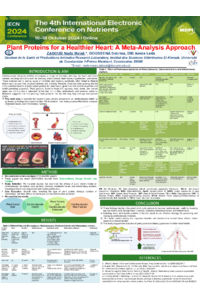
Introduction: Cardiovascular diseases (CVDs) remain one of the most significant health challenges worldwide. Recently, there has been growing interest in the potential benefits of plant-based proteins for heart health, given their rich nutritional profiles and health-promoting properties. These proteins, found in foods like legumes, nuts, and certain algae, may help manage and prevent CVDs.
Objective: This meta-analysis aims to evaluate the impact of plant protein consumption on cardiovascular health by synthesizing findings from recent studies. We focused on how these proteins affect blood pressure, cholesterol levels, and inflammatory markers.
Method: We conducted a meta-analysis of 20 scientific papers sourced from Google Scholar, PubMed, and Science Direct. We selected studies that examined the effects of plant protein intake on cardiovascular risk factors, including blood pressure, cholesterol levels, and inflammation.
We used the key words: “Plant-based Diet”, “Cardiovascular Health”, “Plant Protein and Cardiovascular Diseases”, “Cardiovascular Risk Factors”.
Results: Our analysis showed that diets high in plant proteins significantly reduced systolic and diastolic blood pressure, total cholesterol, and low-density lipoprotein (LDL) cholesterol levels. We also observed an increase in high-density lipoprotein (HDL) cholesterol. Additionally, inflammatory markers like C-reactive protein (CRP) were lower in individuals with higher plant protein intake. The overall effect size suggested a strong protective effect of plant proteins against cardiovascular risk factors.
Conclusion: These findings highlight the potential of plant proteins to improve cardiovascular health by lowering key risk factors such as high blood pressure, unhealthy cholesterol levels, and inflammation. Including more plant-based proteins in the diet could be an effective strategy for preventing and managing cardiovascular diseases. Further research is needed to understand the long-term benefits and mechanisms behind these effects. This study supports the inclusion of plant proteins in dietary guidelines for better heart health.
Keywords
Key words: Heart health
Plant-based diet
Protective effect
LDL
HDL
Management of CVDs.
Poster
sciforum-097658-Zaboub.pdf
The maternal diet during pre-gestation, gestation, or lactation impacts differently on intestinal gene expression: the role of fiber and polyphenols
ULTRASOUND-ASSISTED EXTRACTION OF CAROTENOIDS FROM MACAUBA PULP AND PULP PRESS-CAKE USING ETHYL ACETATE