Event submissions
Published
This submission belongs to the session 3. Biomedical Biomaterials of the event The 1st International Online Conference on Bioengineering
Published date
11 Oct, 2024
Academic Editor
'%3e%3cpath%20d='M12.6657%2010.9104C12.4185%2010.325%2012.0599%209.79327%2011.6097%209.34482C11.1609%208.89508%2010.6293%208.5365%2010.0442%208.28888C10.0389%208.28626%2010.0337%208.28495%2010.0285%208.28233C10.8446%207.69279%2011.3752%206.73249%2011.3752%205.64904C11.3752%203.8542%209.92103%202.39999%208.1262%202.39999C6.33136%202.39999%204.87715%203.8542%204.87715%205.64904C4.87715%206.73249%205.40774%207.69279%206.22393%208.28364C6.21869%208.28626%206.21345%208.28757%206.20821%208.29019C5.62129%208.5378%205.09463%208.89284%204.64265%209.34613C4.1929%209.79493%203.83432%2010.3266%203.58671%2010.9117C3.34345%2011.4845%203.21226%2012.0987%203.20023%2012.7209C3.19988%2012.7349%203.20233%2012.7488%203.20744%2012.7619C3.21255%2012.7749%203.22022%2012.7867%203.22998%2012.7968C3.23975%2012.8068%203.25142%2012.8147%203.26431%2012.8202C3.2772%2012.8256%203.29105%2012.8284%203.30504%2012.8284H4.09109C4.14874%2012.8284%204.19459%2012.7825%204.1959%2012.7262C4.2221%2011.7148%204.62823%2010.7676%205.34617%2010.0497C6.08899%209.30683%207.0755%208.89808%208.1262%208.89808C9.17689%208.89808%2010.1634%209.30683%2010.9062%2010.0497C11.6242%2010.7676%2012.0303%2011.7148%2012.0565%2012.7262C12.0578%2012.7838%2012.1037%2012.8284%2012.1613%2012.8284H12.9474C12.9613%2012.8284%2012.9752%2012.8256%2012.9881%2012.8202C13.001%2012.8147%2013.0126%2012.8068%2013.0224%2012.7968C13.0322%2012.7867%2013.0398%2012.7749%2013.0449%2012.7619C13.0501%2012.7488%2013.0525%2012.7349%2013.0522%2012.7209C13.0391%2012.0947%2012.9094%2011.4855%2012.6657%2010.9104ZM8.1262%207.9024C7.52486%207.9024%206.9589%207.6679%206.53312%207.24211C6.10733%206.81633%205.87283%206.25037%205.87283%205.64904C5.87283%205.0477%206.10733%204.48174%206.53312%204.05596C6.9589%203.63018%207.52486%203.39567%208.1262%203.39567C8.72753%203.39567%209.29349%203.63018%209.71927%204.05596C10.1451%204.48174%2010.3796%205.0477%2010.3796%205.64904C10.3796%206.25037%2010.1451%206.81633%209.71927%207.24211C9.29349%207.6679%208.72753%207.9024%208.1262%207.9024Z'%20fill='%235D1EE1'/%3e%3c/g%3e%3c/svg%3e) Gary Bowlin
Gary BowlinCitation
Sindhu Abraham, Sri Charan N, Akhila Jain, Shwetha Krishnamurthy, Sharon Furtado, Enhancing burn wound healing with Plectranthus amboinicus extract-loaded foam dressings, in Proceedings of The 1st International Online Conference on Bioengineering, 16 October–18 October 2024, MDPI: Basel, Switzerland
Share
Email
Facebook
Twitter
LinkedIn
Enhancing burn wound healing with Plectranthus amboinicus extract-loaded foam dressings
'%3e%3cpath%20d='M12.6647%2010.9104C12.4176%2010.325%2012.0589%209.7933%2011.6088%209.34485C11.16%208.89511%2010.6283%208.53653%2010.0432%208.28891C10.038%208.28629%2010.0327%208.28498%2010.0275%208.28236C10.8437%207.69282%2011.3743%206.73252%2011.3743%205.64907C11.3743%203.85423%209.92005%202.40002%208.12522%202.40002C6.33038%202.40002%204.87618%203.85423%204.87618%205.64907C4.87618%206.73252%205.40677%207.69282%206.22296%208.28367C6.21772%208.28629%206.21248%208.2876%206.20724%208.29022C5.62031%208.53783%205.09365%208.89287%204.64167%209.34616C4.19192%209.79496%203.83334%2010.3266%203.58573%2010.9117C3.34247%2011.4846%203.21128%2012.0987%203.19925%2012.721C3.1989%2012.735%203.20135%2012.7489%203.20646%2012.7619C3.21157%2012.7749%203.21924%2012.7868%203.22901%2012.7968C3.23877%2012.8068%203.25045%2012.8148%203.26334%2012.8202C3.27623%2012.8256%203.29007%2012.8284%203.30406%2012.8284H4.09012C4.14776%2012.8284%204.19362%2012.7825%204.19493%2012.7262C4.22113%2011.7148%204.62726%2010.7676%205.34519%2010.0497C6.08802%209.30686%207.07452%208.89811%208.12522%208.89811C9.17592%208.89811%2010.1624%209.30686%2010.9052%2010.0497C11.6232%2010.7676%2012.0293%2011.7148%2012.0555%2012.7262C12.0568%2012.7839%2012.1027%2012.8284%2012.1603%2012.8284H12.9464C12.9604%2012.8284%2012.9742%2012.8256%2012.9871%2012.8202C13%2012.8148%2013.0117%2012.8068%2013.0214%2012.7968C13.0312%2012.7868%2013.0389%2012.7749%2013.044%2012.7619C13.0491%2012.7489%2013.0515%2012.735%2013.0512%2012.721C13.0381%2012.0947%2012.9084%2011.4856%2012.6647%2010.9104ZM8.12522%207.90243C7.52388%207.90243%206.95792%207.66793%206.53214%207.24215C6.10636%206.81636%205.87185%206.2504%205.87185%205.64907C5.87185%205.04773%206.10636%204.48177%206.53214%204.05599C6.95792%203.63021%207.52388%203.3957%208.12522%203.3957C8.72655%203.3957%209.29252%203.63021%209.7183%204.05599C10.1441%204.48177%2010.3786%205.04773%2010.3786%205.64907C10.3786%206.2504%2010.1441%206.81636%209.7183%207.24215C9.29252%207.66793%208.72655%207.90243%208.12522%207.90243Z'%20fill='%235D1EE1'/%3e%3c/g%3e%3c/svg%3e)
Sindhu Abraham 1
Sri Charan N 2
Akhila Jain 2
Shwetha Krishnamurthy 2
Sharon Furtado 2
1. Ramaiah University of Applied Sciences, India
2. Faculty of Pharmacy, M S Ramaiah University of Applied Sciences, India
Abstract
Abstract Title:
Enhancing burn wound healing with Plectranthus amboinicus extract-loaded foam dressings
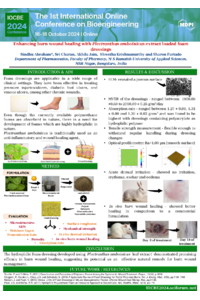
Introduction: Foam dressings have been effective in treating pressure injuries/ulcers, diabetic foot ulcers, and venous ulcers, among other chronic wounds. Even though the currently available polyurethane foams are absorbent in nature, there is a need for the development of foams which are highly hydrophilic in nature. Plectranthus amboinicus is traditionally used as an anti-inflammatory and wound-healing agent. Its incorporation in a hydrophilic polyurethane (PU)-based foam dressing will offer the dual benefits of a highly absorbent foam dressing and the healing potential of P. amboinicus.
Methods: Hydrophillic PU foam dressings were prepared and loaded with P. ambionicus leaf extract (PAE). The dressings were prepared with varying concentrations of extract along with Toluene diisocyanate, polyols, catalysts, chain extenders, and hydrophilic polymers. The microstructure, moisture vapour transmission rate, porosity, absorption rate, surface roughness, and mechanical strength of the dressings was assessed followed by in vivo dermal irritation studies on rabbits and burn wound healing studies in a rodent model.
Results and Discussion: The moisture vapour transmission rate of the dressings was found to range between 1900.06 ±0.59 and 2050.00 ± 0.25 g/m2/day. The absorption rate was found to be between 1.27 ± 0.01 and 1.31 ± 0.00 g/cm2 and was found to be highest with dressings containing polyacrylate as hydrophilic polymer. Tensile strength measurement indicated that the selected formulations were flexible enough to withstand regular handling during dressing changes. Acute dermal irritation performed on rabbits showed no irritation, erythema, eschar, oroedema. The in vivo burn wound healing studies performed on albino Wistar rats showed better healing in comparison to a commercial formulation.
Conclusions: The hydrophilic foam dressing developed using Plectranthus amboinicus leaf extract demonstrated promising efficacy in burn wound healing, suggesting its potential as an effective natural remedy for burn wound management.
Keywords
foam dressing
Plectranthus amboinicus
burn wounds
Poster
sciforum-101144 -IOCBE2024.pdf
The Role and Future Directions of 3D Printing in Custom Prosthetic Design
AI in Nanobot Feature Recognition