Event submissions
Published
This submission belongs to the session S2. Biodiversity Conservation of the event The 3rd International Electronic Conference on Diversity
Published date
11 Oct, 2024
Academic Editor
'%3e%3cpath%20d='M12.6657%2010.9104C12.4185%2010.325%2012.0599%209.79327%2011.6097%209.34482C11.1609%208.89508%2010.6293%208.5365%2010.0442%208.28888C10.0389%208.28626%2010.0337%208.28495%2010.0285%208.28233C10.8446%207.69279%2011.3752%206.73249%2011.3752%205.64904C11.3752%203.8542%209.92103%202.39999%208.1262%202.39999C6.33136%202.39999%204.87715%203.8542%204.87715%205.64904C4.87715%206.73249%205.40774%207.69279%206.22393%208.28364C6.21869%208.28626%206.21345%208.28757%206.20821%208.29019C5.62129%208.5378%205.09463%208.89284%204.64265%209.34613C4.1929%209.79493%203.83432%2010.3266%203.58671%2010.9117C3.34345%2011.4845%203.21226%2012.0987%203.20023%2012.7209C3.19988%2012.7349%203.20233%2012.7488%203.20744%2012.7619C3.21255%2012.7749%203.22022%2012.7867%203.22998%2012.7968C3.23975%2012.8068%203.25142%2012.8147%203.26431%2012.8202C3.2772%2012.8256%203.29105%2012.8284%203.30504%2012.8284H4.09109C4.14874%2012.8284%204.19459%2012.7825%204.1959%2012.7262C4.2221%2011.7148%204.62823%2010.7676%205.34617%2010.0497C6.08899%209.30683%207.0755%208.89808%208.1262%208.89808C9.17689%208.89808%2010.1634%209.30683%2010.9062%2010.0497C11.6242%2010.7676%2012.0303%2011.7148%2012.0565%2012.7262C12.0578%2012.7838%2012.1037%2012.8284%2012.1613%2012.8284H12.9474C12.9613%2012.8284%2012.9752%2012.8256%2012.9881%2012.8202C13.001%2012.8147%2013.0126%2012.8068%2013.0224%2012.7968C13.0322%2012.7867%2013.0398%2012.7749%2013.0449%2012.7619C13.0501%2012.7488%2013.0525%2012.7349%2013.0522%2012.7209C13.0391%2012.0947%2012.9094%2011.4855%2012.6657%2010.9104ZM8.1262%207.9024C7.52486%207.9024%206.9589%207.6679%206.53312%207.24211C6.10733%206.81633%205.87283%206.25037%205.87283%205.64904C5.87283%205.0477%206.10733%204.48174%206.53312%204.05596C6.9589%203.63018%207.52486%203.39567%208.1262%203.39567C8.72753%203.39567%209.29349%203.63018%209.71927%204.05596C10.1451%204.48174%2010.3796%205.0477%2010.3796%205.64904C10.3796%206.25037%2010.1451%206.81633%209.71927%207.24211C9.29349%207.6679%208.72753%207.9024%208.1262%207.9024Z'%20fill='%235D1EE1'/%3e%3c/g%3e%3c/svg%3e) Kevin Cianfaglione
Kevin CianfaglioneCitation
Csaba Centeri, Barbara Simon, New data on earthworms in two nature conservation areas in Hungary, in Proceedings of The 3rd International Electronic Conference on Diversity, 15 October–17 October 2024, MDPI: Basel, Switzerland
Share
Email
Facebook
Twitter
LinkedIn
New data on earthworms in two nature conservation areas in Hungary

Csaba Centeri 1
'%3e%3cpath%20d='M12.6647%2010.9104C12.4176%2010.325%2012.0589%209.7933%2011.6088%209.34485C11.16%208.89511%2010.6283%208.53653%2010.0432%208.28891C10.038%208.28629%2010.0327%208.28498%2010.0275%208.28236C10.8437%207.69282%2011.3743%206.73252%2011.3743%205.64907C11.3743%203.85423%209.92005%202.40002%208.12522%202.40002C6.33038%202.40002%204.87618%203.85423%204.87618%205.64907C4.87618%206.73252%205.40677%207.69282%206.22296%208.28367C6.21772%208.28629%206.21248%208.2876%206.20724%208.29022C5.62031%208.53783%205.09365%208.89287%204.64167%209.34616C4.19192%209.79496%203.83334%2010.3266%203.58573%2010.9117C3.34247%2011.4846%203.21128%2012.0987%203.19925%2012.721C3.1989%2012.735%203.20135%2012.7489%203.20646%2012.7619C3.21157%2012.7749%203.21924%2012.7868%203.22901%2012.7968C3.23877%2012.8068%203.25045%2012.8148%203.26334%2012.8202C3.27623%2012.8256%203.29007%2012.8284%203.30406%2012.8284H4.09012C4.14776%2012.8284%204.19362%2012.7825%204.19493%2012.7262C4.22113%2011.7148%204.62726%2010.7676%205.34519%2010.0497C6.08802%209.30686%207.07452%208.89811%208.12522%208.89811C9.17592%208.89811%2010.1624%209.30686%2010.9052%2010.0497C11.6232%2010.7676%2012.0293%2011.7148%2012.0555%2012.7262C12.0568%2012.7839%2012.1027%2012.8284%2012.1603%2012.8284H12.9464C12.9604%2012.8284%2012.9742%2012.8256%2012.9871%2012.8202C13%2012.8148%2013.0117%2012.8068%2013.0214%2012.7968C13.0312%2012.7868%2013.0389%2012.7749%2013.044%2012.7619C13.0491%2012.7489%2013.0515%2012.735%2013.0512%2012.721C13.0381%2012.0947%2012.9084%2011.4856%2012.6647%2010.9104ZM8.12522%207.90243C7.52388%207.90243%206.95792%207.66793%206.53214%207.24215C6.10636%206.81636%205.87185%206.2504%205.87185%205.64907C5.87185%205.04773%206.10636%204.48177%206.53214%204.05599C6.95792%203.63021%207.52388%203.3957%208.12522%203.3957C8.72655%203.3957%209.29252%203.63021%209.7183%204.05599C10.1441%204.48177%2010.3786%205.04773%2010.3786%205.64907C10.3786%206.2504%2010.1441%206.81636%209.7183%207.24215C9.29252%207.66793%208.72655%207.90243%208.12522%207.90243Z'%20fill='%235D1EE1'/%3e%3c/g%3e%3c/svg%3e)
Barbara Simon 2
1. Institute for Wildlife Management and Nature Conservation, Hungarian University of Agriculture and Life Sciences, H-2100 Gödöllő, Hungary
2. Institute of Environmental Sciences, Hungarian University of Agriculture and Life Sciences (MATE), H-2100, Gödöllő, Hungary
Abstract
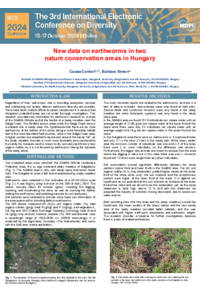
Regardless of their well-known role in providing ecosystem services and maintaining soil quality, data on earthworm diversity are sporadic. There have been multiple efforts to collect samples but it is obvious that Hungarian protected areas are not under thorough investigation. This research provided new information for earthworm research on a slope of the Gödöllő Hillside and at the border of a peaty meadow near the Galga Creek. The Gödöllő area is steep while the Galga Creek area is a wetland with a sandy area. We hypothesize that there will be more earthworms at the bottom of the slope, being a more favorable habitat due to the more abundant food sources, while in the Galga Creek area, a higher number are expected to be present around the sandy “hill”, as the peaty meadow provides a much more favorable area compared to the sandy hill, because sand is known to dry out easily and there is less organic matter, so it is not favored by earthworms (being the opposite of the peaty area). Earthworms were collected in five replicates of a 25×25×25cm hole dug using a shovel. The search normally takes 30 minutes (gross: including the digging, counting, and recultivating the area, as well as marking the bottles holding the earthworms and collecting samples for soil analyses). Aporrectodea rosea was found at both sites. Eisenia fetida and Lumbricus terrestris were only found in the peaty meadow site while Octolasion cyaneum was only found in the steep slope area. Both sampling sites (the hilly area and the peaty meadow) proved the hypothesis: the lower section of the steep slopes and the less sandy area of the peaty meadow provided better habitats, and this was associated with higher earthworm abundance and earthworm weight. The research provides a baseline for further investigations because there is a lack of related publications.
Keywords
protected area
soil biota
soil analyses
Poster
Centeri and Simon.pdf
Comparative analysis of natural and artificial light perception in three moth species
Can altitude effect the distribution of nymphalidae butterflies adjacent to protected regions in the Eastern Himalayan landscape of West Bengal, India?