Event submissions
Published
This submission belongs to the session S4. Urban Water, Treatment Technologies, Systems Efficiency and Smart Water Grids of the event The 8th International Electronic Conference on Water Sciences
Published date
14 Oct, 2024
Academic Editor
'%3e%3cpath%20d='M12.6657%2010.9104C12.4185%2010.325%2012.0599%209.79327%2011.6097%209.34482C11.1609%208.89508%2010.6293%208.5365%2010.0442%208.28888C10.0389%208.28626%2010.0337%208.28495%2010.0285%208.28233C10.8446%207.69279%2011.3752%206.73249%2011.3752%205.64904C11.3752%203.8542%209.92103%202.39999%208.1262%202.39999C6.33136%202.39999%204.87715%203.8542%204.87715%205.64904C4.87715%206.73249%205.40774%207.69279%206.22393%208.28364C6.21869%208.28626%206.21345%208.28757%206.20821%208.29019C5.62129%208.5378%205.09463%208.89284%204.64265%209.34613C4.1929%209.79493%203.83432%2010.3266%203.58671%2010.9117C3.34345%2011.4845%203.21226%2012.0987%203.20023%2012.7209C3.19988%2012.7349%203.20233%2012.7488%203.20744%2012.7619C3.21255%2012.7749%203.22022%2012.7867%203.22998%2012.7968C3.23975%2012.8068%203.25142%2012.8147%203.26431%2012.8202C3.2772%2012.8256%203.29105%2012.8284%203.30504%2012.8284H4.09109C4.14874%2012.8284%204.19459%2012.7825%204.1959%2012.7262C4.2221%2011.7148%204.62823%2010.7676%205.34617%2010.0497C6.08899%209.30683%207.0755%208.89808%208.1262%208.89808C9.17689%208.89808%2010.1634%209.30683%2010.9062%2010.0497C11.6242%2010.7676%2012.0303%2011.7148%2012.0565%2012.7262C12.0578%2012.7838%2012.1037%2012.8284%2012.1613%2012.8284H12.9474C12.9613%2012.8284%2012.9752%2012.8256%2012.9881%2012.8202C13.001%2012.8147%2013.0126%2012.8068%2013.0224%2012.7968C13.0322%2012.7867%2013.0398%2012.7749%2013.0449%2012.7619C13.0501%2012.7488%2013.0525%2012.7349%2013.0522%2012.7209C13.0391%2012.0947%2012.9094%2011.4855%2012.6657%2010.9104ZM8.1262%207.9024C7.52486%207.9024%206.9589%207.6679%206.53312%207.24211C6.10733%206.81633%205.87283%206.25037%205.87283%205.64904C5.87283%205.0477%206.10733%204.48174%206.53312%204.05596C6.9589%203.63018%207.52486%203.39567%208.1262%203.39567C8.72753%203.39567%209.29349%203.63018%209.71927%204.05596C10.1451%204.48174%2010.3796%205.0477%2010.3796%205.64904C10.3796%206.25037%2010.1451%206.81633%209.71927%207.24211C9.29349%207.6679%208.72753%207.9024%208.1262%207.9024Z'%20fill='%235D1EE1'/%3e%3c/g%3e%3c/svg%3e) Carmen Teodosiu
Carmen TeodosiuCitation
Muhammad Mubashar Hanif, Shahbaz Nasir Khan, Adeen Sajid, Ramsha Arif, Ameer Umar Kharal, Mazhar Hussain, Optimizing Urban Water System Efficiency with Smart Water Grids and IoT Technologies, in Proceedings of The 8th International Electronic Conference on Water Sciences, 14 October–16 October 2024, MDPI: Basel, Switzerland
Share
Email
Facebook
Twitter
LinkedIn
Optimizing Urban Water System Efficiency with Smart Water Grids and IoT Technologies
'%3e%3cpath%20d='M12.6647%2010.9104C12.4176%2010.325%2012.0589%209.7933%2011.6088%209.34485C11.16%208.89511%2010.6283%208.53653%2010.0432%208.28891C10.038%208.28629%2010.0327%208.28498%2010.0275%208.28236C10.8437%207.69282%2011.3743%206.73252%2011.3743%205.64907C11.3743%203.85423%209.92005%202.40002%208.12522%202.40002C6.33038%202.40002%204.87618%203.85423%204.87618%205.64907C4.87618%206.73252%205.40677%207.69282%206.22296%208.28367C6.21772%208.28629%206.21248%208.2876%206.20724%208.29022C5.62031%208.53783%205.09365%208.89287%204.64167%209.34616C4.19192%209.79496%203.83334%2010.3266%203.58573%2010.9117C3.34247%2011.4846%203.21128%2012.0987%203.19925%2012.721C3.1989%2012.735%203.20135%2012.7489%203.20646%2012.7619C3.21157%2012.7749%203.21924%2012.7868%203.22901%2012.7968C3.23877%2012.8068%203.25045%2012.8148%203.26334%2012.8202C3.27623%2012.8256%203.29007%2012.8284%203.30406%2012.8284H4.09012C4.14776%2012.8284%204.19362%2012.7825%204.19493%2012.7262C4.22113%2011.7148%204.62726%2010.7676%205.34519%2010.0497C6.08802%209.30686%207.07452%208.89811%208.12522%208.89811C9.17592%208.89811%2010.1624%209.30686%2010.9052%2010.0497C11.6232%2010.7676%2012.0293%2011.7148%2012.0555%2012.7262C12.0568%2012.7839%2012.1027%2012.8284%2012.1603%2012.8284H12.9464C12.9604%2012.8284%2012.9742%2012.8256%2012.9871%2012.8202C13%2012.8148%2013.0117%2012.8068%2013.0214%2012.7968C13.0312%2012.7868%2013.0389%2012.7749%2013.044%2012.7619C13.0491%2012.7489%2013.0515%2012.735%2013.0512%2012.721C13.0381%2012.0947%2012.9084%2011.4856%2012.6647%2010.9104ZM8.12522%207.90243C7.52388%207.90243%206.95792%207.66793%206.53214%207.24215C6.10636%206.81636%205.87185%206.2504%205.87185%205.64907C5.87185%205.04773%206.10636%204.48177%206.53214%204.05599C6.95792%203.63021%207.52388%203.3957%208.12522%203.3957C8.72655%203.3957%209.29252%203.63021%209.7183%204.05599C10.1441%204.48177%2010.3786%205.04773%2010.3786%205.64907C10.3786%206.2504%2010.1441%206.81636%209.7183%207.24215C9.29252%207.66793%208.72655%207.90243%208.12522%207.90243Z'%20fill='%235D1EE1'/%3e%3c/g%3e%3c/svg%3e)
Muhammad Mubashar Hanif 1
Shahbaz Nasir Khan 2
Adeen Sajid 3
Ramsha Arif 3
Ameer Umar Kharal 4
Mazhar Hussain 4
1. Agricultural Engineering, Faculty of agricultural engineering and technology,university of agriculture faisalabad
2. Department of structures and environmental engineering,faculty of agricultural engineering and technology,university of agriculture faisalabad
3. Enviromental Engineering, Faculty of agricultural engineering and technology,university of agriculture faisalabad
4. Agriculural Engineering, Faculty of agricultural engineering and technology,university of agriculture faisalabad
Abstract
Urban water systems are under great strain due to population expansion, climate change, and aging infrastructure. Conventional water management practices are falling short of addressing the rising demand for both sustainable and efficient water utilization. Approximately,30% of urban water is wasted due to leaks and inefficiencies, underscoring the pressing need for innovative solutions. This study explores how smart water grids and advanced technologies can boost the efficiency and resilience of urban water systems. By integrating IoT sensors, real-time data analytics, and automated control systems, smart water grids deliver valuable benefits such as real-time monitoring, leak detection, and improved water distribution efficiency.
A mixed-methods approach is employed in this study, integrating quantitative data analysis from smart water grid installation in various urban areas with qualitative perspectives from stakeholder interviews and detailed case studies. Key components involve the installation of IoT-enabled sensors for the live monitoring of water quality, flow, and pressure. The data gathered from these sensors will be evaluated with advanced statistical models and Geographic Information Systems (GIS) to chart water usage patterns and pinpoint infrastructure weaknesses. Furthermore, machine learning algorithms will be used to predict potential failures and dynamically adjust water supply to match demand.
The anticipated results of this study include notable reductions in non-revenue water, timely leak repairs, and improved water distribution efficiency. Such improvements are more likely to foster more sustainable urban development by guaranteeing a reliable water supply, lowering operational costs, and lessening environmental impacts. By tackling the pressing challenges of urban water management, this study aspires to establish more robust, efficient, and sustainable urban water systems, offering worldwide advantages to societies.
Keywords
Smart water grid : Urban water management : IoT technologies : water efficiency : Sustainability and resilience
Poster
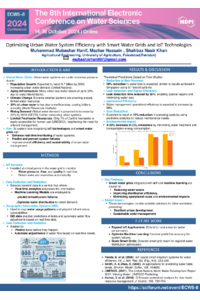
Smart Water Grids ~Poster.pdf
THE IMPACT OF CLIMATE CHANGES ON THE HYDROLOGICAL CONDITIONS IN THE ZARQA MAIN HYDROGRAPHIC BASIN (DEAD SEA)
Examining Extreme Temperature Events in Mainland Portugal: A Comprehensive Analysis with ERA5-Land Data