Event submissions
Published
This submission belongs to the session S3. Marine Diversity of the event The 3rd International Electronic Conference on Diversity
Published date
14 Oct, 2024
Academic Editor
'%3e%3cpath%20d='M12.6657%2010.9104C12.4185%2010.325%2012.0599%209.79327%2011.6097%209.34482C11.1609%208.89508%2010.6293%208.5365%2010.0442%208.28888C10.0389%208.28626%2010.0337%208.28495%2010.0285%208.28233C10.8446%207.69279%2011.3752%206.73249%2011.3752%205.64904C11.3752%203.8542%209.92103%202.39999%208.1262%202.39999C6.33136%202.39999%204.87715%203.8542%204.87715%205.64904C4.87715%206.73249%205.40774%207.69279%206.22393%208.28364C6.21869%208.28626%206.21345%208.28757%206.20821%208.29019C5.62129%208.5378%205.09463%208.89284%204.64265%209.34613C4.1929%209.79493%203.83432%2010.3266%203.58671%2010.9117C3.34345%2011.4845%203.21226%2012.0987%203.20023%2012.7209C3.19988%2012.7349%203.20233%2012.7488%203.20744%2012.7619C3.21255%2012.7749%203.22022%2012.7867%203.22998%2012.7968C3.23975%2012.8068%203.25142%2012.8147%203.26431%2012.8202C3.2772%2012.8256%203.29105%2012.8284%203.30504%2012.8284H4.09109C4.14874%2012.8284%204.19459%2012.7825%204.1959%2012.7262C4.2221%2011.7148%204.62823%2010.7676%205.34617%2010.0497C6.08899%209.30683%207.0755%208.89808%208.1262%208.89808C9.17689%208.89808%2010.1634%209.30683%2010.9062%2010.0497C11.6242%2010.7676%2012.0303%2011.7148%2012.0565%2012.7262C12.0578%2012.7838%2012.1037%2012.8284%2012.1613%2012.8284H12.9474C12.9613%2012.8284%2012.9752%2012.8256%2012.9881%2012.8202C13.001%2012.8147%2013.0126%2012.8068%2013.0224%2012.7968C13.0322%2012.7867%2013.0398%2012.7749%2013.0449%2012.7619C13.0501%2012.7488%2013.0525%2012.7349%2013.0522%2012.7209C13.0391%2012.0947%2012.9094%2011.4855%2012.6657%2010.9104ZM8.1262%207.9024C7.52486%207.9024%206.9589%207.6679%206.53312%207.24211C6.10733%206.81633%205.87283%206.25037%205.87283%205.64904C5.87283%205.0477%206.10733%204.48174%206.53312%204.05596C6.9589%203.63018%207.52486%203.39567%208.1262%203.39567C8.72753%203.39567%209.29349%203.63018%209.71927%204.05596C10.1451%204.48174%2010.3796%205.0477%2010.3796%205.64904C10.3796%206.25037%2010.1451%206.81633%209.71927%207.24211C9.29349%207.6679%208.72753%207.9024%208.1262%207.9024Z'%20fill='%235D1EE1'/%3e%3c/g%3e%3c/svg%3e) Paulo Vale
Paulo ValeCitation
Ana Sofia Lavrador, Inês Afonso, Paula Chainho, Ana Cristina Costa, João Paulo Medeiros, Manuela Isabel Parente, Paola Parretti, Pedro E. Vieira, Filipe Oliveira Costa, Sofia Duarte, Assessing Distribution Patterns of Non-Indigenous Invertebrates in Ten Marinas across Mainland Portugal, Madeira and Azores through DNA Metabarcoding, in Proceedings of The 3rd International Electronic Conference on Diversity, 15 October–17 October 2024, MDPI: Basel, Switzerland
Share
Email
Facebook
Twitter
LinkedIn
Assessing Distribution Patterns of Non-Indigenous Invertebrates in Ten Marinas across Mainland Portugal, Madeira and Azores through DNA Metabarcoding

Ana Sofia Lavrador 1,2
'%3e%3cpath%20d='M12.6647%2010.9104C12.4176%2010.325%2012.0589%209.7933%2011.6088%209.34485C11.16%208.89511%2010.6283%208.53653%2010.0432%208.28891C10.038%208.28629%2010.0327%208.28498%2010.0275%208.28236C10.8437%207.69282%2011.3743%206.73252%2011.3743%205.64907C11.3743%203.85423%209.92005%202.40002%208.12522%202.40002C6.33038%202.40002%204.87618%203.85423%204.87618%205.64907C4.87618%206.73252%205.40677%207.69282%206.22296%208.28367C6.21772%208.28629%206.21248%208.2876%206.20724%208.29022C5.62031%208.53783%205.09365%208.89287%204.64167%209.34616C4.19192%209.79496%203.83334%2010.3266%203.58573%2010.9117C3.34247%2011.4846%203.21128%2012.0987%203.19925%2012.721C3.1989%2012.735%203.20135%2012.7489%203.20646%2012.7619C3.21157%2012.7749%203.21924%2012.7868%203.22901%2012.7968C3.23877%2012.8068%203.25045%2012.8148%203.26334%2012.8202C3.27623%2012.8256%203.29007%2012.8284%203.30406%2012.8284H4.09012C4.14776%2012.8284%204.19362%2012.7825%204.19493%2012.7262C4.22113%2011.7148%204.62726%2010.7676%205.34519%2010.0497C6.08802%209.30686%207.07452%208.89811%208.12522%208.89811C9.17592%208.89811%2010.1624%209.30686%2010.9052%2010.0497C11.6232%2010.7676%2012.0293%2011.7148%2012.0555%2012.7262C12.0568%2012.7839%2012.1027%2012.8284%2012.1603%2012.8284H12.9464C12.9604%2012.8284%2012.9742%2012.8256%2012.9871%2012.8202C13%2012.8148%2013.0117%2012.8068%2013.0214%2012.7968C13.0312%2012.7868%2013.0389%2012.7749%2013.044%2012.7619C13.0491%2012.7489%2013.0515%2012.735%2013.0512%2012.721C13.0381%2012.0947%2012.9084%2011.4856%2012.6647%2010.9104ZM8.12522%207.90243C7.52388%207.90243%206.95792%207.66793%206.53214%207.24215C6.10636%206.81636%205.87185%206.2504%205.87185%205.64907C5.87185%205.04773%206.10636%204.48177%206.53214%204.05599C6.95792%203.63021%207.52388%203.3957%208.12522%203.3957C8.72655%203.3957%209.29252%203.63021%209.7183%204.05599C10.1441%204.48177%2010.3786%205.04773%2010.3786%205.64907C10.3786%206.2504%2010.1441%206.81636%209.7183%207.24215C9.29252%207.66793%208.72655%207.90243%208.12522%207.90243Z'%20fill='%235D1EE1'/%3e%3c/g%3e%3c/svg%3e)
Inês Afonso 3
Paula Chainho 3,4

Ana Cristina Costa 5,6,7
João Paulo Medeiros 3
Manuela Isabel Parente 5,6,7
Paola Parretti 8

Pedro E. Vieira 1,2

Filipe Oliveira Costa 1,2

Sofia Duarte 1,2
1. Centre of Molecular and Environmental Biology (CBMA) and ARNET-Aquatic Research Network, Department of Biology, University of Minho, Campus de Gualtar, 4710-057 Braga, Portugal
2. Institute of Science and Innovation for Bio-Sustainability (IB-S), University of Minho, Campus de Gualtar, 4710-057, Braga, Portugal
3. MARE - Marine and Environmental Sciences Centre/ARNET - Aquatic Research Network, Faculdade de Ciências da Universidade de Lisboa (FCUL), Lisboa, Portugal
4. Polytechnic Institute of Setúbal, Estefanilha, 2910-761 Setúbal, Portugal
5. Faculty of Sciences and Technology, University of the Azores, Ponta Delgada, Portugal
6. CIBIO—Research Centre in Biodiversity and Genetic Resources/InBIO Associate Laboratory and BIOPOLIS Program in Genomics, Biodiversity and Land Planning
7. UNESCO Chair – Land Within Sea: Biodiversity & Sustainability in Atlantic Islands
8. MARE – Marine and Environmental Sciences Centre / ARNET – Aquatic Research Network, Agência Regional para o Desenvolvimento da Investigação Tecnologia e Inovação (ARDITI), Universidade da Madeira (UMa), Funchal, Madeira, Portugal
Abstract
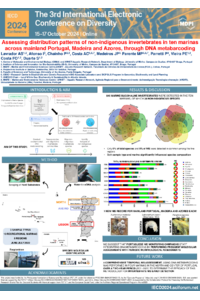
Non-indigenous species (NIS) pose significant threats to coastal ecosystems, causing ecological imbalances and biodiversity loss. Effective monitoring and management strategies are essential to mitigate these impacts, particularly in marinas and ports, which are crucial entry points for NIS due to shipping. This study assessed the spatial distribution of marine invertebrate fauna, particularly NIS, in 10 recreational marinas in Portugal (6 on the mainland and 2 each in Madeira and Azores) using DNA metabarcoding. Samples were collected from hard substrates, water and zooplankton in a single time-point survey in June and July 2020. Using the mitochondrial cytochrome c oxidase subunit I (COI) and the small subunit 18S rRNA gene (18S) markers, a total of 645 species, including 38 NIS, were detected. Only 5% of species and 5% of NIS were common to all marinas. The highest species richness was observed in the mainland North marinas, while Madeira exhibited the lowest richness. Ponta Delgada (Azores) recorded the highest number of NIS (15), whereas Madeira’s marinas recorded the lowest (7 and 9). Species richness and taxonomic composition varied with sample type. A Principal Coordinate Analysis (PCoA) revealed three distinct groups: (1) North and Aveiro (mainland); (2) Lisbon (mainland); and (3) Madeira and the Azores. A PERMANOVA supported the theory that both sample type and marina significantly influenced species composition [P(perm) = 0.001]. A comparison of the 38 NIS detected in this study, with the 2020 national NIS lists, revealed regional differences and spotted species that were not previously considered NIS but are now recognized as such: eight NIS in mainland Portugal, two in Madeira and two in Azores. This study provides valuable insights into the distribution of NIS and marine invertebrate fauna in Portuguese recreational marinas, while highlighting the efficacy of DNA metabarcoding for assessing spatial variability in invertebrate communities and supporting NIS surveillance programs.
Keywords
Non-indigenous species
DNA metabarcoding
marine invertebrates
spatial assessment
Portugal
Poster
IECD_poster_AnaLavrador.pdf
Zooplankton in the surf zone and adjacent shallow subtidal waters: Differences in community patterns between close seascapes.
Wind-Induced Changes in Zooplankton Diversity in a Temperate Sandy Beach Surf Zone: A preliminary methodology using Neutral red staining