Event submissions
Published
This submission belongs to the session S6. Plant Diversity of the event The 3rd International Electronic Conference on Diversity
Published date
15 Oct, 2024
Academic Editor
'%3e%3cpath%20d='M12.6657%2010.9104C12.4185%2010.325%2012.0599%209.79327%2011.6097%209.34482C11.1609%208.89508%2010.6293%208.5365%2010.0442%208.28888C10.0389%208.28626%2010.0337%208.28495%2010.0285%208.28233C10.8446%207.69279%2011.3752%206.73249%2011.3752%205.64904C11.3752%203.8542%209.92103%202.39999%208.1262%202.39999C6.33136%202.39999%204.87715%203.8542%204.87715%205.64904C4.87715%206.73249%205.40774%207.69279%206.22393%208.28364C6.21869%208.28626%206.21345%208.28757%206.20821%208.29019C5.62129%208.5378%205.09463%208.89284%204.64265%209.34613C4.1929%209.79493%203.83432%2010.3266%203.58671%2010.9117C3.34345%2011.4845%203.21226%2012.0987%203.20023%2012.7209C3.19988%2012.7349%203.20233%2012.7488%203.20744%2012.7619C3.21255%2012.7749%203.22022%2012.7867%203.22998%2012.7968C3.23975%2012.8068%203.25142%2012.8147%203.26431%2012.8202C3.2772%2012.8256%203.29105%2012.8284%203.30504%2012.8284H4.09109C4.14874%2012.8284%204.19459%2012.7825%204.1959%2012.7262C4.2221%2011.7148%204.62823%2010.7676%205.34617%2010.0497C6.08899%209.30683%207.0755%208.89808%208.1262%208.89808C9.17689%208.89808%2010.1634%209.30683%2010.9062%2010.0497C11.6242%2010.7676%2012.0303%2011.7148%2012.0565%2012.7262C12.0578%2012.7838%2012.1037%2012.8284%2012.1613%2012.8284H12.9474C12.9613%2012.8284%2012.9752%2012.8256%2012.9881%2012.8202C13.001%2012.8147%2013.0126%2012.8068%2013.0224%2012.7968C13.0322%2012.7867%2013.0398%2012.7749%2013.0449%2012.7619C13.0501%2012.7488%2013.0525%2012.7349%2013.0522%2012.7209C13.0391%2012.0947%2012.9094%2011.4855%2012.6657%2010.9104ZM8.1262%207.9024C7.52486%207.9024%206.9589%207.6679%206.53312%207.24211C6.10733%206.81633%205.87283%206.25037%205.87283%205.64904C5.87283%205.0477%206.10733%204.48174%206.53312%204.05596C6.9589%203.63018%207.52486%203.39567%208.1262%203.39567C8.72753%203.39567%209.29349%203.63018%209.71927%204.05596C10.1451%204.48174%2010.3796%205.0477%2010.3796%205.64904C10.3796%206.25037%2010.1451%206.81633%209.71927%207.24211C9.29349%207.6679%208.72753%207.9024%208.1262%207.9024Z'%20fill='%235D1EE1'/%3e%3c/g%3e%3c/svg%3e) Mario A. Pagnotta
Mario A. PagnottaCitation
Hasnae Ben sbih, Salama EL FATEHI, Soufian CHAKKOUR, Mohammed ATER, Younes HMIMSA, Neglected genetic resources: gathered food plants in the urban markets of North-West Morocco, in Proceedings of The 3rd International Electronic Conference on Diversity, 15 October–17 October 2024, MDPI: Basel, Switzerland
Share
Email
Facebook
Twitter
LinkedIn
Neglected genetic resources: gathered food plants in the urban markets of North-West Morocco
'%3e%3cpath%20d='M12.6647%2010.9104C12.4176%2010.325%2012.0589%209.7933%2011.6088%209.34485C11.16%208.89511%2010.6283%208.53653%2010.0432%208.28891C10.038%208.28629%2010.0327%208.28498%2010.0275%208.28236C10.8437%207.69282%2011.3743%206.73252%2011.3743%205.64907C11.3743%203.85423%209.92005%202.40002%208.12522%202.40002C6.33038%202.40002%204.87618%203.85423%204.87618%205.64907C4.87618%206.73252%205.40677%207.69282%206.22296%208.28367C6.21772%208.28629%206.21248%208.2876%206.20724%208.29022C5.62031%208.53783%205.09365%208.89287%204.64167%209.34616C4.19192%209.79496%203.83334%2010.3266%203.58573%2010.9117C3.34247%2011.4846%203.21128%2012.0987%203.19925%2012.721C3.1989%2012.735%203.20135%2012.7489%203.20646%2012.7619C3.21157%2012.7749%203.21924%2012.7868%203.22901%2012.7968C3.23877%2012.8068%203.25045%2012.8148%203.26334%2012.8202C3.27623%2012.8256%203.29007%2012.8284%203.30406%2012.8284H4.09012C4.14776%2012.8284%204.19362%2012.7825%204.19493%2012.7262C4.22113%2011.7148%204.62726%2010.7676%205.34519%2010.0497C6.08802%209.30686%207.07452%208.89811%208.12522%208.89811C9.17592%208.89811%2010.1624%209.30686%2010.9052%2010.0497C11.6232%2010.7676%2012.0293%2011.7148%2012.0555%2012.7262C12.0568%2012.7839%2012.1027%2012.8284%2012.1603%2012.8284H12.9464C12.9604%2012.8284%2012.9742%2012.8256%2012.9871%2012.8202C13%2012.8148%2013.0117%2012.8068%2013.0214%2012.7968C13.0312%2012.7868%2013.0389%2012.7749%2013.044%2012.7619C13.0491%2012.7489%2013.0515%2012.735%2013.0512%2012.721C13.0381%2012.0947%2012.9084%2011.4856%2012.6647%2010.9104ZM8.12522%207.90243C7.52388%207.90243%206.95792%207.66793%206.53214%207.24215C6.10636%206.81636%205.87185%206.2504%205.87185%205.64907C5.87185%205.04773%206.10636%204.48177%206.53214%204.05599C6.95792%203.63021%207.52388%203.3957%208.12522%203.3957C8.72655%203.3957%209.29252%203.63021%209.7183%204.05599C10.1441%204.48177%2010.3786%205.04773%2010.3786%205.64907C10.3786%206.2504%2010.1441%206.81636%209.7183%207.24215C9.29252%207.66793%208.72655%207.90243%208.12522%207.90243Z'%20fill='%235D1EE1'/%3e%3c/g%3e%3c/svg%3e)
Hasnae Ben sbih 1
Salama EL FATEHI 1
Soufian CHAKKOUR 2
Mohammed ATER 2
Younes HMIMSA 1
1. TEDAEEP Team Research, Polydisciplinary Faculty of Larache (FPL), University of AbdelmalekEssaâdi, Larache (Morocco).
2. Faculty of Sciences, University of AbdelmalekEssaâdi, Tetouan (Morocco).
Abstract
Wild edible plants are species that naturally grow and reproduce in their native habitats without cultivation. Humans have harvested these plants since ancient times, and they have long been integral to traditional diets and food systems. Beyond their food and economic value, these plants also possess significant socio-cultural value, particularly in preserving traditional knowledge. This study was conducted in the Tingitan Peninsula region of Northern Morocco to compile and evaluate the existing ethnobotanical knowledge on wild edible plants sold by women vendors in local markets and traditionally used for human consumption. Out of the 728 women vendors interviewed in this study, 48% were aged between 18 and 49 years, while 28% were between 50 and 59 years old. Regarding socio-economic status, 76% of the women were married, 11% were widowed, 9% were unmarried, and 4% were divorced. In terms of education, 80% of the vendors had not attended school for various reasons, including societal attitudes, household and grazing responsibilities, early marriage, and poverty. The remaining 20% had a primary level of education. A total of 728 interviews were conducted across 13 open-air markets, utilizing semi-structured questionnaires for data collection. Two types of data were collected: socio-economic information from the informants and details about their traditional knowledge and consumption of wild edible plants. Our findings identified 52 consumed species across 23 botanical families, with Asteraceae and Lamiaceae being the most prominent. Most of these plants (68%) are considered weeds and are harvested from cultivated fields, while the remaining 32% are collected from natural habitats. The study also highlighted the diverse consumption methods, categorizing the species into four forms: fruit (17%), vegetable (59%), salad (12%), and condiments (12%). Given the commercial and cultural significance of these species, preserving both their genetic resources and the associated traditional knowledge is crucial.
Keywords
Wild edible plants
local knowledge
ethnobotany
genetic resources
Morocco
Tingitan peninsula
Poster
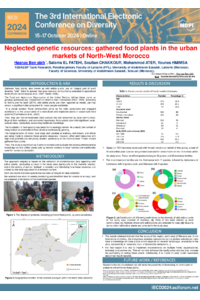
Hasnae IECD poster template_HB.pdf
New data on the amphipod fauna of the hydrothermally active submarine Piip Volcano (Bering Sea)
A new deep-sea phoronid species from the Okhotsk Sea basin