Event submissions
Published
This submission belongs to the session S4. Microbial Diversity and Culture Collections of the event The 3rd International Electronic Conference on Diversity
Published date
15 Oct, 2024
Academic Editor
'%3e%3cpath%20d='M12.6657%2010.9104C12.4185%2010.325%2012.0599%209.79327%2011.6097%209.34482C11.1609%208.89508%2010.6293%208.5365%2010.0442%208.28888C10.0389%208.28626%2010.0337%208.28495%2010.0285%208.28233C10.8446%207.69279%2011.3752%206.73249%2011.3752%205.64904C11.3752%203.8542%209.92103%202.39999%208.1262%202.39999C6.33136%202.39999%204.87715%203.8542%204.87715%205.64904C4.87715%206.73249%205.40774%207.69279%206.22393%208.28364C6.21869%208.28626%206.21345%208.28757%206.20821%208.29019C5.62129%208.5378%205.09463%208.89284%204.64265%209.34613C4.1929%209.79493%203.83432%2010.3266%203.58671%2010.9117C3.34345%2011.4845%203.21226%2012.0987%203.20023%2012.7209C3.19988%2012.7349%203.20233%2012.7488%203.20744%2012.7619C3.21255%2012.7749%203.22022%2012.7867%203.22998%2012.7968C3.23975%2012.8068%203.25142%2012.8147%203.26431%2012.8202C3.2772%2012.8256%203.29105%2012.8284%203.30504%2012.8284H4.09109C4.14874%2012.8284%204.19459%2012.7825%204.1959%2012.7262C4.2221%2011.7148%204.62823%2010.7676%205.34617%2010.0497C6.08899%209.30683%207.0755%208.89808%208.1262%208.89808C9.17689%208.89808%2010.1634%209.30683%2010.9062%2010.0497C11.6242%2010.7676%2012.0303%2011.7148%2012.0565%2012.7262C12.0578%2012.7838%2012.1037%2012.8284%2012.1613%2012.8284H12.9474C12.9613%2012.8284%2012.9752%2012.8256%2012.9881%2012.8202C13.001%2012.8147%2013.0126%2012.8068%2013.0224%2012.7968C13.0322%2012.7867%2013.0398%2012.7749%2013.0449%2012.7619C13.0501%2012.7488%2013.0525%2012.7349%2013.0522%2012.7209C13.0391%2012.0947%2012.9094%2011.4855%2012.6657%2010.9104ZM8.1262%207.9024C7.52486%207.9024%206.9589%207.6679%206.53312%207.24211C6.10733%206.81633%205.87283%206.25037%205.87283%205.64904C5.87283%205.0477%206.10733%204.48174%206.53312%204.05596C6.9589%203.63018%207.52486%203.39567%208.1262%203.39567C8.72753%203.39567%209.29349%203.63018%209.71927%204.05596C10.1451%204.48174%2010.3796%205.0477%2010.3796%205.64904C10.3796%206.25037%2010.1451%206.81633%209.71927%207.24211C9.29349%207.6679%208.72753%207.9024%208.1262%207.9024Z'%20fill='%235D1EE1'/%3e%3c/g%3e%3c/svg%3e) Samantha Karunarathna
Samantha KarunarathnaCitation
Nataliia Tkachuk, Liubov Zelena, Yaroslav Novikov, The Microbial diversity of the surfaces of wet wipes that have become trash: a mini review, in Proceedings of The 3rd International Electronic Conference on Diversity, 15 October–17 October 2024, MDPI: Basel, Switzerland
Share
Email
Facebook
Twitter
LinkedIn
The Microbial diversity of the surfaces of wet wipes that have become trash: a mini review
'%3e%3cpath%20d='M12.6647%2010.9104C12.4176%2010.325%2012.0589%209.7933%2011.6088%209.34485C11.16%208.89511%2010.6283%208.53653%2010.0432%208.28891C10.038%208.28629%2010.0327%208.28498%2010.0275%208.28236C10.8437%207.69282%2011.3743%206.73252%2011.3743%205.64907C11.3743%203.85423%209.92005%202.40002%208.12522%202.40002C6.33038%202.40002%204.87618%203.85423%204.87618%205.64907C4.87618%206.73252%205.40677%207.69282%206.22296%208.28367C6.21772%208.28629%206.21248%208.2876%206.20724%208.29022C5.62031%208.53783%205.09365%208.89287%204.64167%209.34616C4.19192%209.79496%203.83334%2010.3266%203.58573%2010.9117C3.34247%2011.4846%203.21128%2012.0987%203.19925%2012.721C3.1989%2012.735%203.20135%2012.7489%203.20646%2012.7619C3.21157%2012.7749%203.21924%2012.7868%203.22901%2012.7968C3.23877%2012.8068%203.25045%2012.8148%203.26334%2012.8202C3.27623%2012.8256%203.29007%2012.8284%203.30406%2012.8284H4.09012C4.14776%2012.8284%204.19362%2012.7825%204.19493%2012.7262C4.22113%2011.7148%204.62726%2010.7676%205.34519%2010.0497C6.08802%209.30686%207.07452%208.89811%208.12522%208.89811C9.17592%208.89811%2010.1624%209.30686%2010.9052%2010.0497C11.6232%2010.7676%2012.0293%2011.7148%2012.0555%2012.7262C12.0568%2012.7839%2012.1027%2012.8284%2012.1603%2012.8284H12.9464C12.9604%2012.8284%2012.9742%2012.8256%2012.9871%2012.8202C13%2012.8148%2013.0117%2012.8068%2013.0214%2012.7968C13.0312%2012.7868%2013.0389%2012.7749%2013.044%2012.7619C13.0491%2012.7489%2013.0515%2012.735%2013.0512%2012.721C13.0381%2012.0947%2012.9084%2011.4856%2012.6647%2010.9104ZM8.12522%207.90243C7.52388%207.90243%206.95792%207.66793%206.53214%207.24215C6.10636%206.81636%205.87185%206.2504%205.87185%205.64907C5.87185%205.04773%206.10636%204.48177%206.53214%204.05599C6.95792%203.63021%207.52388%203.3957%208.12522%203.3957C8.72655%203.3957%209.29252%203.63021%209.7183%204.05599C10.1441%204.48177%2010.3786%205.04773%2010.3786%205.64907C10.3786%206.2504%2010.1441%206.81636%209.7183%207.24215C9.29252%207.66793%208.72655%207.90243%208.12522%207.90243Z'%20fill='%235D1EE1'/%3e%3c/g%3e%3c/svg%3e)
Nataliia Tkachuk 1
Liubov Zelena 2,3
Yaroslav Novikov 4
1. Department of Biology, Faculty of Mathematics and Natural Sciences, T.H. Shevchenko National University “Chernihiv Colehium”, 14013 Chernihiv, Ukraine
2. Department of Virus Reproduction, Danylo Zabolotny Institute Microbiology and Virology NAS of Ukraine, Kyiv, Ukraine
3. Department of Biotechnology, Leather and Fur of the Kyiv National University of Technologies and Design, Kyiv, Ukraine
4. Department of Biology, T.H. Shevchenko National University “Chernihiv Colehium”
Abstract
The problem of researching the microbial biodiversity of the surfaces of wet wipes that have become garbage is gaining relevance due to the increased global consumption of wet wipes and the development of biotechnological approaches to waste processing. Therefore, the purpose of this study was to analyze data from the literature regarding the variety of types of micro-organisms that were isolated from the surface of the material of wet wipes and the potential possibilities of their use as biodestructors in the biotechnological process of disposal and utilization of these wastes. The methods of theoretical research based on available information, analysis of scientific and methodical sources on this problem, the empirical method of accumulating facts, and the method of argumentation for proving one's own judgments were used. The existence of micro-organisms on the surface of the material of wet wipes was considered, focusing on their ability to form a biofilm. It was shown that the microbiota of the surface/biofilm of the material of wet wipes is mainly characterized by representatives of heterotrophic micro-organisms that are involved in the cycles of Carbon, Nitrogen, and Phosphorus. At the same time, the topic of microbial biodiversity of the surface of wet wipes which have become garbage is rarely studied and is only investigated in a few publications. Currently, the involvement of active bacteria destructors in the processes of the disposal of wet wipes is an eco-friendly way of eliminating environmental pollution by these man-made products. Further research should focus on both the analysis of the total microbial biodiversity of the surface/biofilm microbiota of wet wipes and on the anaerobic representatives, in particular sulfate-reducing bacteria, such as those involved in the biogeochemical cycle of Sulfur.
Keywords
materials biodegradation
biofilm
microbial diversity
nonwoven
wet wipe
Poster
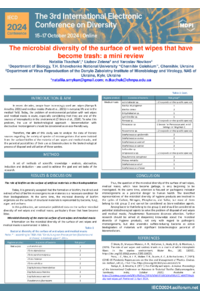
097980-Poster-Tkachuk_Zelena_Novikov_Wet wipes-Diversity.pdf
The Morphological and genetic diversity of species from the genus Monocelis (Platyhelminthes: Proseriata) in the littoral zone of the White Sea
Honey is a natural postbiotic product and source for beneficial microorganisms