Event submissions
Published
This submission belongs to the session S8. Food Quality and Safety of the event The 5th International Electronic Conference on Foods
Published date
25 Oct, 2024
Academic Editor
'%3e%3cpath%20d='M12.6657%2010.9104C12.4185%2010.325%2012.0599%209.79327%2011.6097%209.34482C11.1609%208.89508%2010.6293%208.5365%2010.0442%208.28888C10.0389%208.28626%2010.0337%208.28495%2010.0285%208.28233C10.8446%207.69279%2011.3752%206.73249%2011.3752%205.64904C11.3752%203.8542%209.92103%202.39999%208.1262%202.39999C6.33136%202.39999%204.87715%203.8542%204.87715%205.64904C4.87715%206.73249%205.40774%207.69279%206.22393%208.28364C6.21869%208.28626%206.21345%208.28757%206.20821%208.29019C5.62129%208.5378%205.09463%208.89284%204.64265%209.34613C4.1929%209.79493%203.83432%2010.3266%203.58671%2010.9117C3.34345%2011.4845%203.21226%2012.0987%203.20023%2012.7209C3.19988%2012.7349%203.20233%2012.7488%203.20744%2012.7619C3.21255%2012.7749%203.22022%2012.7867%203.22998%2012.7968C3.23975%2012.8068%203.25142%2012.8147%203.26431%2012.8202C3.2772%2012.8256%203.29105%2012.8284%203.30504%2012.8284H4.09109C4.14874%2012.8284%204.19459%2012.7825%204.1959%2012.7262C4.2221%2011.7148%204.62823%2010.7676%205.34617%2010.0497C6.08899%209.30683%207.0755%208.89808%208.1262%208.89808C9.17689%208.89808%2010.1634%209.30683%2010.9062%2010.0497C11.6242%2010.7676%2012.0303%2011.7148%2012.0565%2012.7262C12.0578%2012.7838%2012.1037%2012.8284%2012.1613%2012.8284H12.9474C12.9613%2012.8284%2012.9752%2012.8256%2012.9881%2012.8202C13.001%2012.8147%2013.0126%2012.8068%2013.0224%2012.7968C13.0322%2012.7867%2013.0398%2012.7749%2013.0449%2012.7619C13.0501%2012.7488%2013.0525%2012.7349%2013.0522%2012.7209C13.0391%2012.0947%2012.9094%2011.4855%2012.6657%2010.9104ZM8.1262%207.9024C7.52486%207.9024%206.9589%207.6679%206.53312%207.24211C6.10733%206.81633%205.87283%206.25037%205.87283%205.64904C5.87283%205.0477%206.10733%204.48174%206.53312%204.05596C6.9589%203.63018%207.52486%203.39567%208.1262%203.39567C8.72753%203.39567%209.29349%203.63018%209.71927%204.05596C10.1451%204.48174%2010.3796%205.0477%2010.3796%205.64904C10.3796%206.25037%2010.1451%206.81633%209.71927%207.24211C9.29349%207.6679%208.72753%207.9024%208.1262%207.9024Z'%20fill='%235D1EE1'/%3e%3c/g%3e%3c/svg%3e) Antonello Santini
Antonello SantiniCitation
Oluchi Judith Osuala, Favour Osamudiamen Oamen, Chinyere Constance Ezemba, Chukwuma Chukwuemeka Chukwuma, Charles Okeke Nnadi, Angus Nnamdi Oli, Paschal Ikeobi Ezemba, Microbial Contamination and Antibiotic Susceptibility of Local Drinks in Elele Town Rivers State: Nigeria, in Proceedings of The 5th International Electronic Conference on Foods, 28 October–30 October 2024, MDPI: Basel, Switzerland
Share
Email
Facebook
Twitter
LinkedIn
Microbial Contamination and Antibiotic Susceptibility of Local Drinks in Elele Town Rivers State: Nigeria
'%3e%3cpath%20d='M12.6647%2010.9104C12.4176%2010.325%2012.0589%209.7933%2011.6088%209.34485C11.16%208.89511%2010.6283%208.53653%2010.0432%208.28891C10.038%208.28629%2010.0327%208.28498%2010.0275%208.28236C10.8437%207.69282%2011.3743%206.73252%2011.3743%205.64907C11.3743%203.85423%209.92005%202.40002%208.12522%202.40002C6.33038%202.40002%204.87618%203.85423%204.87618%205.64907C4.87618%206.73252%205.40677%207.69282%206.22296%208.28367C6.21772%208.28629%206.21248%208.2876%206.20724%208.29022C5.62031%208.53783%205.09365%208.89287%204.64167%209.34616C4.19192%209.79496%203.83334%2010.3266%203.58573%2010.9117C3.34247%2011.4846%203.21128%2012.0987%203.19925%2012.721C3.1989%2012.735%203.20135%2012.7489%203.20646%2012.7619C3.21157%2012.7749%203.21924%2012.7868%203.22901%2012.7968C3.23877%2012.8068%203.25045%2012.8148%203.26334%2012.8202C3.27623%2012.8256%203.29007%2012.8284%203.30406%2012.8284H4.09012C4.14776%2012.8284%204.19362%2012.7825%204.19493%2012.7262C4.22113%2011.7148%204.62726%2010.7676%205.34519%2010.0497C6.08802%209.30686%207.07452%208.89811%208.12522%208.89811C9.17592%208.89811%2010.1624%209.30686%2010.9052%2010.0497C11.6232%2010.7676%2012.0293%2011.7148%2012.0555%2012.7262C12.0568%2012.7839%2012.1027%2012.8284%2012.1603%2012.8284H12.9464C12.9604%2012.8284%2012.9742%2012.8256%2012.9871%2012.8202C13%2012.8148%2013.0117%2012.8068%2013.0214%2012.7968C13.0312%2012.7868%2013.0389%2012.7749%2013.044%2012.7619C13.0491%2012.7489%2013.0515%2012.735%2013.0512%2012.721C13.0381%2012.0947%2012.9084%2011.4856%2012.6647%2010.9104ZM8.12522%207.90243C7.52388%207.90243%206.95792%207.66793%206.53214%207.24215C6.10636%206.81636%205.87185%206.2504%205.87185%205.64907C5.87185%205.04773%206.10636%204.48177%206.53214%204.05599C6.95792%203.63021%207.52388%203.3957%208.12522%203.3957C8.72655%203.3957%209.29252%203.63021%209.7183%204.05599C10.1441%204.48177%2010.3786%205.04773%2010.3786%205.64907C10.3786%206.2504%2010.1441%206.81636%209.7183%207.24215C9.29252%207.66793%208.72655%207.90243%208.12522%207.90243Z'%20fill='%235D1EE1'/%3e%3c/g%3e%3c/svg%3e)
Oluchi Judith Osuala 1
Favour Osamudiamen Oamen 2
Chinyere Constance Ezemba 3
Chukwuma Chukwuemeka Chukwuma 4

Charles Okeke Nnadi 5
Angus Nnamdi Oli 6
Paschal Ikeobi Ezemba 7
1. Department of Pharmaceutical Microbiology and Biotechnology, Faculty of Pharmacy, Madonna University, Elele, Rivers State, Nigeria, 511101, Nigeria
2. Department of pharmaceutical microbiology and biotechnology, Madonna University Elele Rivers State Nigeria
3. Microbiology, Chychy Gilgal laboratory and consultancy services, Ichida Anambra State Nigeria
4. Department of biochemistry, Madonna University Elele Rivers State Nigeria
5. Department of Pharmaceutical Chemistry, University of Nigeria Nsukka Nigeria
6. Department of pharmaceutical microbiology and biotechnology, Nnamdi Azikiwe University Awka Anambra State Nigeria
7. Chukwuemeka Odumegwu Ojukwu University Uli, Anambra State
Abstract
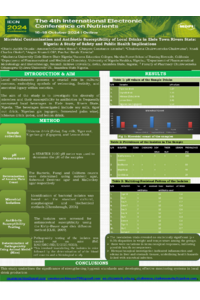
Introduction: Local refreshments are crucial in cultural customs, embodying symbols of festivity and ancestral legacy within societies.
Aim: This study investigated the diversity of microbes and their susceptibility to antibiotics in frequently consumed local beverages in Elele town, Rivers State, Nigeria. The beverages include soy milk, tiger nut drink, Nigerian gin (ogogoro, fermented palm wine), hibiscus drink (zobo), and lemon drink.
Method: This study extracted and isolated viable aerobic microbiological contaminants from the analyzed drinks. The antibiotic susceptibility of these contaminants was then evaluated using an agar well diffusion experiment. Pathogenicity testing of the isolates was carried out on mice with the approval of the Ethical Committee (Ref: MAU/DRC/HD/E/2023/0350). This involved inoculating the isolates in mice followed by the determination of white blood cell counts and a histological study.
Results: The analysis showed that the drinks had a pH range of 3 to 5. The viable bacteria counts ranged from 990 CFU/mL (for lemon drink) to 247 CFU/mL (for Nigerian gin). Only the tiger nut drink displayed a fungal count of 500 CFU/mL. There was no coliform present in any of the drink samples. The most common isolates were Staphylococcus aureus (100%), Bacillus spp. (80%), Shigella spp. (40%), and Candida spp. (20%). Antimicrobial susceptibility tests revealed different resistance levels, with certain isolates showing resistance to multiple drugs. The Multiple Antibiotic Resistant Index (MARI) values suggested a high prevalence of resistance to multiple antibiotics. The inoculation trials revealed no statistically significant (p < 0.05) disparities in weight and temperature among the groups. However, there were variations in immunological responses, indicating possible health consequences. Histopathological investigation indicated inflammation and edema in liver and stomach tissues, underlining health hazards linked with microbial infection.
Conclusion: This study underlines the significance of strengthening hygienic standards and developing effective monitoring systems in local drink production.
Keywords
Local drinks
pathogenicity
Multiple Antibiotic Resistant Index
Histopathology
Immunology
Poster
Favor abstract poster.pdf
The Determination of calcium, magnesium and phosphorus intake in the Cuban population through the first Total Diet Study
Enhancing Eco-Efficiency in Northern Spain's Fishing Sector: Integrating the water–energy–food nexus and DEA+LCA methodology