Event submissions
Published
This submission belongs to the session S3. Sustainable Food Security and Food System of the event The 5th International Electronic Conference on Foods
Published date
25 Oct, 2024
Academic Editor
'%3e%3cpath%20d='M12.6657%2010.9104C12.4185%2010.325%2012.0599%209.79327%2011.6097%209.34482C11.1609%208.89508%2010.6293%208.5365%2010.0442%208.28888C10.0389%208.28626%2010.0337%208.28495%2010.0285%208.28233C10.8446%207.69279%2011.3752%206.73249%2011.3752%205.64904C11.3752%203.8542%209.92103%202.39999%208.1262%202.39999C6.33136%202.39999%204.87715%203.8542%204.87715%205.64904C4.87715%206.73249%205.40774%207.69279%206.22393%208.28364C6.21869%208.28626%206.21345%208.28757%206.20821%208.29019C5.62129%208.5378%205.09463%208.89284%204.64265%209.34613C4.1929%209.79493%203.83432%2010.3266%203.58671%2010.9117C3.34345%2011.4845%203.21226%2012.0987%203.20023%2012.7209C3.19988%2012.7349%203.20233%2012.7488%203.20744%2012.7619C3.21255%2012.7749%203.22022%2012.7867%203.22998%2012.7968C3.23975%2012.8068%203.25142%2012.8147%203.26431%2012.8202C3.2772%2012.8256%203.29105%2012.8284%203.30504%2012.8284H4.09109C4.14874%2012.8284%204.19459%2012.7825%204.1959%2012.7262C4.2221%2011.7148%204.62823%2010.7676%205.34617%2010.0497C6.08899%209.30683%207.0755%208.89808%208.1262%208.89808C9.17689%208.89808%2010.1634%209.30683%2010.9062%2010.0497C11.6242%2010.7676%2012.0303%2011.7148%2012.0565%2012.7262C12.0578%2012.7838%2012.1037%2012.8284%2012.1613%2012.8284H12.9474C12.9613%2012.8284%2012.9752%2012.8256%2012.9881%2012.8202C13.001%2012.8147%2013.0126%2012.8068%2013.0224%2012.7968C13.0322%2012.7867%2013.0398%2012.7749%2013.0449%2012.7619C13.0501%2012.7488%2013.0525%2012.7349%2013.0522%2012.7209C13.0391%2012.0947%2012.9094%2011.4855%2012.6657%2010.9104ZM8.1262%207.9024C7.52486%207.9024%206.9589%207.6679%206.53312%207.24211C6.10733%206.81633%205.87283%206.25037%205.87283%205.64904C5.87283%205.0477%206.10733%204.48174%206.53312%204.05596C6.9589%203.63018%207.52486%203.39567%208.1262%203.39567C8.72753%203.39567%209.29349%203.63018%209.71927%204.05596C10.1451%204.48174%2010.3796%205.0477%2010.3796%205.64904C10.3796%206.25037%2010.1451%206.81633%209.71927%207.24211C9.29349%207.6679%208.72753%207.9024%208.1262%207.9024Z'%20fill='%235D1EE1'/%3e%3c/g%3e%3c/svg%3e) Theodoros Varzakas
Theodoros VarzakasCitation
Teodor Ioan Trasca, Ioana Mihaela Balan, Nicoleta Mateoc-Sirb, Sustainable Food Security in Romania and Neighboring Countries: Trends, Challenges, and Solutions, in Proceedings of The 5th International Electronic Conference on Foods, 28 October–30 October 2024, MDPI: Basel, Switzerland
Share
Email
Facebook
Twitter
LinkedIn
Sustainable Food Security in Romania and Neighboring Countries: Trends, Challenges, and Solutions
'%3e%3cpath%20d='M12.6647%2010.9104C12.4176%2010.325%2012.0589%209.7933%2011.6088%209.34485C11.16%208.89511%2010.6283%208.53653%2010.0432%208.28891C10.038%208.28629%2010.0327%208.28498%2010.0275%208.28236C10.8437%207.69282%2011.3743%206.73252%2011.3743%205.64907C11.3743%203.85423%209.92005%202.40002%208.12522%202.40002C6.33038%202.40002%204.87618%203.85423%204.87618%205.64907C4.87618%206.73252%205.40677%207.69282%206.22296%208.28367C6.21772%208.28629%206.21248%208.2876%206.20724%208.29022C5.62031%208.53783%205.09365%208.89287%204.64167%209.34616C4.19192%209.79496%203.83334%2010.3266%203.58573%2010.9117C3.34247%2011.4846%203.21128%2012.0987%203.19925%2012.721C3.1989%2012.735%203.20135%2012.7489%203.20646%2012.7619C3.21157%2012.7749%203.21924%2012.7868%203.22901%2012.7968C3.23877%2012.8068%203.25045%2012.8148%203.26334%2012.8202C3.27623%2012.8256%203.29007%2012.8284%203.30406%2012.8284H4.09012C4.14776%2012.8284%204.19362%2012.7825%204.19493%2012.7262C4.22113%2011.7148%204.62726%2010.7676%205.34519%2010.0497C6.08802%209.30686%207.07452%208.89811%208.12522%208.89811C9.17592%208.89811%2010.1624%209.30686%2010.9052%2010.0497C11.6232%2010.7676%2012.0293%2011.7148%2012.0555%2012.7262C12.0568%2012.7839%2012.1027%2012.8284%2012.1603%2012.8284H12.9464C12.9604%2012.8284%2012.9742%2012.8256%2012.9871%2012.8202C13%2012.8148%2013.0117%2012.8068%2013.0214%2012.7968C13.0312%2012.7868%2013.0389%2012.7749%2013.044%2012.7619C13.0491%2012.7489%2013.0515%2012.735%2013.0512%2012.721C13.0381%2012.0947%2012.9084%2011.4856%2012.6647%2010.9104ZM8.12522%207.90243C7.52388%207.90243%206.95792%207.66793%206.53214%207.24215C6.10636%206.81636%205.87185%206.2504%205.87185%205.64907C5.87185%205.04773%206.10636%204.48177%206.53214%204.05599C6.95792%203.63021%207.52388%203.3957%208.12522%203.3957C8.72655%203.3957%209.29252%203.63021%209.7183%204.05599C10.1441%204.48177%2010.3786%205.04773%2010.3786%205.64907C10.3786%206.2504%2010.1441%206.81636%209.7183%207.24215C9.29252%207.66793%208.72655%207.90243%208.12522%207.90243Z'%20fill='%235D1EE1'/%3e%3c/g%3e%3c/svg%3e)
Teodor Ioan Trasca 1,2

Ioana Mihaela Balan 2

Nicoleta Mateoc-Sirb 2,3
1. University of Agronomic Sciences and Veterinary Medicine of Bucharest, 011464 Bucharest, Romania
2. University of Life Sciences “King Mihai I” from Timisoara, 300645 Timisoara, Romania
3. Romanian Academy, Timisoara Branch, Research Center for Sustainable Rural Development of Romania
Abstract
Introduction
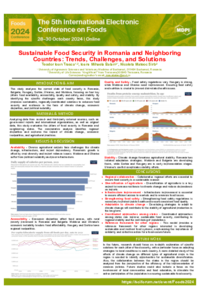
Food security is a critical issue for Romania and its neighboring countries, as it directly impacts regional stability and public health. This study analyzes the current state of food security in Romania, Bulgaria, Hungary, Serbia, Ukraine, and Moldova, focusing on four key pillars: food availability, accessibility, quality and safety, and stability. By identifying the specific challenges each country faces, this study proposes sustainable, regionally-coordinated solutions to enhance food security and resilience in the face of climate change, economic disparities, and political instability.
Methods
Utilizing data from external sources, government reports, and international organizations, this study assesses food security pillars: availability, accessibility, quality and safety, and stability. Comparative analysis identifies regional disparities and explores the impacts of climate change, economic inequalities, and agricultural practices.
Results
Availability: Diverse agricultural outputs face challenges like climate change, infrastructure, and import dependency. Romania’s growth is offset by crop diversity and import reliance issues. Moldova and Ukraine suffer from political instability and poor infrastructure.
Accessibility: Economic disparities affect food access, with rural poverty prominent in Romania and Bulgaria. Moldova and Ukraine's economic instability hinders food affordability. Hungary and Serbia have regional inequalities.
Quality and Safety: Food safety regulations vary; Hungary is strong, while Moldova and Ukraine need improvement. Ensuring food safety and nutrition is crucial to prevent diet-related health issues.
Stability: Climate change threatens agricultural stability. Romania has initiated adaptation strategies; Moldova and Bulgaria are developing theirs, while Serbia and Hungary are in early implementation stages. Ukraine’s conflict complicates stability efforts.
Conclusions
Collaborative regional efforts are essential for food security. Recommendations include diversifying agriculture, improving infrastructure, strengthening food safety regulations, and developing climate adaptation strategies. Coordinated approaches can enhance sustainable food security, benefiting regional stability and populations. This model offers a framework for other regions to build resilient, sustainable food systems.
Keywords
Sustainable food security
agricultural sustainability
Romania
Bulgaria
Hungary
Serbia
Ukraine
Moldova.
Poster
Sustainable Food Security in Romania and Neighboring Countries- Trends, Challenges, and Solutions_Trasca&Balan&Mateoc-Sirb.pdf
Bioinformatical characterization and machine learning classification of seed storage proteins
Microencapsulation of young barley leaf extract with gum arabic, whey protein, and maltodextrin using freeze drying