Event submissions
Published
This submission belongs to the session S3. Sustainable Food Security and Food System of the event The 5th International Electronic Conference on Foods
Published date
25 Oct, 2024
Academic Editor
'%3e%3cpath%20d='M12.6657%2010.9104C12.4185%2010.325%2012.0599%209.79327%2011.6097%209.34482C11.1609%208.89508%2010.6293%208.5365%2010.0442%208.28888C10.0389%208.28626%2010.0337%208.28495%2010.0285%208.28233C10.8446%207.69279%2011.3752%206.73249%2011.3752%205.64904C11.3752%203.8542%209.92103%202.39999%208.1262%202.39999C6.33136%202.39999%204.87715%203.8542%204.87715%205.64904C4.87715%206.73249%205.40774%207.69279%206.22393%208.28364C6.21869%208.28626%206.21345%208.28757%206.20821%208.29019C5.62129%208.5378%205.09463%208.89284%204.64265%209.34613C4.1929%209.79493%203.83432%2010.3266%203.58671%2010.9117C3.34345%2011.4845%203.21226%2012.0987%203.20023%2012.7209C3.19988%2012.7349%203.20233%2012.7488%203.20744%2012.7619C3.21255%2012.7749%203.22022%2012.7867%203.22998%2012.7968C3.23975%2012.8068%203.25142%2012.8147%203.26431%2012.8202C3.2772%2012.8256%203.29105%2012.8284%203.30504%2012.8284H4.09109C4.14874%2012.8284%204.19459%2012.7825%204.1959%2012.7262C4.2221%2011.7148%204.62823%2010.7676%205.34617%2010.0497C6.08899%209.30683%207.0755%208.89808%208.1262%208.89808C9.17689%208.89808%2010.1634%209.30683%2010.9062%2010.0497C11.6242%2010.7676%2012.0303%2011.7148%2012.0565%2012.7262C12.0578%2012.7838%2012.1037%2012.8284%2012.1613%2012.8284H12.9474C12.9613%2012.8284%2012.9752%2012.8256%2012.9881%2012.8202C13.001%2012.8147%2013.0126%2012.8068%2013.0224%2012.7968C13.0322%2012.7867%2013.0398%2012.7749%2013.0449%2012.7619C13.0501%2012.7488%2013.0525%2012.7349%2013.0522%2012.7209C13.0391%2012.0947%2012.9094%2011.4855%2012.6657%2010.9104ZM8.1262%207.9024C7.52486%207.9024%206.9589%207.6679%206.53312%207.24211C6.10733%206.81633%205.87283%206.25037%205.87283%205.64904C5.87283%205.0477%206.10733%204.48174%206.53312%204.05596C6.9589%203.63018%207.52486%203.39567%208.1262%203.39567C8.72753%203.39567%209.29349%203.63018%209.71927%204.05596C10.1451%204.48174%2010.3796%205.0477%2010.3796%205.64904C10.3796%206.25037%2010.1451%206.81633%209.71927%207.24211C9.29349%207.6679%208.72753%207.9024%208.1262%207.9024Z'%20fill='%235D1EE1'/%3e%3c/g%3e%3c/svg%3e) Susana Casal
Susana CasalCitation
Teresa D'Amore, Giuseppina Di Paola, Daniele Bravoco, Cinzia Zolfanelli, Vincenzo Lauciello, Alessio Di Ciancia, Sabino Russi, Theodoros Varzakas, Carlo Calabrese, Pellegrino Mazzone, Geppino Falco, Exploring the use of intestinal organoid models for advancing the application of New Approach Methodologies in food safety assessment, in Proceedings of The 5th International Electronic Conference on Foods, 28 October–30 October 2024, MDPI: Basel, Switzerland
Share
Email
Facebook
Twitter
LinkedIn
Exploring the use of intestinal organoid models for advancing the application of New Approach Methodologies in food safety assessment

Teresa D'Amore 1
'%3e%3cpath%20d='M12.6647%2010.9104C12.4176%2010.325%2012.0589%209.7933%2011.6088%209.34485C11.16%208.89511%2010.6283%208.53653%2010.0432%208.28891C10.038%208.28629%2010.0327%208.28498%2010.0275%208.28236C10.8437%207.69282%2011.3743%206.73252%2011.3743%205.64907C11.3743%203.85423%209.92005%202.40002%208.12522%202.40002C6.33038%202.40002%204.87618%203.85423%204.87618%205.64907C4.87618%206.73252%205.40677%207.69282%206.22296%208.28367C6.21772%208.28629%206.21248%208.2876%206.20724%208.29022C5.62031%208.53783%205.09365%208.89287%204.64167%209.34616C4.19192%209.79496%203.83334%2010.3266%203.58573%2010.9117C3.34247%2011.4846%203.21128%2012.0987%203.19925%2012.721C3.1989%2012.735%203.20135%2012.7489%203.20646%2012.7619C3.21157%2012.7749%203.21924%2012.7868%203.22901%2012.7968C3.23877%2012.8068%203.25045%2012.8148%203.26334%2012.8202C3.27623%2012.8256%203.29007%2012.8284%203.30406%2012.8284H4.09012C4.14776%2012.8284%204.19362%2012.7825%204.19493%2012.7262C4.22113%2011.7148%204.62726%2010.7676%205.34519%2010.0497C6.08802%209.30686%207.07452%208.89811%208.12522%208.89811C9.17592%208.89811%2010.1624%209.30686%2010.9052%2010.0497C11.6232%2010.7676%2012.0293%2011.7148%2012.0555%2012.7262C12.0568%2012.7839%2012.1027%2012.8284%2012.1603%2012.8284H12.9464C12.9604%2012.8284%2012.9742%2012.8256%2012.9871%2012.8202C13%2012.8148%2013.0117%2012.8068%2013.0214%2012.7968C13.0312%2012.7868%2013.0389%2012.7749%2013.044%2012.7619C13.0491%2012.7489%2013.0515%2012.735%2013.0512%2012.721C13.0381%2012.0947%2012.9084%2011.4856%2012.6647%2010.9104ZM8.12522%207.90243C7.52388%207.90243%206.95792%207.66793%206.53214%207.24215C6.10636%206.81636%205.87185%206.2504%205.87185%205.64907C5.87185%205.04773%206.10636%204.48177%206.53214%204.05599C6.95792%203.63021%207.52388%203.3957%208.12522%203.3957C8.72655%203.3957%209.29252%203.63021%209.7183%204.05599C10.1441%204.48177%2010.3786%205.04773%2010.3786%205.64907C10.3786%206.2504%2010.1441%206.81636%209.7183%207.24215C9.29252%207.66793%208.72655%207.90243%208.12522%207.90243Z'%20fill='%235D1EE1'/%3e%3c/g%3e%3c/svg%3e)
Giuseppina Di Paola 2

Daniele Bravoco 2
Cinzia Zolfanelli 1
Vincenzo Lauciello 1
Alessio Di Ciancia 1
Sabino Russi 1

Theodoros Varzakas 3
Carlo Calabrese 4

Pellegrino Mazzone 2
Geppino Falco 5
1. IRCCS CROB, Centro di Riferimento Oncologico della Basilicata, Rionero in Vulture, 85028, Italy
2. Istituto di Biologia e Genetica Molecolare, Via Camporeale, Ariano Irpino, Biogem, 83031, Italy
3. Department of Food Science and Technology, University of the Peloponnese, Antikalamos, 24100, Greece
4. IRCCS, Azienda Ospedaliero, Universitaria di Bologna, Bologna, Italy
5. Department of Biology, University of Naples Federico II, Naples, 80126, Italy
Abstract
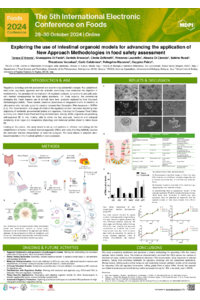
Regulatory toxicology and risk assessment are experiencing substantial changes. At a global level, institutions, regulatory agencies and the scientific community have embraced the objective of revolutionizing the paradigm of the evaluation of regulated products, contaminants and pollutants, with marked consequences for food safety standards. For these reasons, the conventional strategies that made massive use of animals have been gradually replaced by New Approach Methodologies (NAMs). These models, based on stand-alone or integrated in vitro, in chemico, in silico and ex vivo methods, guide the transition towards Next-Generation Risk Assessment. The implementation and usage of NAMs in the regulatory context have been becoming main objectives of worldwide governmental bodies and agencies, including the European Food Safety Authority and United States Food and Drug Administration. Among NAMs, organoids are promising self-organized 3D in vitro models, able to mimic the key structural, functional and biological complexity of an organ and recapitulate physiology and molecular profiles closer to native tissue.
Looking at this context, this study aimed to set up and optimize an efficient methodology for the establishment of human intestinal derived organoids (HIOs) and verify that they faithfully express the molecular markers characteristic of intestinal cytotypes. The local effects of selected stressors on the intestinal epithelium were assessed in terms of cytotoxicity, inflammation and intestinal barrier integrity.
The obtained results show that HIOs replicate native tissue and accurately reflect human response to toxicant exposure. Thus, HIOs have potential to be utilized for regulatory needs. Precise quality control definition and a full in-house validation study are key priorities to increase the strength of these tools. Overall, the goal of the project, filling the gap of there being a very limited number of studies conducted in this field, is to pave the way for a more focused and standardized use of HIOs in regulatory assessments.
Keywords
new approach methodologies
organoids
in vitro
food safety
risk assessment
Poster
D'Amore_foods2024_oct.pdf
Highly Hazardous Pesticides in Fruits and Vegetables: Analysis of food surveillance in Chile between 2015 and 2023
Search for new functional foods in the Western Himalayan District of Jammu and Kashmir in India.