Event submissions
Published
This submission belongs to the session S10. Application of Artificial Intelligence (AI) and Machine Learning in The Food Industry of the event The 5th International Electronic Conference on Foods
Published date
25 Oct, 2024
Academic Editor
'%3e%3cpath%20d='M12.6657%2010.9104C12.4185%2010.325%2012.0599%209.79327%2011.6097%209.34482C11.1609%208.89508%2010.6293%208.5365%2010.0442%208.28888C10.0389%208.28626%2010.0337%208.28495%2010.0285%208.28233C10.8446%207.69279%2011.3752%206.73249%2011.3752%205.64904C11.3752%203.8542%209.92103%202.39999%208.1262%202.39999C6.33136%202.39999%204.87715%203.8542%204.87715%205.64904C4.87715%206.73249%205.40774%207.69279%206.22393%208.28364C6.21869%208.28626%206.21345%208.28757%206.20821%208.29019C5.62129%208.5378%205.09463%208.89284%204.64265%209.34613C4.1929%209.79493%203.83432%2010.3266%203.58671%2010.9117C3.34345%2011.4845%203.21226%2012.0987%203.20023%2012.7209C3.19988%2012.7349%203.20233%2012.7488%203.20744%2012.7619C3.21255%2012.7749%203.22022%2012.7867%203.22998%2012.7968C3.23975%2012.8068%203.25142%2012.8147%203.26431%2012.8202C3.2772%2012.8256%203.29105%2012.8284%203.30504%2012.8284H4.09109C4.14874%2012.8284%204.19459%2012.7825%204.1959%2012.7262C4.2221%2011.7148%204.62823%2010.7676%205.34617%2010.0497C6.08899%209.30683%207.0755%208.89808%208.1262%208.89808C9.17689%208.89808%2010.1634%209.30683%2010.9062%2010.0497C11.6242%2010.7676%2012.0303%2011.7148%2012.0565%2012.7262C12.0578%2012.7838%2012.1037%2012.8284%2012.1613%2012.8284H12.9474C12.9613%2012.8284%2012.9752%2012.8256%2012.9881%2012.8202C13.001%2012.8147%2013.0126%2012.8068%2013.0224%2012.7968C13.0322%2012.7867%2013.0398%2012.7749%2013.0449%2012.7619C13.0501%2012.7488%2013.0525%2012.7349%2013.0522%2012.7209C13.0391%2012.0947%2012.9094%2011.4855%2012.6657%2010.9104ZM8.1262%207.9024C7.52486%207.9024%206.9589%207.6679%206.53312%207.24211C6.10733%206.81633%205.87283%206.25037%205.87283%205.64904C5.87283%205.0477%206.10733%204.48174%206.53312%204.05596C6.9589%203.63018%207.52486%203.39567%208.1262%203.39567C8.72753%203.39567%209.29349%203.63018%209.71927%204.05596C10.1451%204.48174%2010.3796%205.0477%2010.3796%205.64904C10.3796%206.25037%2010.1451%206.81633%209.71927%207.24211C9.29349%207.6679%208.72753%207.9024%208.1262%207.9024Z'%20fill='%235D1EE1'/%3e%3c/g%3e%3c/svg%3e) Yonghui Li
Yonghui LiCitation
Yogeshwari H V, Rashmi H M, Raghu H V, Artificial Intelligence in Food Safety Assessment and Monitoring: A Comprehensive Review, in Proceedings of The 5th International Electronic Conference on Foods, 28 October–30 October 2024, MDPI: Basel, Switzerland
Share
Email
Facebook
Twitter
LinkedIn
Artificial Intelligence in Food Safety Assessment and Monitoring: A Comprehensive Review
'%3e%3cpath%20d='M12.6647%2010.9104C12.4176%2010.325%2012.0589%209.7933%2011.6088%209.34485C11.16%208.89511%2010.6283%208.53653%2010.0432%208.28891C10.038%208.28629%2010.0327%208.28498%2010.0275%208.28236C10.8437%207.69282%2011.3743%206.73252%2011.3743%205.64907C11.3743%203.85423%209.92005%202.40002%208.12522%202.40002C6.33038%202.40002%204.87618%203.85423%204.87618%205.64907C4.87618%206.73252%205.40677%207.69282%206.22296%208.28367C6.21772%208.28629%206.21248%208.2876%206.20724%208.29022C5.62031%208.53783%205.09365%208.89287%204.64167%209.34616C4.19192%209.79496%203.83334%2010.3266%203.58573%2010.9117C3.34247%2011.4846%203.21128%2012.0987%203.19925%2012.721C3.1989%2012.735%203.20135%2012.7489%203.20646%2012.7619C3.21157%2012.7749%203.21924%2012.7868%203.22901%2012.7968C3.23877%2012.8068%203.25045%2012.8148%203.26334%2012.8202C3.27623%2012.8256%203.29007%2012.8284%203.30406%2012.8284H4.09012C4.14776%2012.8284%204.19362%2012.7825%204.19493%2012.7262C4.22113%2011.7148%204.62726%2010.7676%205.34519%2010.0497C6.08802%209.30686%207.07452%208.89811%208.12522%208.89811C9.17592%208.89811%2010.1624%209.30686%2010.9052%2010.0497C11.6232%2010.7676%2012.0293%2011.7148%2012.0555%2012.7262C12.0568%2012.7839%2012.1027%2012.8284%2012.1603%2012.8284H12.9464C12.9604%2012.8284%2012.9742%2012.8256%2012.9871%2012.8202C13%2012.8148%2013.0117%2012.8068%2013.0214%2012.7968C13.0312%2012.7868%2013.0389%2012.7749%2013.044%2012.7619C13.0491%2012.7489%2013.0515%2012.735%2013.0512%2012.721C13.0381%2012.0947%2012.9084%2011.4856%2012.6647%2010.9104ZM8.12522%207.90243C7.52388%207.90243%206.95792%207.66793%206.53214%207.24215C6.10636%206.81636%205.87185%206.2504%205.87185%205.64907C5.87185%205.04773%206.10636%204.48177%206.53214%204.05599C6.95792%203.63021%207.52388%203.3957%208.12522%203.3957C8.72655%203.3957%209.29252%203.63021%209.7183%204.05599C10.1441%204.48177%2010.3786%205.04773%2010.3786%205.64907C10.3786%206.2504%2010.1441%206.81636%209.7183%207.24215C9.29252%207.66793%208.72655%207.90243%208.12522%207.90243Z'%20fill='%235D1EE1'/%3e%3c/g%3e%3c/svg%3e)
Yogeshwari H V 1
Rashmi H M 2
Raghu H V 3
1. Assistant Professor, Department of Computer Application ,Dayananda Sagar College of Arts, Science and Commerce, Bangalore ,Karnataka,India
2. Dairy Bacteriology Section, SRS of ICAR- National Dairy Research Institute, Bangalore, Karnataka, India
3. Microbiology Section, National Referral Centre for Milk Quality and Safety, ICAR-National Dairy Research Institute, Karnal, Haryana, India -132001.
Abstract
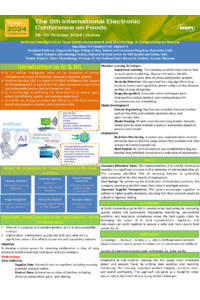
Introduction: Artificial Intelligence (AI) technologies are revolutionizing the field of food safety assessment and monitoring by offering advanced tools for the prediction, detection, and management of food-borne hazards. This paper explores the combating of food fraud and adulteration using Artificial Intelligence. Food fraud and adulteration are critical issues that threaten public health, consumer trust, and the integrity of global food supply chains. Despite regulatory efforts, traditional methods for detecting and preventing food fraud are often insufficient due to their reliance on manual inspections and limited testing capabilities. The complexity and scale of modern food supply chains require more advanced solutions. These illicit practices involve the intentional misrepresentation or alteration of food products for economic gain, including mislabeling, dilution, and contamination. This abstract explores the role of Artificial Intelligence (AI) in addressing these issues, focusing on detection, traceability, and prevention strategies.
Methods: AI-based methods such as machine learning, deep learning, natural language processing and block chain integration are analyzed for their ability to enhance various aspects of food safety. AI technologies, particularly machine learning and deep learning, offer new capabilities for identifying and mitigating food fraud.
Results: These AI methods can significantly enhance the detection, prevention, and management of food fraud and adulteration by providing more accurate, efficient, and scalable solutions than traditional methods.
Conclusions: In conclusion, AI holds tremendous potential to revolutionize food safety by improving quality control, risk assessment, traceability, monitoring, personalized nutrition, and regulatory compliance across the food supply chain. By leveraging the power of AI, food manufacturers, regulators, and consumers can work together to ensure a safer and more secure food system for all.
Keywords
Artificial Intelligence
Machine Learning
Internet Of Things
Deep Learning
Natural Language Processing
Poster
sciforum-101569-Yogeshwari MDPI 2024.pdf
Search for new functional foods in the Western Himalayan District of Jammu and Kashmir in India.
Black Cumin (Nigella sativa L.): A Versatile Natural Remedy for Various Ailments