Event submissions
Published
This submission belongs to the session S5. Chemistry and Physicochemical Properties of Foods of the event The 5th International Electronic Conference on Foods
Published date
25 Oct, 2024
Academic Editor
'%3e%3cpath%20d='M12.6657%2010.9104C12.4185%2010.325%2012.0599%209.79327%2011.6097%209.34482C11.1609%208.89508%2010.6293%208.5365%2010.0442%208.28888C10.0389%208.28626%2010.0337%208.28495%2010.0285%208.28233C10.8446%207.69279%2011.3752%206.73249%2011.3752%205.64904C11.3752%203.8542%209.92103%202.39999%208.1262%202.39999C6.33136%202.39999%204.87715%203.8542%204.87715%205.64904C4.87715%206.73249%205.40774%207.69279%206.22393%208.28364C6.21869%208.28626%206.21345%208.28757%206.20821%208.29019C5.62129%208.5378%205.09463%208.89284%204.64265%209.34613C4.1929%209.79493%203.83432%2010.3266%203.58671%2010.9117C3.34345%2011.4845%203.21226%2012.0987%203.20023%2012.7209C3.19988%2012.7349%203.20233%2012.7488%203.20744%2012.7619C3.21255%2012.7749%203.22022%2012.7867%203.22998%2012.7968C3.23975%2012.8068%203.25142%2012.8147%203.26431%2012.8202C3.2772%2012.8256%203.29105%2012.8284%203.30504%2012.8284H4.09109C4.14874%2012.8284%204.19459%2012.7825%204.1959%2012.7262C4.2221%2011.7148%204.62823%2010.7676%205.34617%2010.0497C6.08899%209.30683%207.0755%208.89808%208.1262%208.89808C9.17689%208.89808%2010.1634%209.30683%2010.9062%2010.0497C11.6242%2010.7676%2012.0303%2011.7148%2012.0565%2012.7262C12.0578%2012.7838%2012.1037%2012.8284%2012.1613%2012.8284H12.9474C12.9613%2012.8284%2012.9752%2012.8256%2012.9881%2012.8202C13.001%2012.8147%2013.0126%2012.8068%2013.0224%2012.7968C13.0322%2012.7867%2013.0398%2012.7749%2013.0449%2012.7619C13.0501%2012.7488%2013.0525%2012.7349%2013.0522%2012.7209C13.0391%2012.0947%2012.9094%2011.4855%2012.6657%2010.9104ZM8.1262%207.9024C7.52486%207.9024%206.9589%207.6679%206.53312%207.24211C6.10733%206.81633%205.87283%206.25037%205.87283%205.64904C5.87283%205.0477%206.10733%204.48174%206.53312%204.05596C6.9589%203.63018%207.52486%203.39567%208.1262%203.39567C8.72753%203.39567%209.29349%203.63018%209.71927%204.05596C10.1451%204.48174%2010.3796%205.0477%2010.3796%205.64904C10.3796%206.25037%2010.1451%206.81633%209.71927%207.24211C9.29349%207.6679%208.72753%207.9024%208.1262%207.9024Z'%20fill='%235D1EE1'/%3e%3c/g%3e%3c/svg%3e) Joana Amaral
Joana AmaralCitation
Samuel 0lufemi Owolade, Olufunke Ezekiel, Olaide Ruth Aderibigbe, THE EFFECTS OF GERMINATION PERIODS ON THE PROXIMATE, MINERAL, AND ANTINUTRIENT PROFILES OF PEARL MILLET (Pennisetum glacum) AND GRAIN AMARANTH (Amaranth cruentus) FLOURS, in Proceedings of The 5th International Electronic Conference on Foods, 28 October–30 October 2024, MDPI: Basel, Switzerland
Share
Email
Facebook
Twitter
LinkedIn
THE EFFECTS OF GERMINATION PERIODS ON THE PROXIMATE, MINERAL, AND ANTINUTRIENT PROFILES OF PEARL MILLET (Pennisetum glacum) AND GRAIN AMARANTH (Amaranth cruentus) FLOURS
'%3e%3cpath%20d='M12.6647%2010.9104C12.4176%2010.325%2012.0589%209.7933%2011.6088%209.34485C11.16%208.89511%2010.6283%208.53653%2010.0432%208.28891C10.038%208.28629%2010.0327%208.28498%2010.0275%208.28236C10.8437%207.69282%2011.3743%206.73252%2011.3743%205.64907C11.3743%203.85423%209.92005%202.40002%208.12522%202.40002C6.33038%202.40002%204.87618%203.85423%204.87618%205.64907C4.87618%206.73252%205.40677%207.69282%206.22296%208.28367C6.21772%208.28629%206.21248%208.2876%206.20724%208.29022C5.62031%208.53783%205.09365%208.89287%204.64167%209.34616C4.19192%209.79496%203.83334%2010.3266%203.58573%2010.9117C3.34247%2011.4846%203.21128%2012.0987%203.19925%2012.721C3.1989%2012.735%203.20135%2012.7489%203.20646%2012.7619C3.21157%2012.7749%203.21924%2012.7868%203.22901%2012.7968C3.23877%2012.8068%203.25045%2012.8148%203.26334%2012.8202C3.27623%2012.8256%203.29007%2012.8284%203.30406%2012.8284H4.09012C4.14776%2012.8284%204.19362%2012.7825%204.19493%2012.7262C4.22113%2011.7148%204.62726%2010.7676%205.34519%2010.0497C6.08802%209.30686%207.07452%208.89811%208.12522%208.89811C9.17592%208.89811%2010.1624%209.30686%2010.9052%2010.0497C11.6232%2010.7676%2012.0293%2011.7148%2012.0555%2012.7262C12.0568%2012.7839%2012.1027%2012.8284%2012.1603%2012.8284H12.9464C12.9604%2012.8284%2012.9742%2012.8256%2012.9871%2012.8202C13%2012.8148%2013.0117%2012.8068%2013.0214%2012.7968C13.0312%2012.7868%2013.0389%2012.7749%2013.044%2012.7619C13.0491%2012.7489%2013.0515%2012.735%2013.0512%2012.721C13.0381%2012.0947%2012.9084%2011.4856%2012.6647%2010.9104ZM8.12522%207.90243C7.52388%207.90243%206.95792%207.66793%206.53214%207.24215C6.10636%206.81636%205.87185%206.2504%205.87185%205.64907C5.87185%205.04773%206.10636%204.48177%206.53214%204.05599C6.95792%203.63021%207.52388%203.3957%208.12522%203.3957C8.72655%203.3957%209.29252%203.63021%209.7183%204.05599C10.1441%204.48177%2010.3786%205.04773%2010.3786%205.64907C10.3786%206.2504%2010.1441%206.81636%209.7183%207.24215C9.29252%207.66793%208.72655%207.90243%208.12522%207.90243Z'%20fill='%235D1EE1'/%3e%3c/g%3e%3c/svg%3e)
Samuel 0lufemi Owolade 1
Olufunke Ezekiel 2,3
Olaide Ruth Aderibigbe 4
1. National Horticultural Research Institute, Product Development Programme, P.M.B. 5432, Idi- Ishin, Jericho GRA, Ibadan, Oyo State, Nigeria.
2. Faculty of Technology
3. Department of Food Technology, University of Ibadan
4. 1National Horticultural Research Institute, Product Development Programme, P.M.B. 5432, Idi- Ishin, Jericho GRA, Ibadan, Oyo State, Nigeria.
Abstract
ABSTRACT
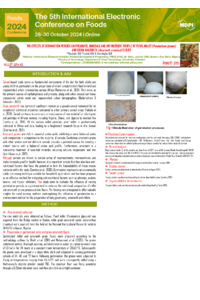
This study investigated the effect of germination periods (24 h, 48 h, and 72 h) on nutritional and antinutritional components of flour from pearl millet and grain amaranth seeds under room temperature conditions (28±0.1oC). The aim was to determine the effect of varying germination period as a pre-treatment process on the nutritional profile of millet and amaranth flour. The results showed that there were significant differences at (p<0, 05) in the proximate, mineral, and antinutrient factors of the samples. The protein in millet flour was 8.61% and 17.37% in amaranth after 24 h germination. The 24h germination period had the highest protein content for both millet and amaranth flours. The protein in millet after 24h germination (8.61%) was only significantly higher than after 72h (8.07%) and ungerminated millet (7.71%), respectively. The concentration of iron (Fe) in millet after 24 h, 48 h, and 72 h germination was 4.77 mg/100g, 4.90 mg/100 g, and 4.96 mg/100 g; in amaranth, the values were 4.10 mg/100g, 5.86 mg/100g, and 5.89 mg/100g. The concentration of iron in ungerminated millet was 3.31mg/100g and 3.50mg/100g in amaranth; these concentrations were significantly lower than germinated millet and 3.50mg/100g amaranth flours across the period. A similar trend was observed in other minerals. There was a significant reduction in the concentration of the antinutrient across the germination periods in the samples. The phytate concentration in millet was between 0.173 and 0.836g/100g. However, the concentration reduced significantly (p<0.05) in ungerminated millet flour from 0.836g/100g to 0.326g/100g, 0.23g/100g, and 0.173g/100g after 24h, 48hrs, and 72h germination periods, respectively. Germination period could impact on the quality of cereal grains, as shown in this study.
Keywords
Key words: Millet
amaranth
grain
flours
germination periods
Poster
OWOLADE S.O et al ., 5th international Online conference on Food.pdf
Effect of in vitro human colonic fermented coffee melanoidins on colon cancer cell proliferation
Determination of ideal sweetness level and nutritional and sensory properties of Spondias mombin juice