Event submissions
Published
This submission belongs to the session S2. Food Nutrition and Functional Foods of the event The 5th International Electronic Conference on Foods
Published date
25 Oct, 2024
Academic Editor
'%3e%3cpath%20d='M12.6657%2010.9104C12.4185%2010.325%2012.0599%209.79327%2011.6097%209.34482C11.1609%208.89508%2010.6293%208.5365%2010.0442%208.28888C10.0389%208.28626%2010.0337%208.28495%2010.0285%208.28233C10.8446%207.69279%2011.3752%206.73249%2011.3752%205.64904C11.3752%203.8542%209.92103%202.39999%208.1262%202.39999C6.33136%202.39999%204.87715%203.8542%204.87715%205.64904C4.87715%206.73249%205.40774%207.69279%206.22393%208.28364C6.21869%208.28626%206.21345%208.28757%206.20821%208.29019C5.62129%208.5378%205.09463%208.89284%204.64265%209.34613C4.1929%209.79493%203.83432%2010.3266%203.58671%2010.9117C3.34345%2011.4845%203.21226%2012.0987%203.20023%2012.7209C3.19988%2012.7349%203.20233%2012.7488%203.20744%2012.7619C3.21255%2012.7749%203.22022%2012.7867%203.22998%2012.7968C3.23975%2012.8068%203.25142%2012.8147%203.26431%2012.8202C3.2772%2012.8256%203.29105%2012.8284%203.30504%2012.8284H4.09109C4.14874%2012.8284%204.19459%2012.7825%204.1959%2012.7262C4.2221%2011.7148%204.62823%2010.7676%205.34617%2010.0497C6.08899%209.30683%207.0755%208.89808%208.1262%208.89808C9.17689%208.89808%2010.1634%209.30683%2010.9062%2010.0497C11.6242%2010.7676%2012.0303%2011.7148%2012.0565%2012.7262C12.0578%2012.7838%2012.1037%2012.8284%2012.1613%2012.8284H12.9474C12.9613%2012.8284%2012.9752%2012.8256%2012.9881%2012.8202C13.001%2012.8147%2013.0126%2012.8068%2013.0224%2012.7968C13.0322%2012.7867%2013.0398%2012.7749%2013.0449%2012.7619C13.0501%2012.7488%2013.0525%2012.7349%2013.0522%2012.7209C13.0391%2012.0947%2012.9094%2011.4855%2012.6657%2010.9104ZM8.1262%207.9024C7.52486%207.9024%206.9589%207.6679%206.53312%207.24211C6.10733%206.81633%205.87283%206.25037%205.87283%205.64904C5.87283%205.0477%206.10733%204.48174%206.53312%204.05596C6.9589%203.63018%207.52486%203.39567%208.1262%203.39567C8.72753%203.39567%209.29349%203.63018%209.71927%204.05596C10.1451%204.48174%2010.3796%205.0477%2010.3796%205.64904C10.3796%206.25037%2010.1451%206.81633%209.71927%207.24211C9.29349%207.6679%208.72753%207.9024%208.1262%207.9024Z'%20fill='%235D1EE1'/%3e%3c/g%3e%3c/svg%3e) Manuel Viuda-Martos
Manuel Viuda-MartosCitation
Dipali Saxena, Dr Shailja Jain, The Development of Nutritious Gluten-Free Composite Flour Blends for Indian Flatbread to Meet the Needs of Autistic Children in Gwalior, Madhya Pradesh, India, in Proceedings of The 5th International Electronic Conference on Foods, 28 October–30 October 2024, MDPI: Basel, Switzerland
Share
Email
Facebook
Twitter
LinkedIn
The Development of Nutritious Gluten-Free Composite Flour Blends for Indian Flatbread to Meet the Needs of Autistic Children in Gwalior, Madhya Pradesh, India
'%3e%3cpath%20d='M12.6647%2010.9104C12.4176%2010.325%2012.0589%209.7933%2011.6088%209.34485C11.16%208.89511%2010.6283%208.53653%2010.0432%208.28891C10.038%208.28629%2010.0327%208.28498%2010.0275%208.28236C10.8437%207.69282%2011.3743%206.73252%2011.3743%205.64907C11.3743%203.85423%209.92005%202.40002%208.12522%202.40002C6.33038%202.40002%204.87618%203.85423%204.87618%205.64907C4.87618%206.73252%205.40677%207.69282%206.22296%208.28367C6.21772%208.28629%206.21248%208.2876%206.20724%208.29022C5.62031%208.53783%205.09365%208.89287%204.64167%209.34616C4.19192%209.79496%203.83334%2010.3266%203.58573%2010.9117C3.34247%2011.4846%203.21128%2012.0987%203.19925%2012.721C3.1989%2012.735%203.20135%2012.7489%203.20646%2012.7619C3.21157%2012.7749%203.21924%2012.7868%203.22901%2012.7968C3.23877%2012.8068%203.25045%2012.8148%203.26334%2012.8202C3.27623%2012.8256%203.29007%2012.8284%203.30406%2012.8284H4.09012C4.14776%2012.8284%204.19362%2012.7825%204.19493%2012.7262C4.22113%2011.7148%204.62726%2010.7676%205.34519%2010.0497C6.08802%209.30686%207.07452%208.89811%208.12522%208.89811C9.17592%208.89811%2010.1624%209.30686%2010.9052%2010.0497C11.6232%2010.7676%2012.0293%2011.7148%2012.0555%2012.7262C12.0568%2012.7839%2012.1027%2012.8284%2012.1603%2012.8284H12.9464C12.9604%2012.8284%2012.9742%2012.8256%2012.9871%2012.8202C13%2012.8148%2013.0117%2012.8068%2013.0214%2012.7968C13.0312%2012.7868%2013.0389%2012.7749%2013.044%2012.7619C13.0491%2012.7489%2013.0515%2012.735%2013.0512%2012.721C13.0381%2012.0947%2012.9084%2011.4856%2012.6647%2010.9104ZM8.12522%207.90243C7.52388%207.90243%206.95792%207.66793%206.53214%207.24215C6.10636%206.81636%205.87185%206.2504%205.87185%205.64907C5.87185%205.04773%206.10636%204.48177%206.53214%204.05599C6.95792%203.63021%207.52388%203.3957%208.12522%203.3957C8.72655%203.3957%209.29252%203.63021%209.7183%204.05599C10.1441%204.48177%2010.3786%205.04773%2010.3786%205.64907C10.3786%206.2504%2010.1441%206.81636%209.7183%207.24215C9.29252%207.66793%208.72655%207.90243%208.12522%207.90243Z'%20fill='%235D1EE1'/%3e%3c/g%3e%3c/svg%3e)
Dipali Saxena 1
Dr Shailja Jain 2
1. Department of Foods and Nutrition, Shri Vaishnav Institute of Home Science, Shri Vaishnav Vidyapeeth Vishwavidyalaya Indore, Madhya Pradesh,
India
2. Professor, Department of Food & Nutrition, Home Science Kamla Raja Post Graduate Autonomous College, Gwalior Madhya Pradesh, India
Abstract
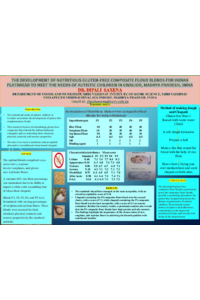
Introduction: The nutritional needs of autistic children in Gwalior necessitate the development of gluten-free complementary foods. This research focuses on formulating gluten-free composite flour blends for Indian flatbread (chapatti) and on evaluating their chemical, physical, textural, and sensory properties. The aim is to create a nutritious and acceptable alternative to traditional wheat-based chapatti.
Methods: Various trials were conducted using different gluten-free flours to achieve a product similar to wheat chapatti. The optimal blends comprised Oryza sativa (rice), Sorghum bicolor (sorghum), and Glycine max (soybean) flours. A constant 40% rice flour percentage was maintained due to its ability to impart a white color resembling that of wheat flour chapatti. Blends P1, P2, P3, P4, and P5 were formulated with varying percentages of sorghum and soybean flours. These blends were assessed for their chemical, physical, textural, and sensory properties by the standard methods.
Results: The standard wheat flour emerged as the most acceptable, with an overall acceptability score of 9.10. Chapatti containing the P4 composite flour blend were the second choice, with a score of 7.3, while chapatti containing the P1 composite flour blend was the least acceptable, with a score of 6.3 on sensory evaluation. A significant difference (P > 0.05) was found between the standard wheat flour chapatti and the product made with P4 composite flour blends. Besides the sensory results, a proximate analysis also reveals that the P4 composite flour blends have high protein and ash contents. The findings highlight the importance of the chosen ratios of rice, sorghum, and soybean flours in achieving the desired qualities with nutritional benefits.
Conclusions: The developed gluten-free composite flour blends, particularly given the composite flour blends, provide a promising alternative for gluten-free chapatti that meets the dietary requirements of autistic children. These blends ensure better acceptance and adherence, contributing to the improved nutritional intake and overall well-being of the target group.
Keywords
gluten : chemical: flatbread: flour: trial: sensory
Poster
sciforum-102572 poster.pdf
Impact of cold plasma on the quality of peach juice
Effect of a nutritional intervention using a combination of perspective theories and expected utility on the use of orange-fleshed sweet potato among women of childbearing age of the commune of Zè in Benin