Event submissions
Published
This submission belongs to the session S9. Food Cultures, Policy and Consumer Science of the event The 5th International Electronic Conference on Foods
Published date
25 Oct, 2024
Academic Editor
'%3e%3cpath%20d='M12.6657%2010.9104C12.4185%2010.325%2012.0599%209.79327%2011.6097%209.34482C11.1609%208.89508%2010.6293%208.5365%2010.0442%208.28888C10.0389%208.28626%2010.0337%208.28495%2010.0285%208.28233C10.8446%207.69279%2011.3752%206.73249%2011.3752%205.64904C11.3752%203.8542%209.92103%202.39999%208.1262%202.39999C6.33136%202.39999%204.87715%203.8542%204.87715%205.64904C4.87715%206.73249%205.40774%207.69279%206.22393%208.28364C6.21869%208.28626%206.21345%208.28757%206.20821%208.29019C5.62129%208.5378%205.09463%208.89284%204.64265%209.34613C4.1929%209.79493%203.83432%2010.3266%203.58671%2010.9117C3.34345%2011.4845%203.21226%2012.0987%203.20023%2012.7209C3.19988%2012.7349%203.20233%2012.7488%203.20744%2012.7619C3.21255%2012.7749%203.22022%2012.7867%203.22998%2012.7968C3.23975%2012.8068%203.25142%2012.8147%203.26431%2012.8202C3.2772%2012.8256%203.29105%2012.8284%203.30504%2012.8284H4.09109C4.14874%2012.8284%204.19459%2012.7825%204.1959%2012.7262C4.2221%2011.7148%204.62823%2010.7676%205.34617%2010.0497C6.08899%209.30683%207.0755%208.89808%208.1262%208.89808C9.17689%208.89808%2010.1634%209.30683%2010.9062%2010.0497C11.6242%2010.7676%2012.0303%2011.7148%2012.0565%2012.7262C12.0578%2012.7838%2012.1037%2012.8284%2012.1613%2012.8284H12.9474C12.9613%2012.8284%2012.9752%2012.8256%2012.9881%2012.8202C13.001%2012.8147%2013.0126%2012.8068%2013.0224%2012.7968C13.0322%2012.7867%2013.0398%2012.7749%2013.0449%2012.7619C13.0501%2012.7488%2013.0525%2012.7349%2013.0522%2012.7209C13.0391%2012.0947%2012.9094%2011.4855%2012.6657%2010.9104ZM8.1262%207.9024C7.52486%207.9024%206.9589%207.6679%206.53312%207.24211C6.10733%206.81633%205.87283%206.25037%205.87283%205.64904C5.87283%205.0477%206.10733%204.48174%206.53312%204.05596C6.9589%203.63018%207.52486%203.39567%208.1262%203.39567C8.72753%203.39567%209.29349%203.63018%209.71927%204.05596C10.1451%204.48174%2010.3796%205.0477%2010.3796%205.64904C10.3796%206.25037%2010.1451%206.81633%209.71927%207.24211C9.29349%207.6679%208.72753%207.9024%208.1262%207.9024Z'%20fill='%235D1EE1'/%3e%3c/g%3e%3c/svg%3e) Maurice O'Sullivan
Maurice O'SullivanCitation
P. Barciela, A. Perez-Vazquez, F. Fernandes, A.O.S. Jorge, A. G. Pereira, M. Carpena, M. Carocho, S.A. Heleno, M.A. Prieto, Up-to-date and comprehensive data on the evolving consumption patterns of energy drinks: in search of a nutrigenomics approach, in Proceedings of The 5th International Electronic Conference on Foods, 28 October–30 October 2024, MDPI: Basel, Switzerland
Share
Email
Facebook
Twitter
LinkedIn
Up-to-date and comprehensive data on the evolving consumption patterns of energy drinks: in search of a nutrigenomics approach

P. Barciela 1
'%3e%3cpath%20d='M12.6647%2010.9104C12.4176%2010.325%2012.0589%209.7933%2011.6088%209.34485C11.16%208.89511%2010.6283%208.53653%2010.0432%208.28891C10.038%208.28629%2010.0327%208.28498%2010.0275%208.28236C10.8437%207.69282%2011.3743%206.73252%2011.3743%205.64907C11.3743%203.85423%209.92005%202.40002%208.12522%202.40002C6.33038%202.40002%204.87618%203.85423%204.87618%205.64907C4.87618%206.73252%205.40677%207.69282%206.22296%208.28367C6.21772%208.28629%206.21248%208.2876%206.20724%208.29022C5.62031%208.53783%205.09365%208.89287%204.64167%209.34616C4.19192%209.79496%203.83334%2010.3266%203.58573%2010.9117C3.34247%2011.4846%203.21128%2012.0987%203.19925%2012.721C3.1989%2012.735%203.20135%2012.7489%203.20646%2012.7619C3.21157%2012.7749%203.21924%2012.7868%203.22901%2012.7968C3.23877%2012.8068%203.25045%2012.8148%203.26334%2012.8202C3.27623%2012.8256%203.29007%2012.8284%203.30406%2012.8284H4.09012C4.14776%2012.8284%204.19362%2012.7825%204.19493%2012.7262C4.22113%2011.7148%204.62726%2010.7676%205.34519%2010.0497C6.08802%209.30686%207.07452%208.89811%208.12522%208.89811C9.17592%208.89811%2010.1624%209.30686%2010.9052%2010.0497C11.6232%2010.7676%2012.0293%2011.7148%2012.0555%2012.7262C12.0568%2012.7839%2012.1027%2012.8284%2012.1603%2012.8284H12.9464C12.9604%2012.8284%2012.9742%2012.8256%2012.9871%2012.8202C13%2012.8148%2013.0117%2012.8068%2013.0214%2012.7968C13.0312%2012.7868%2013.0389%2012.7749%2013.044%2012.7619C13.0491%2012.7489%2013.0515%2012.735%2013.0512%2012.721C13.0381%2012.0947%2012.9084%2011.4856%2012.6647%2010.9104ZM8.12522%207.90243C7.52388%207.90243%206.95792%207.66793%206.53214%207.24215C6.10636%206.81636%205.87185%206.2504%205.87185%205.64907C5.87185%205.04773%206.10636%204.48177%206.53214%204.05599C6.95792%203.63021%207.52388%203.3957%208.12522%203.3957C8.72655%203.3957%209.29252%203.63021%209.7183%204.05599C10.1441%204.48177%2010.3786%205.04773%2010.3786%205.64907C10.3786%206.2504%2010.1441%206.81636%209.7183%207.24215C9.29252%207.66793%208.72655%207.90243%208.12522%207.90243Z'%20fill='%235D1EE1'/%3e%3c/g%3e%3c/svg%3e)
A. Perez-Vazquez 1
F. Fernandes 2
A.O.S. Jorge 1,3

A. G. Pereira 1,4

M. Carpena 1

M. Carocho 4

S.A. Heleno 4

M.A. Prieto 1
1. Universidade de Vigo, Nutrition and Bromatology Group, Department of Analytical Chemistry and Food Science, Instituto de Agroecoloxía e Alimentación (IAA) – CITEXVI, 36310 Vigo, España.
2. Centro de Investigação de Montanha (CIMO), Instituto Politécnico de Bragança, Campus de Santa Apolonia, 5300-253 Bragança, Portugal.
3. REQUIMTE/LAQV, Department of Chemical Sciences, Faculty of Pharmacy, University of Porto, R. Jorge Viterbo Ferreira 228, 4050-313 Porto, Portugal
4. Investigaciones Agroalimentarias Research Group, Galicia Sur Health Research Institute (IIS Galicia Sur). SERGAS-UVIGO.
Abstract
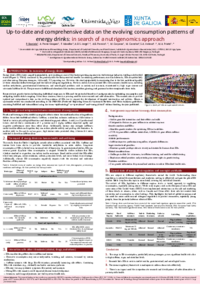
Energy drinks (EDs) have surged in popularity, becoming the fastest-growing products in the beverage industry after bottled water. Children consume them before school, athletes use them for performance enhancement, and adults rely on them for energy and mood improvement. Nearly 70% of European teenagers consume EDs, according to the European Food Safety Authority (EFSA). However, this widespread use is concerning due to the lack of regulation and the low nutritional quality of these beverages. EDs have been linked to various health issues, including cardiac arrhythmias, gastrointestinal disturbances, neurological effects (anxiety, depression, insomnia), and organ inflammation, exacerbated by their high sugar content (12 ± 3 g/100 mL). With a caffeine content of 160 mg per 500 mL, EDs pose health risks beyond caffeine alone, intensified by other ingredients like taurine, carnitine, ginseng, and guarana. Systematic review results indicate a rise in ED consumption across age groups, correlating with increased blood pressure and sleep disturbances. Nutrigenomics research, exploring gene–nutrient interactions, offers potential for optimizing ED consumption to enhance benefits and reduce risks. In conclusion, there is a pressing need for further research, public education, and the development of safer ED alternatives. This study aims to provide comprehensive data on the evolving use of EDs to support targeted interventions and policy development. A systematic review was conducted following the PRISMA guidelines, searching PubMed and ScienceDirect for terms like "epidemiology," "prevalence," and "energy drink" without restricting the publication year.
Keywords
Energy drinks
Caffeine
Consumption patterns
Health effects.
Poster
1.pdf
PREDICTION AND VALIDATION OF THE SOLUBILITY OF DATE SEED PHYTOSTEROLS USING HYDROPHOBIC NATURAL DEEP EUTECTIC SOLVENTS
Study on value addition of co-products in algerian fisheries