Event submissions
Published
This submission belongs to the session S9. Food Cultures, Policy and Consumer Science of the event The 5th International Electronic Conference on Foods
Published date
25 Oct, 2024
Academic Editor
'%3e%3cpath%20d='M12.6657%2010.9104C12.4185%2010.325%2012.0599%209.79327%2011.6097%209.34482C11.1609%208.89508%2010.6293%208.5365%2010.0442%208.28888C10.0389%208.28626%2010.0337%208.28495%2010.0285%208.28233C10.8446%207.69279%2011.3752%206.73249%2011.3752%205.64904C11.3752%203.8542%209.92103%202.39999%208.1262%202.39999C6.33136%202.39999%204.87715%203.8542%204.87715%205.64904C4.87715%206.73249%205.40774%207.69279%206.22393%208.28364C6.21869%208.28626%206.21345%208.28757%206.20821%208.29019C5.62129%208.5378%205.09463%208.89284%204.64265%209.34613C4.1929%209.79493%203.83432%2010.3266%203.58671%2010.9117C3.34345%2011.4845%203.21226%2012.0987%203.20023%2012.7209C3.19988%2012.7349%203.20233%2012.7488%203.20744%2012.7619C3.21255%2012.7749%203.22022%2012.7867%203.22998%2012.7968C3.23975%2012.8068%203.25142%2012.8147%203.26431%2012.8202C3.2772%2012.8256%203.29105%2012.8284%203.30504%2012.8284H4.09109C4.14874%2012.8284%204.19459%2012.7825%204.1959%2012.7262C4.2221%2011.7148%204.62823%2010.7676%205.34617%2010.0497C6.08899%209.30683%207.0755%208.89808%208.1262%208.89808C9.17689%208.89808%2010.1634%209.30683%2010.9062%2010.0497C11.6242%2010.7676%2012.0303%2011.7148%2012.0565%2012.7262C12.0578%2012.7838%2012.1037%2012.8284%2012.1613%2012.8284H12.9474C12.9613%2012.8284%2012.9752%2012.8256%2012.9881%2012.8202C13.001%2012.8147%2013.0126%2012.8068%2013.0224%2012.7968C13.0322%2012.7867%2013.0398%2012.7749%2013.0449%2012.7619C13.0501%2012.7488%2013.0525%2012.7349%2013.0522%2012.7209C13.0391%2012.0947%2012.9094%2011.4855%2012.6657%2010.9104ZM8.1262%207.9024C7.52486%207.9024%206.9589%207.6679%206.53312%207.24211C6.10733%206.81633%205.87283%206.25037%205.87283%205.64904C5.87283%205.0477%206.10733%204.48174%206.53312%204.05596C6.9589%203.63018%207.52486%203.39567%208.1262%203.39567C8.72753%203.39567%209.29349%203.63018%209.71927%204.05596C10.1451%204.48174%2010.3796%205.0477%2010.3796%205.64904C10.3796%206.25037%2010.1451%206.81633%209.71927%207.24211C9.29349%207.6679%208.72753%207.9024%208.1262%207.9024Z'%20fill='%235D1EE1'/%3e%3c/g%3e%3c/svg%3e) Maurice O'Sullivan
Maurice O'SullivanCitation
Mansi Dass Singh, Vandana Gulati, Gal Winter, Australian Indigenous fermented bush food culture, in Proceedings of The 5th International Electronic Conference on Foods, 28 October–30 October 2024, MDPI: Basel, Switzerland
Share
Email
Facebook
Twitter
LinkedIn
Australian Indigenous fermented bush food culture

Mansi Dass Singh 1
'%3e%3cpath%20d='M12.6647%2010.9104C12.4176%2010.325%2012.0589%209.7933%2011.6088%209.34485C11.16%208.89511%2010.6283%208.53653%2010.0432%208.28891C10.038%208.28629%2010.0327%208.28498%2010.0275%208.28236C10.8437%207.69282%2011.3743%206.73252%2011.3743%205.64907C11.3743%203.85423%209.92005%202.40002%208.12522%202.40002C6.33038%202.40002%204.87618%203.85423%204.87618%205.64907C4.87618%206.73252%205.40677%207.69282%206.22296%208.28367C6.21772%208.28629%206.21248%208.2876%206.20724%208.29022C5.62031%208.53783%205.09365%208.89287%204.64167%209.34616C4.19192%209.79496%203.83334%2010.3266%203.58573%2010.9117C3.34247%2011.4846%203.21128%2012.0987%203.19925%2012.721C3.1989%2012.735%203.20135%2012.7489%203.20646%2012.7619C3.21157%2012.7749%203.21924%2012.7868%203.22901%2012.7968C3.23877%2012.8068%203.25045%2012.8148%203.26334%2012.8202C3.27623%2012.8256%203.29007%2012.8284%203.30406%2012.8284H4.09012C4.14776%2012.8284%204.19362%2012.7825%204.19493%2012.7262C4.22113%2011.7148%204.62726%2010.7676%205.34519%2010.0497C6.08802%209.30686%207.07452%208.89811%208.12522%208.89811C9.17592%208.89811%2010.1624%209.30686%2010.9052%2010.0497C11.6232%2010.7676%2012.0293%2011.7148%2012.0555%2012.7262C12.0568%2012.7839%2012.1027%2012.8284%2012.1603%2012.8284H12.9464C12.9604%2012.8284%2012.9742%2012.8256%2012.9871%2012.8202C13%2012.8148%2013.0117%2012.8068%2013.0214%2012.7968C13.0312%2012.7868%2013.0389%2012.7749%2013.044%2012.7619C13.0491%2012.7489%2013.0515%2012.735%2013.0512%2012.721C13.0381%2012.0947%2012.9084%2011.4856%2012.6647%2010.9104ZM8.12522%207.90243C7.52388%207.90243%206.95792%207.66793%206.53214%207.24215C6.10636%206.81636%205.87185%206.2504%205.87185%205.64907C5.87185%205.04773%206.10636%204.48177%206.53214%204.05599C6.95792%203.63021%207.52388%203.3957%208.12522%203.3957C8.72655%203.3957%209.29252%203.63021%209.7183%204.05599C10.1441%204.48177%2010.3786%205.04773%2010.3786%205.64907C10.3786%206.2504%2010.1441%206.81636%209.7183%207.24215C9.29252%207.66793%208.72655%207.90243%208.12522%207.90243Z'%20fill='%235D1EE1'/%3e%3c/g%3e%3c/svg%3e)
Vandana Gulati 2
Gal Winter 3
1. Lecturer
Department of Biomedical Science
School of Science and Technology
McClymont Building (W034)
University of New England
Armidale NSW 2351 Australia
2. B.Pharmacy, M.Pharmacy (By Research), PhD
Senior Lecturer – Biomedical Science
Deputy HDR Coordinator -School of Science and Technology
University of New England
Armidale NSW 2351 Australia
3. Senior Lecturer Biomedical Sciences - School of Science and Technology, University of New England, NSW, Armidale
Abstract
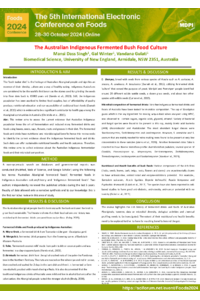
Introduction: The ‘bush tucker diet’ is the heritage of Australian Aboriginal people and signifies their identity, culture, and a way of healthy eating. The Indigenous population has been subjected to limited food supplies, a lack of affordable quality produce and nutritional education, and the non-accessibility of traditional bush foods. This diet is diverse including fruits, seeds, and fermented food with antioxidative potential, as shown in vitro for the following species: Santalum spicatum, Acacia ligulata, Beyeria leshnaultii, Acacia kempeana, and Euphorbia drumondii. This review aims to explore data about Australian Indigenous fermented bush foods.
Method: A non-systematic search on databases was conducted during July-Oct 2023 (PubMed, Web of Science, and Google Scholar) using the following key terms: ‘Australian Aboriginal fermented foods’, ‘fermented foods in Indigenous Australian culture/history’, and ‘Indigenous fermented foods’. Two authors independently reviewed the published articles during the last five years. The paucity of available data led to narrative synthesis, and to our knowledge, this is the first narrative review in this area of study.
Results: There is evidence that Australian Aboriginal people produced several fermented drinks including mangaitch from flowering cones of Banksia in Western Australia, way-a-linah from Eucalyptus tree sap in Tasmania kambuda from crushed nuts of the palm-like Pandanus tree in the Northern Territory, and Damper bread, involving the fermentation of locally produced seeds. Torres Strait Islanders produced tuba from the fructifying buds of coconut palms. The drinks have diverse microflora profiles: Proteobacteria (65%), Firmicutes (3%), Actinobacteria (2%), and Bacteroidetes with the fungal species Saccharomycetes, Dothideomycetes, Tremellomycetes, Leotiomycetes, and Sordariomycetes (50%). However, for fermented indigenous foods to have far-reaching benefits beyond the gut, it is imperative to investigate the taxonomic profile of microbial species, followed by well-defined human feeding studies.
Conclusion: Indigenous fermented food culture could have health, social, and nutritional benefits and we need further studies to explore the gut microbial data.
Keywords
Australian Aboriginal
Torres Strait Islanders
fermented foods
bush tucker
microbiome
culture
Poster
sciforum-103439.pdf
Lyophilized garambullo juice concentrate has endothelium-independent vasodilator effects on isolated thoracic aortic rings from rats with metabolic syndrome-associated hypertension
Physicochemical and microbiological evaluation of urban honey from stingless bees