Event submissions
Published
This submission belongs to the session S3. Sustainable Food Security and Food System of the event The 5th International Electronic Conference on Foods
Published date
28 Oct, 2024
Academic Editor
'%3e%3cpath%20d='M12.6657%2010.9104C12.4185%2010.325%2012.0599%209.79327%2011.6097%209.34482C11.1609%208.89508%2010.6293%208.5365%2010.0442%208.28888C10.0389%208.28626%2010.0337%208.28495%2010.0285%208.28233C10.8446%207.69279%2011.3752%206.73249%2011.3752%205.64904C11.3752%203.8542%209.92103%202.39999%208.1262%202.39999C6.33136%202.39999%204.87715%203.8542%204.87715%205.64904C4.87715%206.73249%205.40774%207.69279%206.22393%208.28364C6.21869%208.28626%206.21345%208.28757%206.20821%208.29019C5.62129%208.5378%205.09463%208.89284%204.64265%209.34613C4.1929%209.79493%203.83432%2010.3266%203.58671%2010.9117C3.34345%2011.4845%203.21226%2012.0987%203.20023%2012.7209C3.19988%2012.7349%203.20233%2012.7488%203.20744%2012.7619C3.21255%2012.7749%203.22022%2012.7867%203.22998%2012.7968C3.23975%2012.8068%203.25142%2012.8147%203.26431%2012.8202C3.2772%2012.8256%203.29105%2012.8284%203.30504%2012.8284H4.09109C4.14874%2012.8284%204.19459%2012.7825%204.1959%2012.7262C4.2221%2011.7148%204.62823%2010.7676%205.34617%2010.0497C6.08899%209.30683%207.0755%208.89808%208.1262%208.89808C9.17689%208.89808%2010.1634%209.30683%2010.9062%2010.0497C11.6242%2010.7676%2012.0303%2011.7148%2012.0565%2012.7262C12.0578%2012.7838%2012.1037%2012.8284%2012.1613%2012.8284H12.9474C12.9613%2012.8284%2012.9752%2012.8256%2012.9881%2012.8202C13.001%2012.8147%2013.0126%2012.8068%2013.0224%2012.7968C13.0322%2012.7867%2013.0398%2012.7749%2013.0449%2012.7619C13.0501%2012.7488%2013.0525%2012.7349%2013.0522%2012.7209C13.0391%2012.0947%2012.9094%2011.4855%2012.6657%2010.9104ZM8.1262%207.9024C7.52486%207.9024%206.9589%207.6679%206.53312%207.24211C6.10733%206.81633%205.87283%206.25037%205.87283%205.64904C5.87283%205.0477%206.10733%204.48174%206.53312%204.05596C6.9589%203.63018%207.52486%203.39567%208.1262%203.39567C8.72753%203.39567%209.29349%203.63018%209.71927%204.05596C10.1451%204.48174%2010.3796%205.0477%2010.3796%205.64904C10.3796%206.25037%2010.1451%206.81633%209.71927%207.24211C9.29349%207.6679%208.72753%207.9024%208.1262%207.9024Z'%20fill='%235D1EE1'/%3e%3c/g%3e%3c/svg%3e) Theodoros Varzakas
Theodoros VarzakasCitation
Seham Al Raish, Khaled A. El-Tarabily, Sara B. Almaramah, Abdelghafar M. Abu-Elsaoud, Wejdan A. Alteneiji, Shaikha T. Albedwawi, Harnessing Food Waste Derived from Kitchen Households for Sustainable Agriculture: A Study on Soil and Plant Nutrient Enhancement, in Proceedings of The 5th International Electronic Conference on Foods, 28 October–30 October 2024, MDPI: Basel, Switzerland
Share
Email
Facebook
Twitter
LinkedIn
Harnessing Food Waste Derived from Kitchen Households for Sustainable Agriculture: A Study on Soil and Plant Nutrient Enhancement
'%3e%3cpath%20d='M12.6647%2010.9104C12.4176%2010.325%2012.0589%209.7933%2011.6088%209.34485C11.16%208.89511%2010.6283%208.53653%2010.0432%208.28891C10.038%208.28629%2010.0327%208.28498%2010.0275%208.28236C10.8437%207.69282%2011.3743%206.73252%2011.3743%205.64907C11.3743%203.85423%209.92005%202.40002%208.12522%202.40002C6.33038%202.40002%204.87618%203.85423%204.87618%205.64907C4.87618%206.73252%205.40677%207.69282%206.22296%208.28367C6.21772%208.28629%206.21248%208.2876%206.20724%208.29022C5.62031%208.53783%205.09365%208.89287%204.64167%209.34616C4.19192%209.79496%203.83334%2010.3266%203.58573%2010.9117C3.34247%2011.4846%203.21128%2012.0987%203.19925%2012.721C3.1989%2012.735%203.20135%2012.7489%203.20646%2012.7619C3.21157%2012.7749%203.21924%2012.7868%203.22901%2012.7968C3.23877%2012.8068%203.25045%2012.8148%203.26334%2012.8202C3.27623%2012.8256%203.29007%2012.8284%203.30406%2012.8284H4.09012C4.14776%2012.8284%204.19362%2012.7825%204.19493%2012.7262C4.22113%2011.7148%204.62726%2010.7676%205.34519%2010.0497C6.08802%209.30686%207.07452%208.89811%208.12522%208.89811C9.17592%208.89811%2010.1624%209.30686%2010.9052%2010.0497C11.6232%2010.7676%2012.0293%2011.7148%2012.0555%2012.7262C12.0568%2012.7839%2012.1027%2012.8284%2012.1603%2012.8284H12.9464C12.9604%2012.8284%2012.9742%2012.8256%2012.9871%2012.8202C13%2012.8148%2013.0117%2012.8068%2013.0214%2012.7968C13.0312%2012.7868%2013.0389%2012.7749%2013.044%2012.7619C13.0491%2012.7489%2013.0515%2012.735%2013.0512%2012.721C13.0381%2012.0947%2012.9084%2011.4856%2012.6647%2010.9104ZM8.12522%207.90243C7.52388%207.90243%206.95792%207.66793%206.53214%207.24215C6.10636%206.81636%205.87185%206.2504%205.87185%205.64907C5.87185%205.04773%206.10636%204.48177%206.53214%204.05599C6.95792%203.63021%207.52388%203.3957%208.12522%203.3957C8.72655%203.3957%209.29252%203.63021%209.7183%204.05599C10.1441%204.48177%2010.3786%205.04773%2010.3786%205.64907C10.3786%206.2504%2010.1441%206.81636%209.7183%207.24215C9.29252%207.66793%208.72655%207.90243%208.12522%207.90243Z'%20fill='%235D1EE1'/%3e%3c/g%3e%3c/svg%3e)
Seham Al Raish 1

Khaled A. El-Tarabily 1
Sara B. Almaramah 1

Abdelghafar M. Abu-Elsaoud 2
Wejdan A. Alteneiji 1
Shaikha T. Albedwawi 1
1. Department of Biology, College of Science, United Arab Emirates University, Al Ain 15551, United Arab Emirates
2. Department of Botany and Microbiology, Faculty of Science, Suez Canal University, Ismailia 41522, Egypt
Department of Biology, College of Science, Imam Mohammad Ibn Saud Islamic University (IMSIU), Riyadh 11623, Saudi Arabia
Abstract
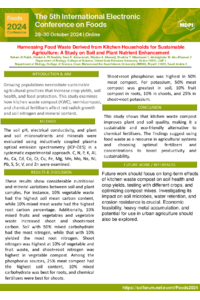
Growing populations necessitate sustainable agricultural practices that increase crop yields, soil health, and food protection. This study examines how kitchen waste compost (KWC), vermicompost, and chemical fertilisers affect red radish growth and soil nitrogen and mineral content. It evaluates soil pH, electrical conductivity, and plant and soil micronutrients and minerals using inductively coupled plasma optical emission spectrometry (ICP-OES) in a systematic experimental approach. C, N, P, K, Al, As, Ca, Cd, Co, Cr, Cu, Fe, Mg, Mn, Mo, Na, Ni, Pb, S, Sr, V, and Zn are examined. These results show considerable nutritional and mineral variations between soil and plant samples. For instance, 10% vegetable waste had the highest soil mean carbon content, while 10% mixed meat waste had the highest root carbon percentage. Additionally, 10% mixed fruits and vegetables and vegetable waste increased shoot and shoot+root carbon. Soil with 50% mixed carbohydrate had the most nitrogen, while that with 10% yielded the most root nitrogen. Shoot nitrogen was highest at 10% of vegetable and fruit waste, and shoot+root nitrogen was highest in vegetable compost. Among the phosphorus sources, 25% meat compost had the highest soil content, 10% mixed carbohydrate was best for roots, and chemical fertilisers were best for shoots. Shoot+root phosphorus was highest in 50% meat compost. For potassium, 50% meat compost was greatest in soil, 10% fruit compost in roots, 10% in shoots, and 25% in shoot+root potassium. This study shows that kitchen waste compost improves plant and soil quality, making it a sustainable and eco-friendly alternative to chemical fertilisers. The findings suggest using food waste as a resource in agricultural systems and choosing optimal fertilisers and concentrations to boost productivity and sustainability.
Keywords
Sustainable agriculture
Kitchen waste compost
Vermicompost
Chemical fertilizers
Soil nutrients
Inductively coupled plasma optical emission spectrometry (ICP-OES)
Food waste recycling
Environmental sustainability
Crop yield
Soil health
Organic fe
Poster
sciforum-099050.pdf
BIOGENIC AMINES IN FERMENTED SOY FOOD CONSUMED IN SERBIA
Prebiotic evaluation of acacia gum for Lactobacillus casei strain Shirota