Event submissions
Published
This submission belongs to the session S7. Oncology & Hematology of the event The 2nd International Electronic Conference on Clinical Medicine
Published date
11 Nov, 2024
Academic Editor
'%3e%3cpath%20d='M12.6657%2010.9104C12.4185%2010.325%2012.0599%209.79327%2011.6097%209.34482C11.1609%208.89508%2010.6293%208.5365%2010.0442%208.28888C10.0389%208.28626%2010.0337%208.28495%2010.0285%208.28233C10.8446%207.69279%2011.3752%206.73249%2011.3752%205.64904C11.3752%203.8542%209.92103%202.39999%208.1262%202.39999C6.33136%202.39999%204.87715%203.8542%204.87715%205.64904C4.87715%206.73249%205.40774%207.69279%206.22393%208.28364C6.21869%208.28626%206.21345%208.28757%206.20821%208.29019C5.62129%208.5378%205.09463%208.89284%204.64265%209.34613C4.1929%209.79493%203.83432%2010.3266%203.58671%2010.9117C3.34345%2011.4845%203.21226%2012.0987%203.20023%2012.7209C3.19988%2012.7349%203.20233%2012.7488%203.20744%2012.7619C3.21255%2012.7749%203.22022%2012.7867%203.22998%2012.7968C3.23975%2012.8068%203.25142%2012.8147%203.26431%2012.8202C3.2772%2012.8256%203.29105%2012.8284%203.30504%2012.8284H4.09109C4.14874%2012.8284%204.19459%2012.7825%204.1959%2012.7262C4.2221%2011.7148%204.62823%2010.7676%205.34617%2010.0497C6.08899%209.30683%207.0755%208.89808%208.1262%208.89808C9.17689%208.89808%2010.1634%209.30683%2010.9062%2010.0497C11.6242%2010.7676%2012.0303%2011.7148%2012.0565%2012.7262C12.0578%2012.7838%2012.1037%2012.8284%2012.1613%2012.8284H12.9474C12.9613%2012.8284%2012.9752%2012.8256%2012.9881%2012.8202C13.001%2012.8147%2013.0126%2012.8068%2013.0224%2012.7968C13.0322%2012.7867%2013.0398%2012.7749%2013.0449%2012.7619C13.0501%2012.7488%2013.0525%2012.7349%2013.0522%2012.7209C13.0391%2012.0947%2012.9094%2011.4855%2012.6657%2010.9104ZM8.1262%207.9024C7.52486%207.9024%206.9589%207.6679%206.53312%207.24211C6.10733%206.81633%205.87283%206.25037%205.87283%205.64904C5.87283%205.0477%206.10733%204.48174%206.53312%204.05596C6.9589%203.63018%207.52486%203.39567%208.1262%203.39567C8.72753%203.39567%209.29349%203.63018%209.71927%204.05596C10.1451%204.48174%2010.3796%205.0477%2010.3796%205.64904C10.3796%206.25037%2010.1451%206.81633%209.71927%207.24211C9.29349%207.6679%208.72753%207.9024%208.1262%207.9024Z'%20fill='%235D1EE1'/%3e%3c/g%3e%3c/svg%3e) Alex C Spyropoulos
Alex C SpyropoulosCitation
Karolina Małgorzata Różycka, Beata Kuczyńska, Małgorzata Mitura-Lesiuk, Aspergillosis in the course of childhood acute lymphoblastic leukaemia: an unexpected enemy, in Proceedings of The 2nd International Electronic Conference on Clinical Medicine, 13 November–15 November 2024, MDPI: Basel, Switzerland
Share
Email
Facebook
Twitter
LinkedIn
Aspergillosis in the course of childhood acute lymphoblastic leukaemia: an unexpected enemy
'%3e%3cpath%20d='M12.6647%2010.9104C12.4176%2010.325%2012.0589%209.7933%2011.6088%209.34485C11.16%208.89511%2010.6283%208.53653%2010.0432%208.28891C10.038%208.28629%2010.0327%208.28498%2010.0275%208.28236C10.8437%207.69282%2011.3743%206.73252%2011.3743%205.64907C11.3743%203.85423%209.92005%202.40002%208.12522%202.40002C6.33038%202.40002%204.87618%203.85423%204.87618%205.64907C4.87618%206.73252%205.40677%207.69282%206.22296%208.28367C6.21772%208.28629%206.21248%208.2876%206.20724%208.29022C5.62031%208.53783%205.09365%208.89287%204.64167%209.34616C4.19192%209.79496%203.83334%2010.3266%203.58573%2010.9117C3.34247%2011.4846%203.21128%2012.0987%203.19925%2012.721C3.1989%2012.735%203.20135%2012.7489%203.20646%2012.7619C3.21157%2012.7749%203.21924%2012.7868%203.22901%2012.7968C3.23877%2012.8068%203.25045%2012.8148%203.26334%2012.8202C3.27623%2012.8256%203.29007%2012.8284%203.30406%2012.8284H4.09012C4.14776%2012.8284%204.19362%2012.7825%204.19493%2012.7262C4.22113%2011.7148%204.62726%2010.7676%205.34519%2010.0497C6.08802%209.30686%207.07452%208.89811%208.12522%208.89811C9.17592%208.89811%2010.1624%209.30686%2010.9052%2010.0497C11.6232%2010.7676%2012.0293%2011.7148%2012.0555%2012.7262C12.0568%2012.7839%2012.1027%2012.8284%2012.1603%2012.8284H12.9464C12.9604%2012.8284%2012.9742%2012.8256%2012.9871%2012.8202C13%2012.8148%2013.0117%2012.8068%2013.0214%2012.7968C13.0312%2012.7868%2013.0389%2012.7749%2013.044%2012.7619C13.0491%2012.7489%2013.0515%2012.735%2013.0512%2012.721C13.0381%2012.0947%2012.9084%2011.4856%2012.6647%2010.9104ZM8.12522%207.90243C7.52388%207.90243%206.95792%207.66793%206.53214%207.24215C6.10636%206.81636%205.87185%206.2504%205.87185%205.64907C5.87185%205.04773%206.10636%204.48177%206.53214%204.05599C6.95792%203.63021%207.52388%203.3957%208.12522%203.3957C8.72655%203.3957%209.29252%203.63021%209.7183%204.05599C10.1441%204.48177%2010.3786%205.04773%2010.3786%205.64907C10.3786%206.2504%2010.1441%206.81636%209.7183%207.24215C9.29252%207.66793%208.72655%207.90243%208.12522%207.90243Z'%20fill='%235D1EE1'/%3e%3c/g%3e%3c/svg%3e)
Karolina Małgorzata Różycka 1
Beata Kuczyńska 1
Małgorzata Mitura-Lesiuk 2
1. Students’ Scientific Association at the Department of Pediatric Hematology, Oncology and Transplantology, Medical University of Lublin, Poland
2. Department of Paediatric Haematology and Oncology and Transplantology, Medical University of Lublin, Poland
Abstract
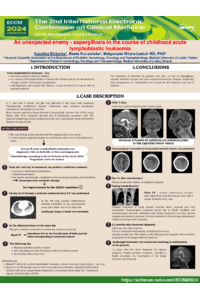
Acute lymphoblastic leukemia (ALL) is a malignant lymphoid tumor, most common in children aged 1-4. Well-diagnosed and treated ALL allows for a 5-year survival rate of up to 90% in pediatric patients.
A girl aged 3 years and 6 months was referred to the Department of Paediatric Haematology, Oncology and Transplantology of the University Children's Hospital in Lublin with suspected proliferative haematopoietic disease.
Laboratory tests revealed leucopenia, neutropenia and significant anaemia. Bone marrow aspiration biopsy showed a hypocellular marrow with 23.6% young blastic cells. Flow cytometry showed 42% B lymphocyte precursor cells. The patient's morphology results steadily improved, and a subsequent biopsy showed the absence of atypical cells. Despite the improvement in morphology results, a month later, 90% of atypical cells were found and a biopsy confirmed pre-B acute lymphoblastic leukaemia. Chemotherapy according to the IA Protocol of the ALLIC-BFM Programme 2009 was started.
From the 18th day of treatment, the patient's condition worsened; she started to have a fever, and her inflammatory parameters were increasing. Broad-spectrum antibiotic therapy was ineffective. Chest CT scan revealed massive inflammatory densities in the left lung. Antifungal drugs (v-fend) were included. The girl's condition continued to deteriorate; a seizure occurred and head CT showed hypodense foci in the parietal lobes. After 5 days, in the area of the skull, a protrusion of the skin occurred, and diagnostic tests confirmed the presence of mycelial strands of Aspergillus (Aspergillosis) in the liquefied brain tissue, necessitating neurosurgical evacuation of the necrotic lesions. Intensive antifungal treatment was continued.
Five months later, resection of the lower lobe of the left lung was performed. After 1.5 years, there was a recurrence of the proliferative process, without reactivation of invasive mycosis.
Regular monitoring and treatment of complications are crucial for the long-term survival of patients.
Keywords
Acute lymphoblastic leukaemia
Aspergillosis
Poster
100755_Karolina_Rozycka.pdf
Effectiveness of Hybrid Assertive Community Treatment in Rural Greece: Improving Outcomes for Severe Mental Illness Patients
Elucidating the Intricacies of Cytokine Release Syndrome (CRS) in Hematological Malignancies and the Associated Risk Factors: A National Study