Event submissions
Published
This submission belongs to the session S3. Epidemiology & Public Health of the event The 2nd International Electronic Conference on Clinical Medicine
Published date
11 Nov, 2024
Academic Editor
'%3e%3cpath%20d='M12.6657%2010.9104C12.4185%2010.325%2012.0599%209.79327%2011.6097%209.34482C11.1609%208.89508%2010.6293%208.5365%2010.0442%208.28888C10.0389%208.28626%2010.0337%208.28495%2010.0285%208.28233C10.8446%207.69279%2011.3752%206.73249%2011.3752%205.64904C11.3752%203.8542%209.92103%202.39999%208.1262%202.39999C6.33136%202.39999%204.87715%203.8542%204.87715%205.64904C4.87715%206.73249%205.40774%207.69279%206.22393%208.28364C6.21869%208.28626%206.21345%208.28757%206.20821%208.29019C5.62129%208.5378%205.09463%208.89284%204.64265%209.34613C4.1929%209.79493%203.83432%2010.3266%203.58671%2010.9117C3.34345%2011.4845%203.21226%2012.0987%203.20023%2012.7209C3.19988%2012.7349%203.20233%2012.7488%203.20744%2012.7619C3.21255%2012.7749%203.22022%2012.7867%203.22998%2012.7968C3.23975%2012.8068%203.25142%2012.8147%203.26431%2012.8202C3.2772%2012.8256%203.29105%2012.8284%203.30504%2012.8284H4.09109C4.14874%2012.8284%204.19459%2012.7825%204.1959%2012.7262C4.2221%2011.7148%204.62823%2010.7676%205.34617%2010.0497C6.08899%209.30683%207.0755%208.89808%208.1262%208.89808C9.17689%208.89808%2010.1634%209.30683%2010.9062%2010.0497C11.6242%2010.7676%2012.0303%2011.7148%2012.0565%2012.7262C12.0578%2012.7838%2012.1037%2012.8284%2012.1613%2012.8284H12.9474C12.9613%2012.8284%2012.9752%2012.8256%2012.9881%2012.8202C13.001%2012.8147%2013.0126%2012.8068%2013.0224%2012.7968C13.0322%2012.7867%2013.0398%2012.7749%2013.0449%2012.7619C13.0501%2012.7488%2013.0525%2012.7349%2013.0522%2012.7209C13.0391%2012.0947%2012.9094%2011.4855%2012.6657%2010.9104ZM8.1262%207.9024C7.52486%207.9024%206.9589%207.6679%206.53312%207.24211C6.10733%206.81633%205.87283%206.25037%205.87283%205.64904C5.87283%205.0477%206.10733%204.48174%206.53312%204.05596C6.9589%203.63018%207.52486%203.39567%208.1262%203.39567C8.72753%203.39567%209.29349%203.63018%209.71927%204.05596C10.1451%204.48174%2010.3796%205.0477%2010.3796%205.64904C10.3796%206.25037%2010.1451%206.81633%209.71927%207.24211C9.29349%207.6679%208.72753%207.9024%208.1262%207.9024Z'%20fill='%235D1EE1'/%3e%3c/g%3e%3c/svg%3e) Kent Doi
Kent DoiCitation
Claire Michaux, Blanca Rodríguez Díaz, Francisco Guillén Grima, Effectiveness of Hypochlorous acid in hospital disinfection, in Proceedings of The 2nd International Electronic Conference on Clinical Medicine, 13 November–15 November 2024, MDPI: Basel, Switzerland
Share
Email
Facebook
Twitter
LinkedIn
Effectiveness of Hypochlorous acid in hospital disinfection
'%3e%3cpath%20d='M12.6647%2010.9104C12.4176%2010.325%2012.0589%209.7933%2011.6088%209.34485C11.16%208.89511%2010.6283%208.53653%2010.0432%208.28891C10.038%208.28629%2010.0327%208.28498%2010.0275%208.28236C10.8437%207.69282%2011.3743%206.73252%2011.3743%205.64907C11.3743%203.85423%209.92005%202.40002%208.12522%202.40002C6.33038%202.40002%204.87618%203.85423%204.87618%205.64907C4.87618%206.73252%205.40677%207.69282%206.22296%208.28367C6.21772%208.28629%206.21248%208.2876%206.20724%208.29022C5.62031%208.53783%205.09365%208.89287%204.64167%209.34616C4.19192%209.79496%203.83334%2010.3266%203.58573%2010.9117C3.34247%2011.4846%203.21128%2012.0987%203.19925%2012.721C3.1989%2012.735%203.20135%2012.7489%203.20646%2012.7619C3.21157%2012.7749%203.21924%2012.7868%203.22901%2012.7968C3.23877%2012.8068%203.25045%2012.8148%203.26334%2012.8202C3.27623%2012.8256%203.29007%2012.8284%203.30406%2012.8284H4.09012C4.14776%2012.8284%204.19362%2012.7825%204.19493%2012.7262C4.22113%2011.7148%204.62726%2010.7676%205.34519%2010.0497C6.08802%209.30686%207.07452%208.89811%208.12522%208.89811C9.17592%208.89811%2010.1624%209.30686%2010.9052%2010.0497C11.6232%2010.7676%2012.0293%2011.7148%2012.0555%2012.7262C12.0568%2012.7839%2012.1027%2012.8284%2012.1603%2012.8284H12.9464C12.9604%2012.8284%2012.9742%2012.8256%2012.9871%2012.8202C13%2012.8148%2013.0117%2012.8068%2013.0214%2012.7968C13.0312%2012.7868%2013.0389%2012.7749%2013.044%2012.7619C13.0491%2012.7489%2013.0515%2012.735%2013.0512%2012.721C13.0381%2012.0947%2012.9084%2011.4856%2012.6647%2010.9104ZM8.12522%207.90243C7.52388%207.90243%206.95792%207.66793%206.53214%207.24215C6.10636%206.81636%205.87185%206.2504%205.87185%205.64907C5.87185%205.04773%206.10636%204.48177%206.53214%204.05599C6.95792%203.63021%207.52388%203.3957%208.12522%203.3957C8.72655%203.3957%209.29252%203.63021%209.7183%204.05599C10.1441%204.48177%2010.3786%205.04773%2010.3786%205.64907C10.3786%206.2504%2010.1441%206.81636%209.7183%207.24215C9.29252%207.66793%208.72655%207.90243%208.12522%207.90243Z'%20fill='%235D1EE1'/%3e%3c/g%3e%3c/svg%3e)
Claire Michaux 1
Blanca Rodríguez Díaz 1

Francisco Guillén Grima 1
1. Clínica Universidad de Navarra, Spain
Abstract
Introduction
Hospital disinfection is crucial for infection prevention, especially with rising bacterial resistance. Effective disinfectants compliant with European biocide regulations (528/2012 CE) are needed. At Clínica Universidad de Navarra, we started using Hypochlorous acid (Klorxitol®) in March 2022. We conducted a study to verify its efficacy by taking surface cultures before and after its application.
Methods
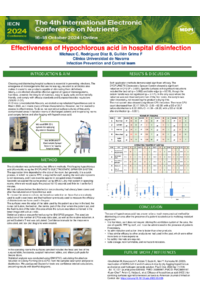
Hypochlorous acid (Klorxitol®) was applied via nebulization in wards and misting in operating theatres. We cultured five surfaces before and after disinfection on nine occasions. Nebulization used the BYOPLANET® Electrostatic Sprayer System, which requires no PPE or ventilation sealing. The high-touch surfaces sampled included patient armchairs, toilet flushes, nurse call bells, bed trays, and bed controls. In operating rooms, a mist system sprayed Klorxitol® for 15 seconds, followed by a 5-minute settling time. The sampled surfaces included the surgical table, keyboards, instrument tables, and door elbow push pads. Statistical analysis was conducted using IBM SPSS, calculating the absolute reduction in Colony-Forming Units (CFU) pre- and post-disinfection. Paired Student's t-tests and confidence interval calculations were used, with results presented in BoxPlot diagrams.
Results
Both application methods demonstrated significant efficacy. The BYOPLANET® Electrostatic Sprayer System showed a significant reduction in CFU (P < 0.001). Specific surfaces with significant reductions included the bed rail (p = 0.002) and table edge (p = 0.019), though the cistern handle was not significant (p = 0.171). The mist system also showed a significant CFU reduction. The mean CFU count decreased from 20.17 (95% CI -2.05 – 62.39) with a SD of 30.7 before disinfection to 8.33 (95% CI -11.59 – 28.25) with a SD of 18.98 after disinfection (p = 0.031).
Conclusion
Hypochlorous acid (Klorxitol®) effectively reduces bacterial contamination on hospital surfaces, meeting disinfection standards and supporting its use as a reliable disinfectant in healthcare settings.
Keywords
"Hospital disinfection" "Hypochlorous acid"
Poster
Poster de hipocloroso.pdf
Influence of circadian rhythmicity in development and course of Substance Use Disorders, Major Depression, and their comorbidities
Early diagnostic markers of nephropathy with hypertensive disease in patients with type 2 diabetes mellitus