Event submissions
Events2024 International Conference on Science and Engineering of Electronics (ICSEE'2024)
Published
This submission belongs to the session S10. Machine and Computer Vision for Electronics of the event 2024 International Conference on Science and Engineering of Electronics (ICSEE'2024)
Published date
23 Nov, 2024
Academic Editor
'%3e%3cpath%20d='M12.6657%2010.9104C12.4185%2010.325%2012.0599%209.79327%2011.6097%209.34482C11.1609%208.89508%2010.6293%208.5365%2010.0442%208.28888C10.0389%208.28626%2010.0337%208.28495%2010.0285%208.28233C10.8446%207.69279%2011.3752%206.73249%2011.3752%205.64904C11.3752%203.8542%209.92103%202.39999%208.1262%202.39999C6.33136%202.39999%204.87715%203.8542%204.87715%205.64904C4.87715%206.73249%205.40774%207.69279%206.22393%208.28364C6.21869%208.28626%206.21345%208.28757%206.20821%208.29019C5.62129%208.5378%205.09463%208.89284%204.64265%209.34613C4.1929%209.79493%203.83432%2010.3266%203.58671%2010.9117C3.34345%2011.4845%203.21226%2012.0987%203.20023%2012.7209C3.19988%2012.7349%203.20233%2012.7488%203.20744%2012.7619C3.21255%2012.7749%203.22022%2012.7867%203.22998%2012.7968C3.23975%2012.8068%203.25142%2012.8147%203.26431%2012.8202C3.2772%2012.8256%203.29105%2012.8284%203.30504%2012.8284H4.09109C4.14874%2012.8284%204.19459%2012.7825%204.1959%2012.7262C4.2221%2011.7148%204.62823%2010.7676%205.34617%2010.0497C6.08899%209.30683%207.0755%208.89808%208.1262%208.89808C9.17689%208.89808%2010.1634%209.30683%2010.9062%2010.0497C11.6242%2010.7676%2012.0303%2011.7148%2012.0565%2012.7262C12.0578%2012.7838%2012.1037%2012.8284%2012.1613%2012.8284H12.9474C12.9613%2012.8284%2012.9752%2012.8256%2012.9881%2012.8202C13.001%2012.8147%2013.0126%2012.8068%2013.0224%2012.7968C13.0322%2012.7867%2013.0398%2012.7749%2013.0449%2012.7619C13.0501%2012.7488%2013.0525%2012.7349%2013.0522%2012.7209C13.0391%2012.0947%2012.9094%2011.4855%2012.6657%2010.9104ZM8.1262%207.9024C7.52486%207.9024%206.9589%207.6679%206.53312%207.24211C6.10733%206.81633%205.87283%206.25037%205.87283%205.64904C5.87283%205.0477%206.10733%204.48174%206.53312%204.05596C6.9589%203.63018%207.52486%203.39567%208.1262%203.39567C8.72753%203.39567%209.29349%203.63018%209.71927%204.05596C10.1451%204.48174%2010.3796%205.0477%2010.3796%205.64904C10.3796%206.25037%2010.1451%206.81633%209.71927%207.24211C9.29349%207.6679%208.72753%207.9024%208.1262%207.9024Z'%20fill='%235D1EE1'/%3e%3c/g%3e%3c/svg%3e) Ying Tan
Ying TanCitation
Huicong Liu, Miao Tian, Shengbo Huang, Zini Zhuang, Xinzhi Tan, Xiongsheng Dong, Vehicle VIN Recognition Based on Deep Learning and OCR, in Proceedings of 2024 International Conference on Science and Engineering of Electronics (ICSEE'2024), Wuhan, 22 November–26 November 2024, MDPI: Basel, Switzerland
Share
Email
Facebook
Twitter
LinkedIn
Vehicle VIN Recognition Based on Deep Learning and OCR
'%3e%3cpath%20d='M12.6647%2010.9104C12.4176%2010.325%2012.0589%209.7933%2011.6088%209.34485C11.16%208.89511%2010.6283%208.53653%2010.0432%208.28891C10.038%208.28629%2010.0327%208.28498%2010.0275%208.28236C10.8437%207.69282%2011.3743%206.73252%2011.3743%205.64907C11.3743%203.85423%209.92005%202.40002%208.12522%202.40002C6.33038%202.40002%204.87618%203.85423%204.87618%205.64907C4.87618%206.73252%205.40677%207.69282%206.22296%208.28367C6.21772%208.28629%206.21248%208.2876%206.20724%208.29022C5.62031%208.53783%205.09365%208.89287%204.64167%209.34616C4.19192%209.79496%203.83334%2010.3266%203.58573%2010.9117C3.34247%2011.4846%203.21128%2012.0987%203.19925%2012.721C3.1989%2012.735%203.20135%2012.7489%203.20646%2012.7619C3.21157%2012.7749%203.21924%2012.7868%203.22901%2012.7968C3.23877%2012.8068%203.25045%2012.8148%203.26334%2012.8202C3.27623%2012.8256%203.29007%2012.8284%203.30406%2012.8284H4.09012C4.14776%2012.8284%204.19362%2012.7825%204.19493%2012.7262C4.22113%2011.7148%204.62726%2010.7676%205.34519%2010.0497C6.08802%209.30686%207.07452%208.89811%208.12522%208.89811C9.17592%208.89811%2010.1624%209.30686%2010.9052%2010.0497C11.6232%2010.7676%2012.0293%2011.7148%2012.0555%2012.7262C12.0568%2012.7839%2012.1027%2012.8284%2012.1603%2012.8284H12.9464C12.9604%2012.8284%2012.9742%2012.8256%2012.9871%2012.8202C13%2012.8148%2013.0117%2012.8068%2013.0214%2012.7968C13.0312%2012.7868%2013.0389%2012.7749%2013.044%2012.7619C13.0491%2012.7489%2013.0515%2012.735%2013.0512%2012.721C13.0381%2012.0947%2012.9084%2011.4856%2012.6647%2010.9104ZM8.12522%207.90243C7.52388%207.90243%206.95792%207.66793%206.53214%207.24215C6.10636%206.81636%205.87185%206.2504%205.87185%205.64907C5.87185%205.04773%206.10636%204.48177%206.53214%204.05599C6.95792%203.63021%207.52388%203.3957%208.12522%203.3957C8.72655%203.3957%209.29252%203.63021%209.7183%204.05599C10.1441%204.48177%2010.3786%205.04773%2010.3786%205.64907C10.3786%206.2504%2010.1441%206.81636%209.7183%207.24215C9.29252%207.66793%208.72655%207.90243%208.12522%207.90243Z'%20fill='%235D1EE1'/%3e%3c/g%3e%3c/svg%3e)
Huicong Liu 1
Miao Tian 1
Shengbo Huang 1
Zini Zhuang 1
Xinzhi Tan 1
Xiongsheng Dong 1
1. Shenzhen Power Supply Co.,Ltd
Abstract
This paper proposes a deep learning-based Optical Character Recognition (OCR) system aimed at addressing the limitations of traditional Vehicle Identification Number (VIN) recognition methods in complex environments. As the unique identifier for vehicles, the VIN plays a critical role in vehicle management, registration, and tracking. However, conventional recognition methods, which rely on manual transcription or simple license plate recognition, are inefficient and prone to errors, especially in situations where there is insufficient lighting, reflections, dirt, or significant tilt angles. To overcome these challenges, the proposed system uses high-resolution cameras to capture vehicle images and applies image preprocessing techniques such as grayscale conversion and binarization to enhance image quality, ensuring that characters are clearly visible even in challenging conditions.At the core of the system is the integration of deep learning models, including Long Short-Term Memory (LSTM) networks, which automatically learn and extract key features from the images, enabling precise VIN recognition without the need for manual intervention. Compared to traditional methods based on template matching or rules, deep learning models offer greater generalization capabilities, allowing for high-accuracy recognition under various complex conditions. Additionally, the system incorporates a character verification function to ensure that the recognized VIN conforms to standard formatting and effectively distinguishes between easily confused characters, such as "0" and "O." This feature not only improves recognition accuracy but also helps prevent the misuse of charging cards, further optimizing the management and utilization of corporate vehicle resources.
Keywords
VIN Recognition
OCR
LSTM
Vehicle Management
Poster
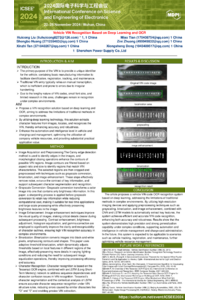
poster1.pdf
Research on Data Encryption and Authentication Methods for Industrial Automation Based on Machine Learning
An Optimization of the Biomagnetism Model for the BEST Software