Event submissions
Published
This submission belongs to the session S5. Advancement in Vaccine Design for Broad Protection of the event The 2nd International Electronic Conference on Vaccines
Published date
25 Nov, 2024
Academic Editor
'%3e%3cpath%20d='M12.6657%2010.9104C12.4185%2010.325%2012.0599%209.79327%2011.6097%209.34482C11.1609%208.89508%2010.6293%208.5365%2010.0442%208.28888C10.0389%208.28626%2010.0337%208.28495%2010.0285%208.28233C10.8446%207.69279%2011.3752%206.73249%2011.3752%205.64904C11.3752%203.8542%209.92103%202.39999%208.1262%202.39999C6.33136%202.39999%204.87715%203.8542%204.87715%205.64904C4.87715%206.73249%205.40774%207.69279%206.22393%208.28364C6.21869%208.28626%206.21345%208.28757%206.20821%208.29019C5.62129%208.5378%205.09463%208.89284%204.64265%209.34613C4.1929%209.79493%203.83432%2010.3266%203.58671%2010.9117C3.34345%2011.4845%203.21226%2012.0987%203.20023%2012.7209C3.19988%2012.7349%203.20233%2012.7488%203.20744%2012.7619C3.21255%2012.7749%203.22022%2012.7867%203.22998%2012.7968C3.23975%2012.8068%203.25142%2012.8147%203.26431%2012.8202C3.2772%2012.8256%203.29105%2012.8284%203.30504%2012.8284H4.09109C4.14874%2012.8284%204.19459%2012.7825%204.1959%2012.7262C4.2221%2011.7148%204.62823%2010.7676%205.34617%2010.0497C6.08899%209.30683%207.0755%208.89808%208.1262%208.89808C9.17689%208.89808%2010.1634%209.30683%2010.9062%2010.0497C11.6242%2010.7676%2012.0303%2011.7148%2012.0565%2012.7262C12.0578%2012.7838%2012.1037%2012.8284%2012.1613%2012.8284H12.9474C12.9613%2012.8284%2012.9752%2012.8256%2012.9881%2012.8202C13.001%2012.8147%2013.0126%2012.8068%2013.0224%2012.7968C13.0322%2012.7867%2013.0398%2012.7749%2013.0449%2012.7619C13.0501%2012.7488%2013.0525%2012.7349%2013.0522%2012.7209C13.0391%2012.0947%2012.9094%2011.4855%2012.6657%2010.9104ZM8.1262%207.9024C7.52486%207.9024%206.9589%207.6679%206.53312%207.24211C6.10733%206.81633%205.87283%206.25037%205.87283%205.64904C5.87283%205.0477%206.10733%204.48174%206.53312%204.05596C6.9589%203.63018%207.52486%203.39567%208.1262%203.39567C8.72753%203.39567%209.29349%203.63018%209.71927%204.05596C10.1451%204.48174%2010.3796%205.0477%2010.3796%205.64904C10.3796%206.25037%2010.1451%206.81633%209.71927%207.24211C9.29349%207.6679%208.72753%207.9024%208.1262%207.9024Z'%20fill='%235D1EE1'/%3e%3c/g%3e%3c/svg%3e) Sara Louise Cosby
Sara Louise CosbyCitation
Anchal Singh, Vipin Kumar, Sunil Kumar, Designing a novel multi-epitope cocktail vaccine candidate for Lymphatic Filariasis: An immuno-informatics approach, in Proceedings of The 2nd International Electronic Conference on Vaccines, 27 November–29 November 2024, MDPI: Basel, Switzerland
Share
Email
Facebook
Twitter
LinkedIn
Designing a novel multi-epitope cocktail vaccine candidate for Lymphatic Filariasis: An immuno-informatics approach
'%3e%3cpath%20d='M12.6647%2010.9104C12.4176%2010.325%2012.0589%209.7933%2011.6088%209.34485C11.16%208.89511%2010.6283%208.53653%2010.0432%208.28891C10.038%208.28629%2010.0327%208.28498%2010.0275%208.28236C10.8437%207.69282%2011.3743%206.73252%2011.3743%205.64907C11.3743%203.85423%209.92005%202.40002%208.12522%202.40002C6.33038%202.40002%204.87618%203.85423%204.87618%205.64907C4.87618%206.73252%205.40677%207.69282%206.22296%208.28367C6.21772%208.28629%206.21248%208.2876%206.20724%208.29022C5.62031%208.53783%205.09365%208.89287%204.64167%209.34616C4.19192%209.79496%203.83334%2010.3266%203.58573%2010.9117C3.34247%2011.4846%203.21128%2012.0987%203.19925%2012.721C3.1989%2012.735%203.20135%2012.7489%203.20646%2012.7619C3.21157%2012.7749%203.21924%2012.7868%203.22901%2012.7968C3.23877%2012.8068%203.25045%2012.8148%203.26334%2012.8202C3.27623%2012.8256%203.29007%2012.8284%203.30406%2012.8284H4.09012C4.14776%2012.8284%204.19362%2012.7825%204.19493%2012.7262C4.22113%2011.7148%204.62726%2010.7676%205.34519%2010.0497C6.08802%209.30686%207.07452%208.89811%208.12522%208.89811C9.17592%208.89811%2010.1624%209.30686%2010.9052%2010.0497C11.6232%2010.7676%2012.0293%2011.7148%2012.0555%2012.7262C12.0568%2012.7839%2012.1027%2012.8284%2012.1603%2012.8284H12.9464C12.9604%2012.8284%2012.9742%2012.8256%2012.9871%2012.8202C13%2012.8148%2013.0117%2012.8068%2013.0214%2012.7968C13.0312%2012.7868%2013.0389%2012.7749%2013.044%2012.7619C13.0491%2012.7489%2013.0515%2012.735%2013.0512%2012.721C13.0381%2012.0947%2012.9084%2011.4856%2012.6647%2010.9104ZM8.12522%207.90243C7.52388%207.90243%206.95792%207.66793%206.53214%207.24215C6.10636%206.81636%205.87185%206.2504%205.87185%205.64907C5.87185%205.04773%206.10636%204.48177%206.53214%204.05599C6.95792%203.63021%207.52388%203.3957%208.12522%203.3957C8.72655%203.3957%209.29252%203.63021%209.7183%204.05599C10.1441%204.48177%2010.3786%205.04773%2010.3786%205.64907C10.3786%206.2504%2010.1441%206.81636%209.7183%207.24215C9.29252%207.66793%208.72655%207.90243%208.12522%207.90243Z'%20fill='%235D1EE1'/%3e%3c/g%3e%3c/svg%3e)
Anchal Singh 1
Vipin Kumar 1
Sunil Kumar 1
1. Department of Biochemistry,
Institute of Science,
Banaras Hindu University,
Varanasi, 221005, U.P., India
Abstract
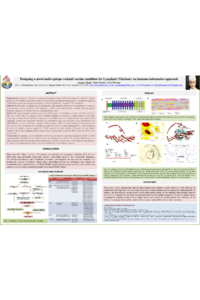
Background: Lymphatic filariasis is a neglected tropical disease (NTD) affecting more than 863 million people in 47 countries across the world. A multi-epitope prophylactic/therapeutic vaccination targeting filarial defense proteins would be invaluable in achieving the current goal of LF elimination.
Method: In this study, a combination of immunomics and immune-informatics was applied to construct a multi-epitope vaccine candidate. The antigenic proteins were identified by immune blotting against different categories of Wuchereria bancrofti-infected LF sera.
Result: The major antigenic proteins were heat shock protein 70, Tubulin beta chain, Enolase, Galectin, and 14-3-3 zeta. The five antigens were combined together to construct a multi-epitope vaccine after predicting the linear B-cell and T-cell epitopes of individual antigens. A three-dimensional model of the candidate vaccine was predicted, followed by refinement, and was validated using RAMPAGE and PROCHECK servers. A Toll-like receptor (TLR) agonist, a 50S ribosomal subunit of Mycobacterium tuberculosis, was included in the candidate vaccine to enhance vaccine immunogenicity. The docking of the chimeric peptide vaccine against the TLR5 resulted in high binding efficiency for the docked complex. The in silico immune simulation provided a significant increase in CD4+ T-cell and CD8+ T-cell populations.
Conclusion: In summary, the recombinant putative vaccine showed high immunogenicity which could be experimentally validated in the future for the development of a potent LF vaccine. Furthermore, by employing multi-epitope structures and constructing a cocktail vaccine for LF, this study has the potential to represent an important milestone in the development of an anti-filarial vaccine.
Keywords
Lymphatic filarial vaccine
multi-epitopic vaccine
cocktail vaccine
Poster
poster sciforum-106631.pdf
In silico design of a vaccine candidate against Oropouche virus based on a multi-epitope protein
Challenges in Developing Universal Influenza Vaccine: Progress and Hurdles in Creating Broad Protection Against the Rapidly Mutating Virus