Event submissions
Published
This submission belongs to the session S1. Crops of the event The 4th International Electronic Conference on Agronomy
Published date
02 Dec, 2024
Academic Editor
'%3e%3cpath%20d='M12.6657%2010.9104C12.4185%2010.325%2012.0599%209.79327%2011.6097%209.34482C11.1609%208.89508%2010.6293%208.5365%2010.0442%208.28888C10.0389%208.28626%2010.0337%208.28495%2010.0285%208.28233C10.8446%207.69279%2011.3752%206.73249%2011.3752%205.64904C11.3752%203.8542%209.92103%202.39999%208.1262%202.39999C6.33136%202.39999%204.87715%203.8542%204.87715%205.64904C4.87715%206.73249%205.40774%207.69279%206.22393%208.28364C6.21869%208.28626%206.21345%208.28757%206.20821%208.29019C5.62129%208.5378%205.09463%208.89284%204.64265%209.34613C4.1929%209.79493%203.83432%2010.3266%203.58671%2010.9117C3.34345%2011.4845%203.21226%2012.0987%203.20023%2012.7209C3.19988%2012.7349%203.20233%2012.7488%203.20744%2012.7619C3.21255%2012.7749%203.22022%2012.7867%203.22998%2012.7968C3.23975%2012.8068%203.25142%2012.8147%203.26431%2012.8202C3.2772%2012.8256%203.29105%2012.8284%203.30504%2012.8284H4.09109C4.14874%2012.8284%204.19459%2012.7825%204.1959%2012.7262C4.2221%2011.7148%204.62823%2010.7676%205.34617%2010.0497C6.08899%209.30683%207.0755%208.89808%208.1262%208.89808C9.17689%208.89808%2010.1634%209.30683%2010.9062%2010.0497C11.6242%2010.7676%2012.0303%2011.7148%2012.0565%2012.7262C12.0578%2012.7838%2012.1037%2012.8284%2012.1613%2012.8284H12.9474C12.9613%2012.8284%2012.9752%2012.8256%2012.9881%2012.8202C13.001%2012.8147%2013.0126%2012.8068%2013.0224%2012.7968C13.0322%2012.7867%2013.0398%2012.7749%2013.0449%2012.7619C13.0501%2012.7488%2013.0525%2012.7349%2013.0522%2012.7209C13.0391%2012.0947%2012.9094%2011.4855%2012.6657%2010.9104ZM8.1262%207.9024C7.52486%207.9024%206.9589%207.6679%206.53312%207.24211C6.10733%206.81633%205.87283%206.25037%205.87283%205.64904C5.87283%205.0477%206.10733%204.48174%206.53312%204.05596C6.9589%203.63018%207.52486%203.39567%208.1262%203.39567C8.72753%203.39567%209.29349%203.63018%209.71927%204.05596C10.1451%204.48174%2010.3796%205.0477%2010.3796%205.64904C10.3796%206.25037%2010.1451%206.81633%209.71927%207.24211C9.29349%207.6679%208.72753%207.9024%208.1262%207.9024Z'%20fill='%235D1EE1'/%3e%3c/g%3e%3c/svg%3e) Ionut Spatar
Ionut SpatarCitation
DHIVYA LAKSHMIKANTHAN, PUNITHAVATHI V R, Combined effects of micro-/nanoplastics and humic substance on Allium sativum and importance of humic substance in alleviating toxicity, in Proceedings of The 4th International Electronic Conference on Agronomy, 2 December–5 December 2024, MDPI: Basel, Switzerland
Share
Email
Facebook
Twitter
LinkedIn
Combined effects of micro-/nanoplastics and humic substance on Allium sativum and importance of humic substance in alleviating toxicity
'%3e%3cpath%20d='M12.6647%2010.9104C12.4176%2010.325%2012.0589%209.7933%2011.6088%209.34485C11.16%208.89511%2010.6283%208.53653%2010.0432%208.28891C10.038%208.28629%2010.0327%208.28498%2010.0275%208.28236C10.8437%207.69282%2011.3743%206.73252%2011.3743%205.64907C11.3743%203.85423%209.92005%202.40002%208.12522%202.40002C6.33038%202.40002%204.87618%203.85423%204.87618%205.64907C4.87618%206.73252%205.40677%207.69282%206.22296%208.28367C6.21772%208.28629%206.21248%208.2876%206.20724%208.29022C5.62031%208.53783%205.09365%208.89287%204.64167%209.34616C4.19192%209.79496%203.83334%2010.3266%203.58573%2010.9117C3.34247%2011.4846%203.21128%2012.0987%203.19925%2012.721C3.1989%2012.735%203.20135%2012.7489%203.20646%2012.7619C3.21157%2012.7749%203.21924%2012.7868%203.22901%2012.7968C3.23877%2012.8068%203.25045%2012.8148%203.26334%2012.8202C3.27623%2012.8256%203.29007%2012.8284%203.30406%2012.8284H4.09012C4.14776%2012.8284%204.19362%2012.7825%204.19493%2012.7262C4.22113%2011.7148%204.62726%2010.7676%205.34519%2010.0497C6.08802%209.30686%207.07452%208.89811%208.12522%208.89811C9.17592%208.89811%2010.1624%209.30686%2010.9052%2010.0497C11.6232%2010.7676%2012.0293%2011.7148%2012.0555%2012.7262C12.0568%2012.7839%2012.1027%2012.8284%2012.1603%2012.8284H12.9464C12.9604%2012.8284%2012.9742%2012.8256%2012.9871%2012.8202C13%2012.8148%2013.0117%2012.8068%2013.0214%2012.7968C13.0312%2012.7868%2013.0389%2012.7749%2013.044%2012.7619C13.0491%2012.7489%2013.0515%2012.735%2013.0512%2012.721C13.0381%2012.0947%2012.9084%2011.4856%2012.6647%2010.9104ZM8.12522%207.90243C7.52388%207.90243%206.95792%207.66793%206.53214%207.24215C6.10636%206.81636%205.87185%206.2504%205.87185%205.64907C5.87185%205.04773%206.10636%204.48177%206.53214%204.05599C6.95792%203.63021%207.52388%203.3957%208.12522%203.3957C8.72655%203.3957%209.29252%203.63021%209.7183%204.05599C10.1441%204.48177%2010.3786%205.04773%2010.3786%205.64907C10.3786%206.2504%2010.1441%206.81636%209.7183%207.24215C9.29252%207.66793%208.72655%207.90243%208.12522%207.90243Z'%20fill='%235D1EE1'/%3e%3c/g%3e%3c/svg%3e)
DHIVYA LAKSHMIKANTHAN 1,2
PUNITHAVATHI V R 2,3
1. ASSISTANT PROFESSOR, DEPARTMENT OF BIOTECHNOLOGY
2. M.M.E.S. WOMEN'S ARTS AND SCIENCE COLLEGE, MELVISHARAM, ARCOT
3. HEAD OF THE DEPARTMENT, ASSISTANT PROFESSOR, DEPARTMENT OF BIOTECHNOLOGY
Abstract
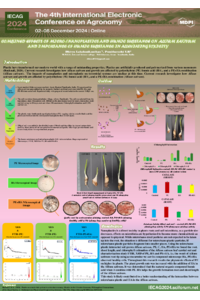
The impacts of nanoplastics (NPs) and microplastics (MPs) on terrestrial systems are not yet fully understood, but their increasing accumulation is raising significant concerns, particularly with the use of sewage sludge in agricultural practices. This research aimed to elucidate the effects of polyethylene (PE), humic acid (HA), and their combination on the growth and development of Allium sativum (garlic). This study observed the formation of a significant eco-corona after 24 hours of interaction between PE and HA, which led to notable enhancements in garlic plant growth parameters. Specifically, plants exposed to eco-coronated PE exhibited improved growth and higher chlorophyll (Chl) content. Garlic bulbs treated with a combination of PE and HA demonstrated an impressive growth rate of 90%, compared to only 30% for those treated with PE alone. Chlorophyll content measurements further revealed that plants in the HA and PE+HA treatment groups had significantly higher levels of Chl a, b, and total Chl (a + b) compared to those treated with PE alone. Additionally, the HA and PE+HA treatment groups showed lower catalase activity than the groups treated with PE alone, indicating reduced oxidative stress and toxicity. These findings suggest that HA can substantially mitigate the toxicity caused by PE, likely due to the formation of an eco-corona on the PE particles' surface. This eco-corona appears to alter the interaction between the plastic particles and the plants, potentially reducing harmful effects. This study indicates that utilizing eco-coronas could be an effective strategy for protecting plants from xenobiotics such as NPs. Further, this research is essential to fully understand the mechanisms behind these interactions, including how eco-coronas form and function, and to explore their broader implications for terrestrial ecosystems. This knowledge is essential for creating guidelines to manage plastic pollution and protect terrestrial ecosystems from the harmful effects of NPs and MPs.
Keywords
Chlorophyll estimation
Humic acid (HA)
Oxidative stress
Polyethylene (PE)
Plant growth rate
Poster
Dr. Dhivya L - Agronomy Conf Poster.pdf
Indoor green and purple lettuce seedling production under LED lights
A practical analysis of the food traceability procedure across the different stages of the supply chain