Event submissions
Published
This submission belongs to the session S3. Sustainable Soil Management and Farming Systems of the event The 4th International Electronic Conference on Agronomy
Published date
02 Dec, 2024
Academic Editor
'%3e%3cpath%20d='M12.6657%2010.9104C12.4185%2010.325%2012.0599%209.79327%2011.6097%209.34482C11.1609%208.89508%2010.6293%208.5365%2010.0442%208.28888C10.0389%208.28626%2010.0337%208.28495%2010.0285%208.28233C10.8446%207.69279%2011.3752%206.73249%2011.3752%205.64904C11.3752%203.8542%209.92103%202.39999%208.1262%202.39999C6.33136%202.39999%204.87715%203.8542%204.87715%205.64904C4.87715%206.73249%205.40774%207.69279%206.22393%208.28364C6.21869%208.28626%206.21345%208.28757%206.20821%208.29019C5.62129%208.5378%205.09463%208.89284%204.64265%209.34613C4.1929%209.79493%203.83432%2010.3266%203.58671%2010.9117C3.34345%2011.4845%203.21226%2012.0987%203.20023%2012.7209C3.19988%2012.7349%203.20233%2012.7488%203.20744%2012.7619C3.21255%2012.7749%203.22022%2012.7867%203.22998%2012.7968C3.23975%2012.8068%203.25142%2012.8147%203.26431%2012.8202C3.2772%2012.8256%203.29105%2012.8284%203.30504%2012.8284H4.09109C4.14874%2012.8284%204.19459%2012.7825%204.1959%2012.7262C4.2221%2011.7148%204.62823%2010.7676%205.34617%2010.0497C6.08899%209.30683%207.0755%208.89808%208.1262%208.89808C9.17689%208.89808%2010.1634%209.30683%2010.9062%2010.0497C11.6242%2010.7676%2012.0303%2011.7148%2012.0565%2012.7262C12.0578%2012.7838%2012.1037%2012.8284%2012.1613%2012.8284H12.9474C12.9613%2012.8284%2012.9752%2012.8256%2012.9881%2012.8202C13.001%2012.8147%2013.0126%2012.8068%2013.0224%2012.7968C13.0322%2012.7867%2013.0398%2012.7749%2013.0449%2012.7619C13.0501%2012.7488%2013.0525%2012.7349%2013.0522%2012.7209C13.0391%2012.0947%2012.9094%2011.4855%2012.6657%2010.9104ZM8.1262%207.9024C7.52486%207.9024%206.9589%207.6679%206.53312%207.24211C6.10733%206.81633%205.87283%206.25037%205.87283%205.64904C5.87283%205.0477%206.10733%204.48174%206.53312%204.05596C6.9589%203.63018%207.52486%203.39567%208.1262%203.39567C8.72753%203.39567%209.29349%203.63018%209.71927%204.05596C10.1451%204.48174%2010.3796%205.0477%2010.3796%205.64904C10.3796%206.25037%2010.1451%206.81633%209.71927%207.24211C9.29349%207.6679%208.72753%207.9024%208.1262%207.9024Z'%20fill='%235D1EE1'/%3e%3c/g%3e%3c/svg%3e) Mirza Hasanuzzaman
Mirza HasanuzzamanCitation
Chinedu Endurance Mbah, Olubukola Monisola Oyawoye, Oluwatomiwa Jubilee Sunbare-Funto, Oluwatosin Akinola Ajibade, GENOMIC EXPLORATION OF Enterobacter hormaechei OYAS29: A POTENTIAL ALLY FOR SUSTAINABLE PLANT GROWTH, in Proceedings of The 4th International Electronic Conference on Agronomy, 2 December–5 December 2024, MDPI: Basel, Switzerland
Share
Email
Facebook
Twitter
LinkedIn
GENOMIC EXPLORATION OF Enterobacter hormaechei OYAS29: A POTENTIAL ALLY FOR SUSTAINABLE PLANT GROWTH
'%3e%3cpath%20d='M12.6647%2010.9104C12.4176%2010.325%2012.0589%209.7933%2011.6088%209.34485C11.16%208.89511%2010.6283%208.53653%2010.0432%208.28891C10.038%208.28629%2010.0327%208.28498%2010.0275%208.28236C10.8437%207.69282%2011.3743%206.73252%2011.3743%205.64907C11.3743%203.85423%209.92005%202.40002%208.12522%202.40002C6.33038%202.40002%204.87618%203.85423%204.87618%205.64907C4.87618%206.73252%205.40677%207.69282%206.22296%208.28367C6.21772%208.28629%206.21248%208.2876%206.20724%208.29022C5.62031%208.53783%205.09365%208.89287%204.64167%209.34616C4.19192%209.79496%203.83334%2010.3266%203.58573%2010.9117C3.34247%2011.4846%203.21128%2012.0987%203.19925%2012.721C3.1989%2012.735%203.20135%2012.7489%203.20646%2012.7619C3.21157%2012.7749%203.21924%2012.7868%203.22901%2012.7968C3.23877%2012.8068%203.25045%2012.8148%203.26334%2012.8202C3.27623%2012.8256%203.29007%2012.8284%203.30406%2012.8284H4.09012C4.14776%2012.8284%204.19362%2012.7825%204.19493%2012.7262C4.22113%2011.7148%204.62726%2010.7676%205.34519%2010.0497C6.08802%209.30686%207.07452%208.89811%208.12522%208.89811C9.17592%208.89811%2010.1624%209.30686%2010.9052%2010.0497C11.6232%2010.7676%2012.0293%2011.7148%2012.0555%2012.7262C12.0568%2012.7839%2012.1027%2012.8284%2012.1603%2012.8284H12.9464C12.9604%2012.8284%2012.9742%2012.8256%2012.9871%2012.8202C13%2012.8148%2013.0117%2012.8068%2013.0214%2012.7968C13.0312%2012.7868%2013.0389%2012.7749%2013.044%2012.7619C13.0491%2012.7489%2013.0515%2012.735%2013.0512%2012.721C13.0381%2012.0947%2012.9084%2011.4856%2012.6647%2010.9104ZM8.12522%207.90243C7.52388%207.90243%206.95792%207.66793%206.53214%207.24215C6.10636%206.81636%205.87185%206.2504%205.87185%205.64907C5.87185%205.04773%206.10636%204.48177%206.53214%204.05599C6.95792%203.63021%207.52388%203.3957%208.12522%203.3957C8.72655%203.3957%209.29252%203.63021%209.7183%204.05599C10.1441%204.48177%2010.3786%205.04773%2010.3786%205.64907C10.3786%206.2504%2010.1441%206.81636%209.7183%207.24215C9.29252%207.66793%208.72655%207.90243%208.12522%207.90243Z'%20fill='%235D1EE1'/%3e%3c/g%3e%3c/svg%3e)
Chinedu Endurance Mbah 1
Olubukola Monisola Oyawoye 2
Oluwatomiwa Jubilee Sunbare-Funto 2
Oluwatosin Akinola Ajibade 3
1. Department of Microbiology, Faculty of Science, Federal University Oye-Ekiti, Ekiti State, 370111, Nigeria
2. Department of Microbiology, Federal University Oye-Ekiti, Ekiti State, Nigeria
3. Department of Microbiology, Adeleke University, Ede, Osun State, Nigeria
Abstract
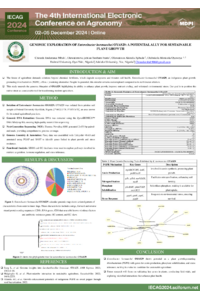
There is insufficient information showing that Enterobacter species that promote plant development are important for improving plants' vegetative growth. Enterobacter hormaechei, in contrast to Enterobacter cloacae, has received little research attention while having enormous promise for promoting plant development. This study conducts a thorough genomic exploration of Enterobacter hormaechei OYAS29, a potential plant growth-promoting rhizobacterium (PGPR) isolated from an undisturbed and uncontaminated farmland at the Federal University Oye Ekiti, Ekiti State, Nigeria. Through the application of cutting-edge sequencing technologies and bioinformatics evaluations, we decipher Enterobacter hormaechei OYAS29’s genomic characteristics, highlighting its genetic makeup that promotes sustainable plant growth. The genome falls within the superkingdom Bacteria and contains 2 ribosomal RNA (rRNA) genes, 71 transfer RNA (tRNA) genes, and 4,083 protein-coding sequences (CDS). The annotation included 3,657 proteins with assigned functions, alongside 426 hypothetical proteins. Among the functional proteins, 851 were associated with KEGG pathways, 979 had Gene Ontology (GO) assignments, and 1,203 possessed Enzyme Commission (EC) numbers. Additionally, We found several genes, including trpABCFDRS, Ipdc, patB/malY, trps, and mtr, which are linked to the synthesis of IAA and tryptophan synthase, the nar and nir gene cluster (narHLKX, nirDB, and nasR) linked to nitrate reduction and nitrite oxidation. Given its pristine environmental origin and distinct genomic makeup, Enterobacter hormaechei OYAS29 is a promising ally for ecologically friendly and successful plant growth promotion in agricultural contexts. This study advances sustainable agriculture techniques that are adapted to regional ecosystems and contribute to the increasing body of knowledge on indigenous PGPRs.
Keywords
Genomic exploration
High-throughput sequencing
sustainable agriculture
Enterobacter hormaechei.
Poster
103970.pdf
Lessons of Innovative Sustainable Farming for Corn/Legume Production under WEFE Nexus in Egypt
Sociodemographic Profile of Persian Lime (Citrus latifolia Tanaka) Producers and the Use of Organic Fertilizers in the Central Citrus Region of Veracruz State, Mexico