Event submissions
Published
This submission belongs to the session S3. Sustainable Soil Management and Farming Systems of the event The 4th International Electronic Conference on Agronomy
Published date
02 Dec, 2024
Academic Editor
'%3e%3cpath%20d='M12.6657%2010.9104C12.4185%2010.325%2012.0599%209.79327%2011.6097%209.34482C11.1609%208.89508%2010.6293%208.5365%2010.0442%208.28888C10.0389%208.28626%2010.0337%208.28495%2010.0285%208.28233C10.8446%207.69279%2011.3752%206.73249%2011.3752%205.64904C11.3752%203.8542%209.92103%202.39999%208.1262%202.39999C6.33136%202.39999%204.87715%203.8542%204.87715%205.64904C4.87715%206.73249%205.40774%207.69279%206.22393%208.28364C6.21869%208.28626%206.21345%208.28757%206.20821%208.29019C5.62129%208.5378%205.09463%208.89284%204.64265%209.34613C4.1929%209.79493%203.83432%2010.3266%203.58671%2010.9117C3.34345%2011.4845%203.21226%2012.0987%203.20023%2012.7209C3.19988%2012.7349%203.20233%2012.7488%203.20744%2012.7619C3.21255%2012.7749%203.22022%2012.7867%203.22998%2012.7968C3.23975%2012.8068%203.25142%2012.8147%203.26431%2012.8202C3.2772%2012.8256%203.29105%2012.8284%203.30504%2012.8284H4.09109C4.14874%2012.8284%204.19459%2012.7825%204.1959%2012.7262C4.2221%2011.7148%204.62823%2010.7676%205.34617%2010.0497C6.08899%209.30683%207.0755%208.89808%208.1262%208.89808C9.17689%208.89808%2010.1634%209.30683%2010.9062%2010.0497C11.6242%2010.7676%2012.0303%2011.7148%2012.0565%2012.7262C12.0578%2012.7838%2012.1037%2012.8284%2012.1613%2012.8284H12.9474C12.9613%2012.8284%2012.9752%2012.8256%2012.9881%2012.8202C13.001%2012.8147%2013.0126%2012.8068%2013.0224%2012.7968C13.0322%2012.7867%2013.0398%2012.7749%2013.0449%2012.7619C13.0501%2012.7488%2013.0525%2012.7349%2013.0522%2012.7209C13.0391%2012.0947%2012.9094%2011.4855%2012.6657%2010.9104ZM8.1262%207.9024C7.52486%207.9024%206.9589%207.6679%206.53312%207.24211C6.10733%206.81633%205.87283%206.25037%205.87283%205.64904C5.87283%205.0477%206.10733%204.48174%206.53312%204.05596C6.9589%203.63018%207.52486%203.39567%208.1262%203.39567C8.72753%203.39567%209.29349%203.63018%209.71927%204.05596C10.1451%204.48174%2010.3796%205.0477%2010.3796%205.64904C10.3796%206.25037%2010.1451%206.81633%209.71927%207.24211C9.29349%207.6679%208.72753%207.9024%208.1262%207.9024Z'%20fill='%235D1EE1'/%3e%3c/g%3e%3c/svg%3e) Mirza Hasanuzzaman
Mirza HasanuzzamanCitation
Andrew Agrey Abiya, David Mfuti Kupesa, Dennis Beesigamukama, Sustainable management of pests and improved yield in Chinese cabbage (Brassica rapa subsp. chinensis) by Black soldier fly frass and Desmodium under Wonder multistory gardens, in Proceedings of The 4th International Electronic Conference on Agronomy, 2 December–5 December 2024, MDPI: Basel, Switzerland
Share
Email
Facebook
Twitter
LinkedIn
Sustainable management of pests and improved yield in Chinese cabbage (Brassica rapa subsp. chinensis) by Black soldier fly frass and Desmodium under Wonder multistory gardens
'%3e%3cpath%20d='M12.6647%2010.9104C12.4176%2010.325%2012.0589%209.7933%2011.6088%209.34485C11.16%208.89511%2010.6283%208.53653%2010.0432%208.28891C10.038%208.28629%2010.0327%208.28498%2010.0275%208.28236C10.8437%207.69282%2011.3743%206.73252%2011.3743%205.64907C11.3743%203.85423%209.92005%202.40002%208.12522%202.40002C6.33038%202.40002%204.87618%203.85423%204.87618%205.64907C4.87618%206.73252%205.40677%207.69282%206.22296%208.28367C6.21772%208.28629%206.21248%208.2876%206.20724%208.29022C5.62031%208.53783%205.09365%208.89287%204.64167%209.34616C4.19192%209.79496%203.83334%2010.3266%203.58573%2010.9117C3.34247%2011.4846%203.21128%2012.0987%203.19925%2012.721C3.1989%2012.735%203.20135%2012.7489%203.20646%2012.7619C3.21157%2012.7749%203.21924%2012.7868%203.22901%2012.7968C3.23877%2012.8068%203.25045%2012.8148%203.26334%2012.8202C3.27623%2012.8256%203.29007%2012.8284%203.30406%2012.8284H4.09012C4.14776%2012.8284%204.19362%2012.7825%204.19493%2012.7262C4.22113%2011.7148%204.62726%2010.7676%205.34519%2010.0497C6.08802%209.30686%207.07452%208.89811%208.12522%208.89811C9.17592%208.89811%2010.1624%209.30686%2010.9052%2010.0497C11.6232%2010.7676%2012.0293%2011.7148%2012.0555%2012.7262C12.0568%2012.7839%2012.1027%2012.8284%2012.1603%2012.8284H12.9464C12.9604%2012.8284%2012.9742%2012.8256%2012.9871%2012.8202C13%2012.8148%2013.0117%2012.8068%2013.0214%2012.7968C13.0312%2012.7868%2013.0389%2012.7749%2013.044%2012.7619C13.0491%2012.7489%2013.0515%2012.735%2013.0512%2012.721C13.0381%2012.0947%2012.9084%2011.4856%2012.6647%2010.9104ZM8.12522%207.90243C7.52388%207.90243%206.95792%207.66793%206.53214%207.24215C6.10636%206.81636%205.87185%206.2504%205.87185%205.64907C5.87185%205.04773%206.10636%204.48177%206.53214%204.05599C6.95792%203.63021%207.52388%203.3957%208.12522%203.3957C8.72655%203.3957%209.29252%203.63021%209.7183%204.05599C10.1441%204.48177%2010.3786%205.04773%2010.3786%205.64907C10.3786%206.2504%2010.1441%206.81636%209.7183%207.24215C9.29252%207.66793%208.72655%207.90243%208.12522%207.90243Z'%20fill='%235D1EE1'/%3e%3c/g%3e%3c/svg%3e)
Andrew Agrey Abiya 1,2
David Mfuti Kupesa 1,3
Dennis Beesigamukama 1,4
1. International Centre of Insect Physiology and Ecology (icipe), P.O. Box 30772, Nairobi 00100, Kenya
2. Department of Horticulture and Food Security, Jomo Kenyatta University of Agriculture and Technology (Jkuat), P.O. Box 62000, Juja 00200, Kenya
3. National Institute for Agricultural Research Studies (INERA), Kinshasa BP 2037, Congo
4. Department of Crop Production and Management, Busitema University, Tororo P.O. Box 236, Uganda
Abstract
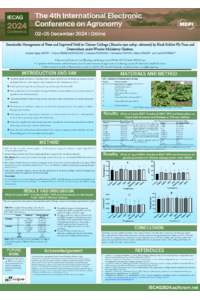
Intensive use of inorganic fertilizers and pesticides in farming to improve productivity has globally destroyed soil fertility, interfered with biodiversity, and negatively affected both human and the environment. To overcome these problems, it is very important to shift our attention towards eco-friendly alternatives like insect-based black soldier fly frass (BSFF) and Desmodium that have the potential to increase crop growth and yield as well as control or suppress pests sustainably. Black soldier fly frass fertilizer with its rich plant growth nutrient not only improves the growth and yield of crops but also offers protection to pests through the provision of nutrients; also, the chitin present helps control pests. Desmodium also has tremendous potential to protect plants from pests when used as a companion crop as it increases the diversity and activity of natural enemies, which helps to suppress pests. In this study, we examined the potential of Desmodium and BSFF in the management of common brassica pests and improved growth under low-cost vertical gardens suitable for urban settings. A Randomized Complete Block design trial on wonder multistorey gardens with eight treatments was laid out as sole cabbage (T0), Powdered black soldier fly frass (T1), liquid black soldier fly frass, (T2), Desmodium (T3), NPK (T4), combined powdered black soldier fly frass with Desmodium (T5), combined liquid black soldier fly frass with Desmodium (T6)) and combined NPK with Desmodium (T7), each of which was replicated three times. Data collected on pests’ numbers, growth parameters, damage score and yield showed significant differences when subjected to ANOVA. Gardens where BSFF and Desmodium were used showed a high growth rate and yield, and reduced pest damage. This indicated the potential of BSFF and Desmodium as an alternative source of plant nutrients and as a pest control strategy in vertical vegetable production systems.
Keywords
Black soldier fly frass
Chinese cabbage
Wonder multistorey garden
Repeated measures ANOVA.
Poster
MDPI poster_Abiya.pdf
Effect of ammonium-clinoptilolite zeolite as a slow-release fertilizer on the growth of bell pepper seedlings (Capsicum annuum L.)
Ion leaching patterns in agricultural soils: insights from ion chromatographic data