Event submissions
Published
This submission belongs to the session S3. Sustainable Soil Management and Farming Systems of the event The 4th International Electronic Conference on Agronomy
Published date
02 Dec, 2024
Academic Editor
'%3e%3cpath%20d='M12.6657%2010.9104C12.4185%2010.325%2012.0599%209.79327%2011.6097%209.34482C11.1609%208.89508%2010.6293%208.5365%2010.0442%208.28888C10.0389%208.28626%2010.0337%208.28495%2010.0285%208.28233C10.8446%207.69279%2011.3752%206.73249%2011.3752%205.64904C11.3752%203.8542%209.92103%202.39999%208.1262%202.39999C6.33136%202.39999%204.87715%203.8542%204.87715%205.64904C4.87715%206.73249%205.40774%207.69279%206.22393%208.28364C6.21869%208.28626%206.21345%208.28757%206.20821%208.29019C5.62129%208.5378%205.09463%208.89284%204.64265%209.34613C4.1929%209.79493%203.83432%2010.3266%203.58671%2010.9117C3.34345%2011.4845%203.21226%2012.0987%203.20023%2012.7209C3.19988%2012.7349%203.20233%2012.7488%203.20744%2012.7619C3.21255%2012.7749%203.22022%2012.7867%203.22998%2012.7968C3.23975%2012.8068%203.25142%2012.8147%203.26431%2012.8202C3.2772%2012.8256%203.29105%2012.8284%203.30504%2012.8284H4.09109C4.14874%2012.8284%204.19459%2012.7825%204.1959%2012.7262C4.2221%2011.7148%204.62823%2010.7676%205.34617%2010.0497C6.08899%209.30683%207.0755%208.89808%208.1262%208.89808C9.17689%208.89808%2010.1634%209.30683%2010.9062%2010.0497C11.6242%2010.7676%2012.0303%2011.7148%2012.0565%2012.7262C12.0578%2012.7838%2012.1037%2012.8284%2012.1613%2012.8284H12.9474C12.9613%2012.8284%2012.9752%2012.8256%2012.9881%2012.8202C13.001%2012.8147%2013.0126%2012.8068%2013.0224%2012.7968C13.0322%2012.7867%2013.0398%2012.7749%2013.0449%2012.7619C13.0501%2012.7488%2013.0525%2012.7349%2013.0522%2012.7209C13.0391%2012.0947%2012.9094%2011.4855%2012.6657%2010.9104ZM8.1262%207.9024C7.52486%207.9024%206.9589%207.6679%206.53312%207.24211C6.10733%206.81633%205.87283%206.25037%205.87283%205.64904C5.87283%205.0477%206.10733%204.48174%206.53312%204.05596C6.9589%203.63018%207.52486%203.39567%208.1262%203.39567C8.72753%203.39567%209.29349%203.63018%209.71927%204.05596C10.1451%204.48174%2010.3796%205.0477%2010.3796%205.64904C10.3796%206.25037%2010.1451%206.81633%209.71927%207.24211C9.29349%207.6679%208.72753%207.9024%208.1262%207.9024Z'%20fill='%235D1EE1'/%3e%3c/g%3e%3c/svg%3e) José Flores-Félix
José Flores-FélixCitation
María Dolores Fernández, Dimitrios Kalderis, Concepción García-Gómez, Effects of Aloe Vera-Based Hydrochar on Cherry Tomato and Soil Microbial Activities: Immediate and Six-Month Aged Amendments, in Proceedings of The 4th International Electronic Conference on Agronomy, 2 December–5 December 2024, MDPI: Basel, Switzerland
Share
Email
Facebook
Twitter
LinkedIn
Effects of Aloe Vera-Based Hydrochar on Cherry Tomato and Soil Microbial Activities: Immediate and Six-Month Aged Amendments
'%3e%3cpath%20d='M12.6647%2010.9104C12.4176%2010.325%2012.0589%209.7933%2011.6088%209.34485C11.16%208.89511%2010.6283%208.53653%2010.0432%208.28891C10.038%208.28629%2010.0327%208.28498%2010.0275%208.28236C10.8437%207.69282%2011.3743%206.73252%2011.3743%205.64907C11.3743%203.85423%209.92005%202.40002%208.12522%202.40002C6.33038%202.40002%204.87618%203.85423%204.87618%205.64907C4.87618%206.73252%205.40677%207.69282%206.22296%208.28367C6.21772%208.28629%206.21248%208.2876%206.20724%208.29022C5.62031%208.53783%205.09365%208.89287%204.64167%209.34616C4.19192%209.79496%203.83334%2010.3266%203.58573%2010.9117C3.34247%2011.4846%203.21128%2012.0987%203.19925%2012.721C3.1989%2012.735%203.20135%2012.7489%203.20646%2012.7619C3.21157%2012.7749%203.21924%2012.7868%203.22901%2012.7968C3.23877%2012.8068%203.25045%2012.8148%203.26334%2012.8202C3.27623%2012.8256%203.29007%2012.8284%203.30406%2012.8284H4.09012C4.14776%2012.8284%204.19362%2012.7825%204.19493%2012.7262C4.22113%2011.7148%204.62726%2010.7676%205.34519%2010.0497C6.08802%209.30686%207.07452%208.89811%208.12522%208.89811C9.17592%208.89811%2010.1624%209.30686%2010.9052%2010.0497C11.6232%2010.7676%2012.0293%2011.7148%2012.0555%2012.7262C12.0568%2012.7839%2012.1027%2012.8284%2012.1603%2012.8284H12.9464C12.9604%2012.8284%2012.9742%2012.8256%2012.9871%2012.8202C13%2012.8148%2013.0117%2012.8068%2013.0214%2012.7968C13.0312%2012.7868%2013.0389%2012.7749%2013.044%2012.7619C13.0491%2012.7489%2013.0515%2012.735%2013.0512%2012.721C13.0381%2012.0947%2012.9084%2011.4856%2012.6647%2010.9104ZM8.12522%207.90243C7.52388%207.90243%206.95792%207.66793%206.53214%207.24215C6.10636%206.81636%205.87185%206.2504%205.87185%205.64907C5.87185%205.04773%206.10636%204.48177%206.53214%204.05599C6.95792%203.63021%207.52388%203.3957%208.12522%203.3957C8.72655%203.3957%209.29252%203.63021%209.7183%204.05599C10.1441%204.48177%2010.3786%205.04773%2010.3786%205.64907C10.3786%206.2504%2010.1441%206.81636%209.7183%207.24215C9.29252%207.66793%208.72655%207.90243%208.12522%207.90243Z'%20fill='%235D1EE1'/%3e%3c/g%3e%3c/svg%3e)
María Dolores Fernández 1

Dimitrios Kalderis 2
Concepción García-Gómez 1
1. Department of Environment and Agronomy. Instituto Nacional de Investigación y Tecnología Agraria y Alimentaria (INIA-CSIC). Ctra. A Coruña, km 7.5. Madrid 28040, Spain
2. Department of Electronic Engineering. Hellenic Mediterranean University, Chania 73100, Greece
Abstract
Hydrochar, a carbon-based material, is synthesized through hydrothermal carbonization (HTC) at temperatures ranging from 180 to 250 °C. In this study, aloe vera residues were utilized as the feedstock for the HTC process. The impacts of untreated aloe-based hydrochar were assessed at various application rates (0.5%, 1%, and 3%) in agricultural soil and at different residence times in the soil (immediately after application and after six months of weathering). Two successive sowings of tomato (Lycopersicon esculentum var. cerasiforme) were conducted in pots, five months apart. The investigation focused on the effects of hydrochar addition on seed germination, plant growth, photosynthetic pigment concentrations, and oxidative stress biomarkers in 35-day-old tomato plant leaves. Additionally, changes in soil pH, electrical conductivity, and soil functions mediated by microorganisms were examined. Most effects of fresh added hydrochar were dose-dependent. Notably, a reduction in germination rate and an increase in soil salinity at 3% hydrochar loading were the most concerning outcomes. The parameters most sensitive to hydrochar application were carotenoid levels and soil enzymatic activities (dehydrogenase, phosphatase, and ammonium oxidase) across all concentrations studied. Elevated levels of antioxidant enzymes, proteins, and malondialdehyde in the leaves were observed only at the highest dose. The most significant finding was the increase in guaiacol peroxidase activity. Over time, except for photosynthetic parameters and soil phosphatase activity, most effects, vanished (germination, protein and malondialdehyde levels, and antioxidant enzymes) or were significantly reduced (notably guaiacol peroxidase, catalase, and dehydrogenase activities). This reduction is consistent with the degradation of more labile toxic components of hydrochar in the soil. These findings underscore the necessity of rigorously testing materials derived from hydrothermal carbonization prior to their application on an agricultural scale. At the highest application rate, a safety period post-application appears essential to mitigate adverse effects on soil biota.
Keywords
Hydrochar ageing
Soil enzymatic activities
Plant oxidative stress
Photosynthetic parameters
Plant growth
Poster
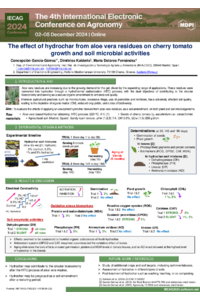
Poster sciforum-103617.pdf
Tea Bag Index: Assessing Soil Microbial Activity Under Different Compost Management Practices in Vineyards
Evaluating the Effects of Myco-Vermicompost on the Growth Performance of Pak Choi (Brassica rapa var. chinensis)