Event submissions
Published
This submission belongs to the session S1. Applied Biosciences and Bioengineering of the event The 5th International Electronic Conference on Applied Sciences
Published date
03 Dec, 2024
Academic Editor
'%3e%3cpath%20d='M12.6657%2010.9104C12.4185%2010.325%2012.0599%209.79327%2011.6097%209.34482C11.1609%208.89508%2010.6293%208.5365%2010.0442%208.28888C10.0389%208.28626%2010.0337%208.28495%2010.0285%208.28233C10.8446%207.69279%2011.3752%206.73249%2011.3752%205.64904C11.3752%203.8542%209.92103%202.39999%208.1262%202.39999C6.33136%202.39999%204.87715%203.8542%204.87715%205.64904C4.87715%206.73249%205.40774%207.69279%206.22393%208.28364C6.21869%208.28626%206.21345%208.28757%206.20821%208.29019C5.62129%208.5378%205.09463%208.89284%204.64265%209.34613C4.1929%209.79493%203.83432%2010.3266%203.58671%2010.9117C3.34345%2011.4845%203.21226%2012.0987%203.20023%2012.7209C3.19988%2012.7349%203.20233%2012.7488%203.20744%2012.7619C3.21255%2012.7749%203.22022%2012.7867%203.22998%2012.7968C3.23975%2012.8068%203.25142%2012.8147%203.26431%2012.8202C3.2772%2012.8256%203.29105%2012.8284%203.30504%2012.8284H4.09109C4.14874%2012.8284%204.19459%2012.7825%204.1959%2012.7262C4.2221%2011.7148%204.62823%2010.7676%205.34617%2010.0497C6.08899%209.30683%207.0755%208.89808%208.1262%208.89808C9.17689%208.89808%2010.1634%209.30683%2010.9062%2010.0497C11.6242%2010.7676%2012.0303%2011.7148%2012.0565%2012.7262C12.0578%2012.7838%2012.1037%2012.8284%2012.1613%2012.8284H12.9474C12.9613%2012.8284%2012.9752%2012.8256%2012.9881%2012.8202C13.001%2012.8147%2013.0126%2012.8068%2013.0224%2012.7968C13.0322%2012.7867%2013.0398%2012.7749%2013.0449%2012.7619C13.0501%2012.7488%2013.0525%2012.7349%2013.0522%2012.7209C13.0391%2012.0947%2012.9094%2011.4855%2012.6657%2010.9104ZM8.1262%207.9024C7.52486%207.9024%206.9589%207.6679%206.53312%207.24211C6.10733%206.81633%205.87283%206.25037%205.87283%205.64904C5.87283%205.0477%206.10733%204.48174%206.53312%204.05596C6.9589%203.63018%207.52486%203.39567%208.1262%203.39567C8.72753%203.39567%209.29349%203.63018%209.71927%204.05596C10.1451%204.48174%2010.3796%205.0477%2010.3796%205.64904C10.3796%206.25037%2010.1451%206.81633%209.71927%207.24211C9.29349%207.6679%208.72753%207.9024%208.1262%207.9024Z'%20fill='%235D1EE1'/%3e%3c/g%3e%3c/svg%3e) Takahito Ohshiro
Takahito OhshiroCitation
Clara Lombardo, Cosimo Galletti, Gabriele Cervino, Chiara La Barbiera, Clemente Cedro, Gianluca Pandolfo, Maria Rosaria Anna Muscatello, Enrico Nastro Siniscalchi, Mario Nicolas De La Fuente, Sofia Munge, Sergio Parra Garcia, Carmela Mento, Affective Temperaments and Depressive Rumination in an Italian–Spanish sample with bruxism, in Proceedings of The 5th International Electronic Conference on Applied Sciences, 4 December–6 December 2024, MDPI: Basel, Switzerland
Share
Email
Facebook
Twitter
LinkedIn
Affective Temperaments and Depressive Rumination in an Italian–Spanish sample with bruxism
'%3e%3cpath%20d='M12.6647%2010.9104C12.4176%2010.325%2012.0589%209.7933%2011.6088%209.34485C11.16%208.89511%2010.6283%208.53653%2010.0432%208.28891C10.038%208.28629%2010.0327%208.28498%2010.0275%208.28236C10.8437%207.69282%2011.3743%206.73252%2011.3743%205.64907C11.3743%203.85423%209.92005%202.40002%208.12522%202.40002C6.33038%202.40002%204.87618%203.85423%204.87618%205.64907C4.87618%206.73252%205.40677%207.69282%206.22296%208.28367C6.21772%208.28629%206.21248%208.2876%206.20724%208.29022C5.62031%208.53783%205.09365%208.89287%204.64167%209.34616C4.19192%209.79496%203.83334%2010.3266%203.58573%2010.9117C3.34247%2011.4846%203.21128%2012.0987%203.19925%2012.721C3.1989%2012.735%203.20135%2012.7489%203.20646%2012.7619C3.21157%2012.7749%203.21924%2012.7868%203.22901%2012.7968C3.23877%2012.8068%203.25045%2012.8148%203.26334%2012.8202C3.27623%2012.8256%203.29007%2012.8284%203.30406%2012.8284H4.09012C4.14776%2012.8284%204.19362%2012.7825%204.19493%2012.7262C4.22113%2011.7148%204.62726%2010.7676%205.34519%2010.0497C6.08802%209.30686%207.07452%208.89811%208.12522%208.89811C9.17592%208.89811%2010.1624%209.30686%2010.9052%2010.0497C11.6232%2010.7676%2012.0293%2011.7148%2012.0555%2012.7262C12.0568%2012.7839%2012.1027%2012.8284%2012.1603%2012.8284H12.9464C12.9604%2012.8284%2012.9742%2012.8256%2012.9871%2012.8202C13%2012.8148%2013.0117%2012.8068%2013.0214%2012.7968C13.0312%2012.7868%2013.0389%2012.7749%2013.044%2012.7619C13.0491%2012.7489%2013.0515%2012.735%2013.0512%2012.721C13.0381%2012.0947%2012.9084%2011.4856%2012.6647%2010.9104ZM8.12522%207.90243C7.52388%207.90243%206.95792%207.66793%206.53214%207.24215C6.10636%206.81636%205.87185%206.2504%205.87185%205.64907C5.87185%205.04773%206.10636%204.48177%206.53214%204.05599C6.95792%203.63021%207.52388%203.3957%208.12522%203.3957C8.72655%203.3957%209.29252%203.63021%209.7183%204.05599C10.1441%204.48177%2010.3786%205.04773%2010.3786%205.64907C10.3786%206.2504%2010.1441%206.81636%209.7183%207.24215C9.29252%207.66793%208.72655%207.90243%208.12522%207.90243Z'%20fill='%235D1EE1'/%3e%3c/g%3e%3c/svg%3e)
Clara Lombardo 1
Cosimo Galletti 2

Gabriele Cervino 3
Chiara La Barbiera 1
Clemente Cedro 4
Gianluca Pandolfo 4

Maria Rosaria Anna Muscatello 4
Enrico Nastro Siniscalchi 5
Mario Nicolas De La Fuente 6
Sofia Munge 6
Sergio Parra Garcia 7

Carmela Mento 4
1. Department “Scienze della Salute”, University of Catanzaro, Catanzaro, Italy
2. Department of Integrated Dentistry, International University of Catalonia, San Cugat del Vallès, Barcelona, Spain
3. University of Messina, Italy
4. Department of Biomedical and Dental Sciences and Morphofunctional Imaging, University of Messina, Messina, Italy
5. University of Enna "Kore"
6. Universidad Católica de Córdoba, Argentina
7. Department of Surgery, Faculty of Medicine. University of Salamanca, Salamanca, Spain
Abstract
Introduction
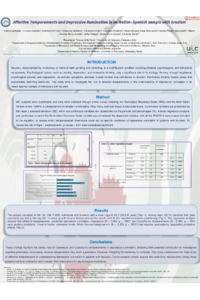
Bruxism, a condition characterized by teeth grinding or clenching, is a complex issue influenced by various factors. From a mental health perspective, bruxism has been linked to psychopatological variables, i.e., anxiety, depression and ruminative thinking. The aim of this study is to investigate the psychological traits associated with affective components in an Italian–Spanish sample with bruxism.
Method
In total, 581 subjects were examinated and data were collected through online survey including the Ruminative Response Scale (RRS) and the Brief Italian Version of the TEMPS-A (Temperament Evaluation of Memphis, Pisa, Paris, and San Diego Autoquestionnaire). Differences between the groups were assessed using Student’s t-test for independent samples. In addition, a linear regression analysis was performed, in which the Ruminative Response Scale variable was considered the dependent variable, and all the TEMPS-A factors were included in the equation, to assess which temperamental dimensions could act as specific predictors of depressive rumination in patients with bruxism.
Results
The analyses revealed statistically significant gender differences concerning Depressive, Cyclothymic, Hyperthymic, and Anxious temperaments, as well as components of Depressive Rumination. Furthermore, linear regression analysis showed that Depressive, Cyclothymic, and Anxious temperaments are predictive of the Depressive Rumination variable.
Conclusions
These preliminary results suggest the relevance of affective temperaments and Depressive Rumination in the clinical population of patients with bruxism.
Keywords
Bruxism
depression
psychological traits
Poster
sciforum-103848.pdf
Addressing Scientific Misconduct in Dental Publications: From Predatory Journal to Artificial Intelligence Misuse
Study of the antimicrobial activity of new 1,3,5-triazine derivatives