Event submissions
Published
This submission belongs to the session S4. Electrical, Electronics and Communications Engineering of the event The 5th International Electronic Conference on Applied Sciences
Published date
03 Dec, 2024
Academic Editor
'%3e%3cpath%20d='M12.6657%2010.9104C12.4185%2010.325%2012.0599%209.79327%2011.6097%209.34482C11.1609%208.89508%2010.6293%208.5365%2010.0442%208.28888C10.0389%208.28626%2010.0337%208.28495%2010.0285%208.28233C10.8446%207.69279%2011.3752%206.73249%2011.3752%205.64904C11.3752%203.8542%209.92103%202.39999%208.1262%202.39999C6.33136%202.39999%204.87715%203.8542%204.87715%205.64904C4.87715%206.73249%205.40774%207.69279%206.22393%208.28364C6.21869%208.28626%206.21345%208.28757%206.20821%208.29019C5.62129%208.5378%205.09463%208.89284%204.64265%209.34613C4.1929%209.79493%203.83432%2010.3266%203.58671%2010.9117C3.34345%2011.4845%203.21226%2012.0987%203.20023%2012.7209C3.19988%2012.7349%203.20233%2012.7488%203.20744%2012.7619C3.21255%2012.7749%203.22022%2012.7867%203.22998%2012.7968C3.23975%2012.8068%203.25142%2012.8147%203.26431%2012.8202C3.2772%2012.8256%203.29105%2012.8284%203.30504%2012.8284H4.09109C4.14874%2012.8284%204.19459%2012.7825%204.1959%2012.7262C4.2221%2011.7148%204.62823%2010.7676%205.34617%2010.0497C6.08899%209.30683%207.0755%208.89808%208.1262%208.89808C9.17689%208.89808%2010.1634%209.30683%2010.9062%2010.0497C11.6242%2010.7676%2012.0303%2011.7148%2012.0565%2012.7262C12.0578%2012.7838%2012.1037%2012.8284%2012.1613%2012.8284H12.9474C12.9613%2012.8284%2012.9752%2012.8256%2012.9881%2012.8202C13.001%2012.8147%2013.0126%2012.8068%2013.0224%2012.7968C13.0322%2012.7867%2013.0398%2012.7749%2013.0449%2012.7619C13.0501%2012.7488%2013.0525%2012.7349%2013.0522%2012.7209C13.0391%2012.0947%2012.9094%2011.4855%2012.6657%2010.9104ZM8.1262%207.9024C7.52486%207.9024%206.9589%207.6679%206.53312%207.24211C6.10733%206.81633%205.87283%206.25037%205.87283%205.64904C5.87283%205.0477%206.10733%204.48174%206.53312%204.05596C6.9589%203.63018%207.52486%203.39567%208.1262%203.39567C8.72753%203.39567%209.29349%203.63018%209.71927%204.05596C10.1451%204.48174%2010.3796%205.0477%2010.3796%205.64904C10.3796%206.25037%2010.1451%206.81633%209.71927%207.24211C9.29349%207.6679%208.72753%207.9024%208.1262%207.9024Z'%20fill='%235D1EE1'/%3e%3c/g%3e%3c/svg%3e) Stefania Campopiano
Stefania CampopianoCitation
Abdelkarim Belbali, Wafa Bourbia, abdellah kadri, Salim MAKHLOUFI, comparative study between the experimental implementation of an open loop observer and EKF observer with DTC of induction motor, in Proceedings of The 5th International Electronic Conference on Applied Sciences, 4 December–6 December 2024, MDPI: Basel, Switzerland
Share
Email
Facebook
Twitter
LinkedIn
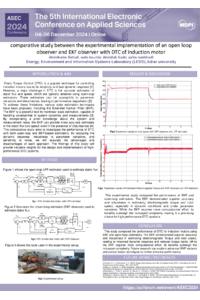
comparative study between the experimental implementation of an open loop observer and EKF observer with DTC of induction motor
'%3e%3cpath%20d='M12.6647%2010.9104C12.4176%2010.325%2012.0589%209.7933%2011.6088%209.34485C11.16%208.89511%2010.6283%208.53653%2010.0432%208.28891C10.038%208.28629%2010.0327%208.28498%2010.0275%208.28236C10.8437%207.69282%2011.3743%206.73252%2011.3743%205.64907C11.3743%203.85423%209.92005%202.40002%208.12522%202.40002C6.33038%202.40002%204.87618%203.85423%204.87618%205.64907C4.87618%206.73252%205.40677%207.69282%206.22296%208.28367C6.21772%208.28629%206.21248%208.2876%206.20724%208.29022C5.62031%208.53783%205.09365%208.89287%204.64167%209.34616C4.19192%209.79496%203.83334%2010.3266%203.58573%2010.9117C3.34247%2011.4846%203.21128%2012.0987%203.19925%2012.721C3.1989%2012.735%203.20135%2012.7489%203.20646%2012.7619C3.21157%2012.7749%203.21924%2012.7868%203.22901%2012.7968C3.23877%2012.8068%203.25045%2012.8148%203.26334%2012.8202C3.27623%2012.8256%203.29007%2012.8284%203.30406%2012.8284H4.09012C4.14776%2012.8284%204.19362%2012.7825%204.19493%2012.7262C4.22113%2011.7148%204.62726%2010.7676%205.34519%2010.0497C6.08802%209.30686%207.07452%208.89811%208.12522%208.89811C9.17592%208.89811%2010.1624%209.30686%2010.9052%2010.0497C11.6232%2010.7676%2012.0293%2011.7148%2012.0555%2012.7262C12.0568%2012.7839%2012.1027%2012.8284%2012.1603%2012.8284H12.9464C12.9604%2012.8284%2012.9742%2012.8256%2012.9871%2012.8202C13%2012.8148%2013.0117%2012.8068%2013.0214%2012.7968C13.0312%2012.7868%2013.0389%2012.7749%2013.044%2012.7619C13.0491%2012.7489%2013.0515%2012.735%2013.0512%2012.721C13.0381%2012.0947%2012.9084%2011.4856%2012.6647%2010.9104ZM8.12522%207.90243C7.52388%207.90243%206.95792%207.66793%206.53214%207.24215C6.10636%206.81636%205.87185%206.2504%205.87185%205.64907C5.87185%205.04773%206.10636%204.48177%206.53214%204.05599C6.95792%203.63021%207.52388%203.3957%208.12522%203.3957C8.72655%203.3957%209.29252%203.63021%209.7183%204.05599C10.1441%204.48177%2010.3786%205.04773%2010.3786%205.64907C10.3786%206.2504%2010.1441%206.81636%209.7183%207.24215C9.29252%207.66793%208.72655%207.90243%208.12522%207.90243Z'%20fill='%235D1EE1'/%3e%3c/g%3e%3c/svg%3e)
Abdelkarim Belbali 1
Wafa Bourbia 2
abdellah kadri 3
Salim MAKHLOUFI 2
1. Laboratoire Énergie, Environnement et Systèmes Informatiques (LEESI),Université Ahemd Draia, 01000 Adrar, 6 Rue National, Alegria.
2. Energy, Environment and Computer Systems Laboratory (LEESI), Department of Technology Sciences, Faculty of Technology Sciences, Ahemd Draia University, 01000 Adrar, 6 Rue National, Algeria.
3. Energy, Environment and Computer Systems Laboratory (LEESI), Ahemd Draia University, 01000 Adrar, 6 Rue National, Algeria.
Abstract
Estimation technique is a very important tool in the control of electrical machines, especially in the control of induction motors. The technique is based on the concept of "observing" unobservable states of the system by a mathematical model. There are two kinds of observer techniques available in the literature: the open loop type and the close loop type (observer).
In our study we use Direct Torque Control (DTC)which is a control strategy that allows direct control of the motor’s torque and flux. This technique uses estimators or observers to calculate motor parameters, including rotor speed, torque, and stator flux.
A comparative study between the experimental implementation of an open loop observer and an Extended Kalman Filter (EKF) observer with Direct Torque Control (DTC) of an induction motor can be framed around several performance criteria. These criteria include accuracy, dynamic response, robustness, computational cost, noise sensitivity, and ease of implementation. The Open Loop Observer is a simpler observer, based on the mathematical model of the induction motor. It assumes perfect knowledge of the system and does not correct for measurement or model inaccuracies. Where Extended Kalman Filter (EKF) Observer is the more advanced observer that uses a stochastic approach, incorporating statistical models of noise. It estimates motor parameters by recursively updating based on measurement and system dynamics, correcting for errors and noise.
Keywords
DTC-SVPWM
open loop observer
Extended Kalman Filter (EKF) observer accuracy
induction motor
accuracy
noise sensitivity
Poster
sciforum-106238.pdf
Optimization of Artificial Potential Fields Using Genetic Algorithm for Autonomous Mobile Robot Navigation
Speed Regulation in DC Motor-Driven Electric Vehicles Under Real-time Disturbances Using Artificial Neural Network-Based Proportional–Integral–Derivative Control Strategies