Event submissions
Published
This submission belongs to the session S2. Nanosciences, Chemistry and Materials Science of the event The 5th International Electronic Conference on Applied Sciences
Published date
04 Dec, 2024
Academic Editor
'%3e%3cpath%20d='M12.6657%2010.9104C12.4185%2010.325%2012.0599%209.79327%2011.6097%209.34482C11.1609%208.89508%2010.6293%208.5365%2010.0442%208.28888C10.0389%208.28626%2010.0337%208.28495%2010.0285%208.28233C10.8446%207.69279%2011.3752%206.73249%2011.3752%205.64904C11.3752%203.8542%209.92103%202.39999%208.1262%202.39999C6.33136%202.39999%204.87715%203.8542%204.87715%205.64904C4.87715%206.73249%205.40774%207.69279%206.22393%208.28364C6.21869%208.28626%206.21345%208.28757%206.20821%208.29019C5.62129%208.5378%205.09463%208.89284%204.64265%209.34613C4.1929%209.79493%203.83432%2010.3266%203.58671%2010.9117C3.34345%2011.4845%203.21226%2012.0987%203.20023%2012.7209C3.19988%2012.7349%203.20233%2012.7488%203.20744%2012.7619C3.21255%2012.7749%203.22022%2012.7867%203.22998%2012.7968C3.23975%2012.8068%203.25142%2012.8147%203.26431%2012.8202C3.2772%2012.8256%203.29105%2012.8284%203.30504%2012.8284H4.09109C4.14874%2012.8284%204.19459%2012.7825%204.1959%2012.7262C4.2221%2011.7148%204.62823%2010.7676%205.34617%2010.0497C6.08899%209.30683%207.0755%208.89808%208.1262%208.89808C9.17689%208.89808%2010.1634%209.30683%2010.9062%2010.0497C11.6242%2010.7676%2012.0303%2011.7148%2012.0565%2012.7262C12.0578%2012.7838%2012.1037%2012.8284%2012.1613%2012.8284H12.9474C12.9613%2012.8284%2012.9752%2012.8256%2012.9881%2012.8202C13.001%2012.8147%2013.0126%2012.8068%2013.0224%2012.7968C13.0322%2012.7867%2013.0398%2012.7749%2013.0449%2012.7619C13.0501%2012.7488%2013.0525%2012.7349%2013.0522%2012.7209C13.0391%2012.0947%2012.9094%2011.4855%2012.6657%2010.9104ZM8.1262%207.9024C7.52486%207.9024%206.9589%207.6679%206.53312%207.24211C6.10733%206.81633%205.87283%206.25037%205.87283%205.64904C5.87283%205.0477%206.10733%204.48174%206.53312%204.05596C6.9589%203.63018%207.52486%203.39567%208.1262%203.39567C8.72753%203.39567%209.29349%203.63018%209.71927%204.05596C10.1451%204.48174%2010.3796%205.0477%2010.3796%205.64904C10.3796%206.25037%2010.1451%206.81633%209.71927%207.24211C9.29349%207.6679%208.72753%207.9024%208.1262%207.9024Z'%20fill='%235D1EE1'/%3e%3c/g%3e%3c/svg%3e) Luis Cerdán
Luis CerdánCitation
Sirine Mounir Zamouri, Amal Abdulla, Farah Hasan, Fatima Zabara, Noor Mahdi, Fatima Al-Hannan, Roshan Deen G, The development of a multifunctional high-swelling alginate silver nanocomposite for water decontamination, in Proceedings of The 5th International Electronic Conference on Applied Sciences, 4 December–6 December 2024, MDPI: Basel, Switzerland
Share
Email
Facebook
Twitter
LinkedIn
The development of a multifunctional high-swelling alginate silver nanocomposite for water decontamination
'%3e%3cpath%20d='M12.6647%2010.9104C12.4176%2010.325%2012.0589%209.7933%2011.6088%209.34485C11.16%208.89511%2010.6283%208.53653%2010.0432%208.28891C10.038%208.28629%2010.0327%208.28498%2010.0275%208.28236C10.8437%207.69282%2011.3743%206.73252%2011.3743%205.64907C11.3743%203.85423%209.92005%202.40002%208.12522%202.40002C6.33038%202.40002%204.87618%203.85423%204.87618%205.64907C4.87618%206.73252%205.40677%207.69282%206.22296%208.28367C6.21772%208.28629%206.21248%208.2876%206.20724%208.29022C5.62031%208.53783%205.09365%208.89287%204.64167%209.34616C4.19192%209.79496%203.83334%2010.3266%203.58573%2010.9117C3.34247%2011.4846%203.21128%2012.0987%203.19925%2012.721C3.1989%2012.735%203.20135%2012.7489%203.20646%2012.7619C3.21157%2012.7749%203.21924%2012.7868%203.22901%2012.7968C3.23877%2012.8068%203.25045%2012.8148%203.26334%2012.8202C3.27623%2012.8256%203.29007%2012.8284%203.30406%2012.8284H4.09012C4.14776%2012.8284%204.19362%2012.7825%204.19493%2012.7262C4.22113%2011.7148%204.62726%2010.7676%205.34519%2010.0497C6.08802%209.30686%207.07452%208.89811%208.12522%208.89811C9.17592%208.89811%2010.1624%209.30686%2010.9052%2010.0497C11.6232%2010.7676%2012.0293%2011.7148%2012.0555%2012.7262C12.0568%2012.7839%2012.1027%2012.8284%2012.1603%2012.8284H12.9464C12.9604%2012.8284%2012.9742%2012.8256%2012.9871%2012.8202C13%2012.8148%2013.0117%2012.8068%2013.0214%2012.7968C13.0312%2012.7868%2013.0389%2012.7749%2013.044%2012.7619C13.0491%2012.7489%2013.0515%2012.735%2013.0512%2012.721C13.0381%2012.0947%2012.9084%2011.4856%2012.6647%2010.9104ZM8.12522%207.90243C7.52388%207.90243%206.95792%207.66793%206.53214%207.24215C6.10636%206.81636%205.87185%206.2504%205.87185%205.64907C5.87185%205.04773%206.10636%204.48177%206.53214%204.05599C6.95792%203.63021%207.52388%203.3957%208.12522%203.3957C8.72655%203.3957%209.29252%203.63021%209.7183%204.05599C10.1441%204.48177%2010.3786%205.04773%2010.3786%205.64907C10.3786%206.2504%2010.1441%206.81636%209.7183%207.24215C9.29252%207.66793%208.72655%207.90243%208.12522%207.90243Z'%20fill='%235D1EE1'/%3e%3c/g%3e%3c/svg%3e)
Sirine Mounir Zamouri 1
Amal Abdulla 1
Farah Hasan 1
Fatima Zabara 1
Noor Mahdi 1
Fatima Al-Hannan 1

Roshan Deen G 1
1. Materials for Medicine Research Group, School of Medicine, Royal College of Surgeons in Ireland, Medical university of Bahrain, Bahrain.
Abstract
Introduction
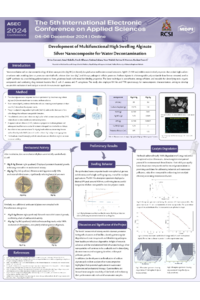
Sodium alginate nanocomposites containing metallic nanoparticles have found various biomedical and environmental applications. These materials are easy to prepare and sustainable. In recent years, such materials have been widely used for the adsorption/degradation of toxic substances such as organic dyes, pharmaceuticals, heavy metals, etc. In this project, we have developed reusable sodium alginate–poly sodium acrylate silver nanocomposites with a high swelling capacity for enhanced degradation of toxic organic materials.
Methodology
Polymer beads based on sodium alginate–poly sodium acrylate containing silver nanoparticles were synthesized by means of a combination of ionotropic crosslinking in calcium chloride solution and free-radical polymerization using ammonium persulfate. The beads were characterized using various advanced methods such as UV-Vis absorption spectroscopy, Fourier transform infra-red spectroscopy, and electron microscopy. The swelling capacity was evaluated using the gravimetric method. The antibacterial property was studied using the incubation method against three clinically important pathogens: Escherichia coli, Staphylococcus aureus, and Pseudomonas aeruginosa. The catalytic degradation of Congo red and 2-nitrophenol achieved by the beads was studied in the presence of sodium borohydride.
Preliminary results
The nanocomposite beads were spherical and porous and exhibited a high swelling capacity due to the presence of poly sodium acrylate. A strong plasmon resonance (SPR) peak at around 400 nm confirmed the presence of silver nanoparticles. The nanocomposites were effective against the growth of E. coli and P. aeruginosa. Almost 100% degradation of Congo red and 2-nitrophenol was achieved in about 30 min.
Conclusion and work in progress
The nanocomposite beads showed both antibacterial and catalytic properties, showing promise for detoxification of hospital wastewater in the future. The reusability of the material and the use of real-life samples are currently in progress.
Keywords
Silver nanocomposites
alginate beads
swelling
biodegradation
antibacterial effect.
Poster
Sciforum-103857 Poster.pdf
Sensitivity analysis of conformal CCs for injection molds: 3D Transient Heat Transfer Analysis
The aerodynamic and flight characteristics of the UEFA EURO 2024 football