Event submissions
Published
This submission belongs to the session C. Human Genomics and Genetic Diseases of the event The 2nd International Electronic Conference on Genes
Published date
09 Dec, 2024
Academic Editor
'%3e%3cpath%20d='M12.6657%2010.9104C12.4185%2010.325%2012.0599%209.79327%2011.6097%209.34482C11.1609%208.89508%2010.6293%208.5365%2010.0442%208.28888C10.0389%208.28626%2010.0337%208.28495%2010.0285%208.28233C10.8446%207.69279%2011.3752%206.73249%2011.3752%205.64904C11.3752%203.8542%209.92103%202.39999%208.1262%202.39999C6.33136%202.39999%204.87715%203.8542%204.87715%205.64904C4.87715%206.73249%205.40774%207.69279%206.22393%208.28364C6.21869%208.28626%206.21345%208.28757%206.20821%208.29019C5.62129%208.5378%205.09463%208.89284%204.64265%209.34613C4.1929%209.79493%203.83432%2010.3266%203.58671%2010.9117C3.34345%2011.4845%203.21226%2012.0987%203.20023%2012.7209C3.19988%2012.7349%203.20233%2012.7488%203.20744%2012.7619C3.21255%2012.7749%203.22022%2012.7867%203.22998%2012.7968C3.23975%2012.8068%203.25142%2012.8147%203.26431%2012.8202C3.2772%2012.8256%203.29105%2012.8284%203.30504%2012.8284H4.09109C4.14874%2012.8284%204.19459%2012.7825%204.1959%2012.7262C4.2221%2011.7148%204.62823%2010.7676%205.34617%2010.0497C6.08899%209.30683%207.0755%208.89808%208.1262%208.89808C9.17689%208.89808%2010.1634%209.30683%2010.9062%2010.0497C11.6242%2010.7676%2012.0303%2011.7148%2012.0565%2012.7262C12.0578%2012.7838%2012.1037%2012.8284%2012.1613%2012.8284H12.9474C12.9613%2012.8284%2012.9752%2012.8256%2012.9881%2012.8202C13.001%2012.8147%2013.0126%2012.8068%2013.0224%2012.7968C13.0322%2012.7867%2013.0398%2012.7749%2013.0449%2012.7619C13.0501%2012.7488%2013.0525%2012.7349%2013.0522%2012.7209C13.0391%2012.0947%2012.9094%2011.4855%2012.6657%2010.9104ZM8.1262%207.9024C7.52486%207.9024%206.9589%207.6679%206.53312%207.24211C6.10733%206.81633%205.87283%206.25037%205.87283%205.64904C5.87283%205.0477%206.10733%204.48174%206.53312%204.05596C6.9589%203.63018%207.52486%203.39567%208.1262%203.39567C8.72753%203.39567%209.29349%203.63018%209.71927%204.05596C10.1451%204.48174%2010.3796%205.0477%2010.3796%205.64904C10.3796%206.25037%2010.1451%206.81633%209.71927%207.24211C9.29349%207.6679%208.72753%207.9024%208.1262%207.9024Z'%20fill='%235D1EE1'/%3e%3c/g%3e%3c/svg%3e) Anelia Horvath
Anelia HorvathCitation
Jose Joaquin Merino, The CXCR4/CXCL12 axis contributes to cerebrolysin-induced neuroprotection against staurosporine-treated cortical neurons at 7 days in vitro and prevents inflammation in a N2a cell line exposed to LPS, in Proceedings of The 2nd International Electronic Conference on Genes, 11 December–13 December 2024, MDPI: Basel, Switzerland
Share
Email
Facebook
Twitter
LinkedIn
The CXCR4/CXCL12 axis contributes to cerebrolysin-induced neuroprotection against staurosporine-treated cortical neurons at 7 days in vitro and prevents inflammation in a N2a cell line exposed to LPS
'%3e%3cpath%20d='M12.6647%2010.9104C12.4176%2010.325%2012.0589%209.7933%2011.6088%209.34485C11.16%208.89511%2010.6283%208.53653%2010.0432%208.28891C10.038%208.28629%2010.0327%208.28498%2010.0275%208.28236C10.8437%207.69282%2011.3743%206.73252%2011.3743%205.64907C11.3743%203.85423%209.92005%202.40002%208.12522%202.40002C6.33038%202.40002%204.87618%203.85423%204.87618%205.64907C4.87618%206.73252%205.40677%207.69282%206.22296%208.28367C6.21772%208.28629%206.21248%208.2876%206.20724%208.29022C5.62031%208.53783%205.09365%208.89287%204.64167%209.34616C4.19192%209.79496%203.83334%2010.3266%203.58573%2010.9117C3.34247%2011.4846%203.21128%2012.0987%203.19925%2012.721C3.1989%2012.735%203.20135%2012.7489%203.20646%2012.7619C3.21157%2012.7749%203.21924%2012.7868%203.22901%2012.7968C3.23877%2012.8068%203.25045%2012.8148%203.26334%2012.8202C3.27623%2012.8256%203.29007%2012.8284%203.30406%2012.8284H4.09012C4.14776%2012.8284%204.19362%2012.7825%204.19493%2012.7262C4.22113%2011.7148%204.62726%2010.7676%205.34519%2010.0497C6.08802%209.30686%207.07452%208.89811%208.12522%208.89811C9.17592%208.89811%2010.1624%209.30686%2010.9052%2010.0497C11.6232%2010.7676%2012.0293%2011.7148%2012.0555%2012.7262C12.0568%2012.7839%2012.1027%2012.8284%2012.1603%2012.8284H12.9464C12.9604%2012.8284%2012.9742%2012.8256%2012.9871%2012.8202C13%2012.8148%2013.0117%2012.8068%2013.0214%2012.7968C13.0312%2012.7868%2013.0389%2012.7749%2013.044%2012.7619C13.0491%2012.7489%2013.0515%2012.735%2013.0512%2012.721C13.0381%2012.0947%2012.9084%2011.4856%2012.6647%2010.9104ZM8.12522%207.90243C7.52388%207.90243%206.95792%207.66793%206.53214%207.24215C6.10636%206.81636%205.87185%206.2504%205.87185%205.64907C5.87185%205.04773%206.10636%204.48177%206.53214%204.05599C6.95792%203.63021%207.52388%203.3957%208.12522%203.3957C8.72655%203.3957%209.29252%203.63021%209.7183%204.05599C10.1441%204.48177%2010.3786%205.04773%2010.3786%205.64907C10.3786%206.2504%2010.1441%206.81636%209.7183%207.24215C9.29252%207.66793%208.72655%207.90243%208.12522%207.90243Z'%20fill='%235D1EE1'/%3e%3c/g%3e%3c/svg%3e)
Jose Joaquin Merino 1
1. UCM (Universidad Complutense de Madrid), Dpto. Farmacología, Farmacognosia y Botánica (UCM), IUIN, Spain
Abstract
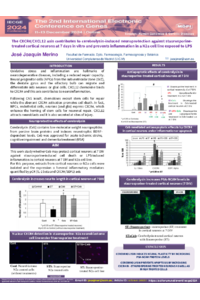
Introduction. Oxidative stress and inflammation are hallmarks of neurodegenerative diseases, including a reduced repair capacity. Neural progenitor cells (NPCs) from the subventricular zone (SVZ), the dentate gyrus and the olfactory bulb can migrate and differentiate into neurons or glial cells. CXCL12 chemokine binds to CXCR4 and this axis contributes to neuroinflammation. Following CNS insult, chemokines recruit stem cells for repair while the aberrant CXCR4 activation promotes cell death. In fact, NPCs, endothelial cells, neurons (and glia) express CXCR4, which enhance the homing of stem cells for neuronal repair. CXCL12 attracts neuroblasts and it is also secreted at sites of injury.
Aim. This study evaluated whether cerebrolysin (brain porcine peptide) or recombinant chemokines may protect cortical neurons at 7 DIV against staurosporine-induced cell death or LPS-induced inflammation in a N2a cell line. For this purpose, extracts from cortical neurons or N2a cells were isolated and several inflammatory markers were quantified by pCR (IL-1 beta and CXCR4/SDF1 alpha). Staurosporine or LPS treatment were added during 6 hours in the medium and cerebrolysin or recombinant proteins were o/n added in the presence of these treatments.
Results. The antiapoptotic role of chemokines and/or cerebrolysin was demonstrated in staurosporine-treated cortical neurons at 7 DIV using an XTT assay. Cerebrolysin prevented staurosporine-induced apoptosis in the N2A cell line and decreased Il-1 beta leveles in a N2a cell line exposed to LPS during 6 h.
Conclusion. The observed correlation between cerebrolysin and the neuroprotective effect of chemokines against apoptosis suggests that CXCR4 chemokine receptor activation by cerebrolysin prevented staurosporine-induced cell death in cortical neurons from rats and also reduced IL-1 beta levels in a N2a murine cell line exposed to LPS (lipopolysaccharide)). Although the clinic efficacy of cerebrolysin against dementia requires more clinical evidences, some clinical trials have confirmed its efficacy against neurological diseases.
Keywords
cerebrolysin
Neuroprotection
chemokines
inflammation
Poster
600 José Joaquín Merino Sciforu- 105057 POSTER Cerebrolysin.pdf
Relevance of Pharmacogenomics, CYP450 genes and their genetic variations in drug metabolism and toxicity