Event submissions
Published
This submission belongs to the session C. Human Genomics and Genetic Diseases of the event The 2nd International Electronic Conference on Genes
Published date
09 Dec, 2024
Academic Editor
'%3e%3cpath%20d='M12.6657%2010.9104C12.4185%2010.325%2012.0599%209.79327%2011.6097%209.34482C11.1609%208.89508%2010.6293%208.5365%2010.0442%208.28888C10.0389%208.28626%2010.0337%208.28495%2010.0285%208.28233C10.8446%207.69279%2011.3752%206.73249%2011.3752%205.64904C11.3752%203.8542%209.92103%202.39999%208.1262%202.39999C6.33136%202.39999%204.87715%203.8542%204.87715%205.64904C4.87715%206.73249%205.40774%207.69279%206.22393%208.28364C6.21869%208.28626%206.21345%208.28757%206.20821%208.29019C5.62129%208.5378%205.09463%208.89284%204.64265%209.34613C4.1929%209.79493%203.83432%2010.3266%203.58671%2010.9117C3.34345%2011.4845%203.21226%2012.0987%203.20023%2012.7209C3.19988%2012.7349%203.20233%2012.7488%203.20744%2012.7619C3.21255%2012.7749%203.22022%2012.7867%203.22998%2012.7968C3.23975%2012.8068%203.25142%2012.8147%203.26431%2012.8202C3.2772%2012.8256%203.29105%2012.8284%203.30504%2012.8284H4.09109C4.14874%2012.8284%204.19459%2012.7825%204.1959%2012.7262C4.2221%2011.7148%204.62823%2010.7676%205.34617%2010.0497C6.08899%209.30683%207.0755%208.89808%208.1262%208.89808C9.17689%208.89808%2010.1634%209.30683%2010.9062%2010.0497C11.6242%2010.7676%2012.0303%2011.7148%2012.0565%2012.7262C12.0578%2012.7838%2012.1037%2012.8284%2012.1613%2012.8284H12.9474C12.9613%2012.8284%2012.9752%2012.8256%2012.9881%2012.8202C13.001%2012.8147%2013.0126%2012.8068%2013.0224%2012.7968C13.0322%2012.7867%2013.0398%2012.7749%2013.0449%2012.7619C13.0501%2012.7488%2013.0525%2012.7349%2013.0522%2012.7209C13.0391%2012.0947%2012.9094%2011.4855%2012.6657%2010.9104ZM8.1262%207.9024C7.52486%207.9024%206.9589%207.6679%206.53312%207.24211C6.10733%206.81633%205.87283%206.25037%205.87283%205.64904C5.87283%205.0477%206.10733%204.48174%206.53312%204.05596C6.9589%203.63018%207.52486%203.39567%208.1262%203.39567C8.72753%203.39567%209.29349%203.63018%209.71927%204.05596C10.1451%204.48174%2010.3796%205.0477%2010.3796%205.64904C10.3796%206.25037%2010.1451%206.81633%209.71927%207.24211C9.29349%207.6679%208.72753%207.9024%208.1262%207.9024Z'%20fill='%235D1EE1'/%3e%3c/g%3e%3c/svg%3e) Dror Sharon
Dror SharonCitation
Natalya N Mazanova, Dmitry S Demianov, Goar B Movsisyan, Anastasya A Rusakova, Daria A Chudakova, Alexander A Pushkov, Ilya S Zhanin, Alexandr S Potapov, Kirill V Savostyanov, Andrey P Fisenko, THE EARLY DIAGNOSTIC OF NIEMANN-PICK DISEASE TYPE A CAUSED BY c.996del AND c.1252C>T IN SMPD1 GENE: A CASE STUDY, in Proceedings of The 2nd International Electronic Conference on Genes, 11 December–13 December 2024, MDPI: Basel, Switzerland
Share
Email
Facebook
Twitter
LinkedIn
THE EARLY DIAGNOSTIC OF NIEMANN-PICK DISEASE TYPE A CAUSED BY c.996del AND c.1252C>T IN SMPD1 GENE: A CASE STUDY
'%3e%3cpath%20d='M12.6647%2010.9104C12.4176%2010.325%2012.0589%209.7933%2011.6088%209.34485C11.16%208.89511%2010.6283%208.53653%2010.0432%208.28891C10.038%208.28629%2010.0327%208.28498%2010.0275%208.28236C10.8437%207.69282%2011.3743%206.73252%2011.3743%205.64907C11.3743%203.85423%209.92005%202.40002%208.12522%202.40002C6.33038%202.40002%204.87618%203.85423%204.87618%205.64907C4.87618%206.73252%205.40677%207.69282%206.22296%208.28367C6.21772%208.28629%206.21248%208.2876%206.20724%208.29022C5.62031%208.53783%205.09365%208.89287%204.64167%209.34616C4.19192%209.79496%203.83334%2010.3266%203.58573%2010.9117C3.34247%2011.4846%203.21128%2012.0987%203.19925%2012.721C3.1989%2012.735%203.20135%2012.7489%203.20646%2012.7619C3.21157%2012.7749%203.21924%2012.7868%203.22901%2012.7968C3.23877%2012.8068%203.25045%2012.8148%203.26334%2012.8202C3.27623%2012.8256%203.29007%2012.8284%203.30406%2012.8284H4.09012C4.14776%2012.8284%204.19362%2012.7825%204.19493%2012.7262C4.22113%2011.7148%204.62726%2010.7676%205.34519%2010.0497C6.08802%209.30686%207.07452%208.89811%208.12522%208.89811C9.17592%208.89811%2010.1624%209.30686%2010.9052%2010.0497C11.6232%2010.7676%2012.0293%2011.7148%2012.0555%2012.7262C12.0568%2012.7839%2012.1027%2012.8284%2012.1603%2012.8284H12.9464C12.9604%2012.8284%2012.9742%2012.8256%2012.9871%2012.8202C13%2012.8148%2013.0117%2012.8068%2013.0214%2012.7968C13.0312%2012.7868%2013.0389%2012.7749%2013.044%2012.7619C13.0491%2012.7489%2013.0515%2012.735%2013.0512%2012.721C13.0381%2012.0947%2012.9084%2011.4856%2012.6647%2010.9104ZM8.12522%207.90243C7.52388%207.90243%206.95792%207.66793%206.53214%207.24215C6.10636%206.81636%205.87185%206.2504%205.87185%205.64907C5.87185%205.04773%206.10636%204.48177%206.53214%204.05599C6.95792%203.63021%207.52388%203.3957%208.12522%203.3957C8.72655%203.3957%209.29252%203.63021%209.7183%204.05599C10.1441%204.48177%2010.3786%205.04773%2010.3786%205.64907C10.3786%206.2504%2010.1441%206.81636%209.7183%207.24215C9.29252%207.66793%208.72655%207.90243%208.12522%207.90243Z'%20fill='%235D1EE1'/%3e%3c/g%3e%3c/svg%3e)
Natalya N Mazanova 1
Dmitry S Demianov 2
Goar B Movsisyan 3
Anastasya A Rusakova 2

Daria A Chudakova 2
Alexander A Pushkov 2
Ilya S Zhanin 2
Alexandr S Potapov 2
Kirill V Savostyanov 2
Andrey P Fisenko 4
1. Laboratory of Medical Genomics, National Medical Research of Children's Health Federal State Autonomous Institution of the Ministry of Health of the Russian Federation, Moscow, 119991, Russian Federation
2. National Medical Research of Children's Health Federal State Autonomous Institution of the Ministry of Health of the Russian Federation
3. Gastroentherology Department, National Medical Research of Children's Health Federal State Autonomous Institution of the Ministry of Health of the Russian Federation, Moscow, 119991, Russian Federation
4. Director of National Medical Research of Children's Health Federal State Autonomous Institution, National Medical Research of Children's Health Federal State Autonomous Institution of the Ministry of Health of the Russian Federation, Moscow, 119991
Abstract
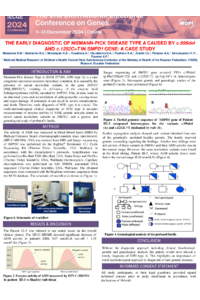
Niemann-Pick disease Type A (MIM 257200, NPD type A) is a rare congenital autosomal recessive hereditary condition. It is caused by the presence of causal nucleotide variants in the gene SMPD1 (NM_000543.5), resulting in a deficiency of the enzyme Acid Sphingomyelinase (ASM) encoded by SMPD1. This, in turn, leads to an abnormal lysosomal accumulation of sphingomyelin, causing tissue and organ damage. If untreated, it results in severe complications and death. Therefore, the early diagnosis of NPD type A is crucial. The multi-methodological diagnostic of NPD type A includes measurements of the enzyme activity of ASM, genetic analysis aimed at detecting causal nucleotide variants in SMPD1, and a genetic and genealogical study of the proband’s family. The activity of ASM is commonly measured in Dried Blood Spots (DBS) by high-performance liquid chromatography–tandem mass spectrometry (HPLC-MS/MS), as this method outperforms others. The gold standard for the detection of nucleotide variants in SMPD1 is Sanger sequencing. Finally, a genetic and genealogical study of the proband’s family is recommended when possible. As an example of such an approach, here, we present the diagnostic journey of one family. The patient was referred to our center based on the overall clinical picture. The HPLC-MS/MS detected a significant decrease in ASM activity in the patient's DBS. The sequencing of SMPD1 revealed that the proband had two heterozygous nucleotide variants: c.996del, (p.Phe333Serfs*52) and c.1252C>T, (p.Arg418*). Further segregation analysis showed that each variant was inherited from one of the genetically unrelated healthy parents. The family received genetic counseling regarding the findings. Another two siblings were not carriers of these variants in SMPD1 and their ASM activity was in the normal range. However, the same nucleotide variants were found in the third sibling whose ASM activity levels were below the normal range. Without the multi-methodological approach, this patient would have missed a timely diagnosis of NPD type A.
Keywords
Lysosomal Storage Disease
Niemann-Pick disease type А
Acid Sphingomyelinase
genetic counseling
HPLC-MS/MS
clinical diagnostics
SMPD1
Poster
Mazanova et al GENES.pdf
mRNA-Based Biomarker Identification for Targeted Therapy Development in Pancreatic Cancer
GENETIC ANALYSIS OF HEMOCHROMATOSIS AND ITS IMPACT ON LIVER FUNCTION IN THE POPULATION OF LAHORE, PAKISTAN