Event submissions
Published
This submission belongs to the session E. Microbial Genetics and Genomics of the event The 2nd International Electronic Conference on Genes
Published date
09 Dec, 2024
Academic Editor
'%3e%3cpath%20d='M12.6657%2010.9104C12.4185%2010.325%2012.0599%209.79327%2011.6097%209.34482C11.1609%208.89508%2010.6293%208.5365%2010.0442%208.28888C10.0389%208.28626%2010.0337%208.28495%2010.0285%208.28233C10.8446%207.69279%2011.3752%206.73249%2011.3752%205.64904C11.3752%203.8542%209.92103%202.39999%208.1262%202.39999C6.33136%202.39999%204.87715%203.8542%204.87715%205.64904C4.87715%206.73249%205.40774%207.69279%206.22393%208.28364C6.21869%208.28626%206.21345%208.28757%206.20821%208.29019C5.62129%208.5378%205.09463%208.89284%204.64265%209.34613C4.1929%209.79493%203.83432%2010.3266%203.58671%2010.9117C3.34345%2011.4845%203.21226%2012.0987%203.20023%2012.7209C3.19988%2012.7349%203.20233%2012.7488%203.20744%2012.7619C3.21255%2012.7749%203.22022%2012.7867%203.22998%2012.7968C3.23975%2012.8068%203.25142%2012.8147%203.26431%2012.8202C3.2772%2012.8256%203.29105%2012.8284%203.30504%2012.8284H4.09109C4.14874%2012.8284%204.19459%2012.7825%204.1959%2012.7262C4.2221%2011.7148%204.62823%2010.7676%205.34617%2010.0497C6.08899%209.30683%207.0755%208.89808%208.1262%208.89808C9.17689%208.89808%2010.1634%209.30683%2010.9062%2010.0497C11.6242%2010.7676%2012.0303%2011.7148%2012.0565%2012.7262C12.0578%2012.7838%2012.1037%2012.8284%2012.1613%2012.8284H12.9474C12.9613%2012.8284%2012.9752%2012.8256%2012.9881%2012.8202C13.001%2012.8147%2013.0126%2012.8068%2013.0224%2012.7968C13.0322%2012.7867%2013.0398%2012.7749%2013.0449%2012.7619C13.0501%2012.7488%2013.0525%2012.7349%2013.0522%2012.7209C13.0391%2012.0947%2012.9094%2011.4855%2012.6657%2010.9104ZM8.1262%207.9024C7.52486%207.9024%206.9589%207.6679%206.53312%207.24211C6.10733%206.81633%205.87283%206.25037%205.87283%205.64904C5.87283%205.0477%206.10733%204.48174%206.53312%204.05596C6.9589%203.63018%207.52486%203.39567%208.1262%203.39567C8.72753%203.39567%209.29349%203.63018%209.71927%204.05596C10.1451%204.48174%2010.3796%205.0477%2010.3796%205.64904C10.3796%206.25037%2010.1451%206.81633%209.71927%207.24211C9.29349%207.6679%208.72753%207.9024%208.1262%207.9024Z'%20fill='%235D1EE1'/%3e%3c/g%3e%3c/svg%3e) Silvia Turroni
Silvia TurroniCitation
Marcos Jessé Abrahão Silva, Sebastião Kauã de Sousa Bispo, Rebecca Lobato Marinho, Eliete Costa da Cruz, Thiago Pinto Brasil, Caroliny Soares Silva, Cristiane Cunha Frota, Diana da Costa Lobato, Lilian Cristina Santos Sinfrônio da Silva, Everaldina Cordeiro dos Santos, Karla Valéria Batista Lima, Luana Nepomuceno Gondim Costa Lima, Functional and Structural Characterization of COVID-19 Risk-Associated Exonic SNPs: An In Silico Analysis, in Proceedings of The 2nd International Electronic Conference on Genes, 11 December–13 December 2024, MDPI: Basel, Switzerland
Share
Email
Facebook
Twitter
LinkedIn
Functional and Structural Characterization of COVID-19 Risk-Associated Exonic SNPs: An In Silico Analysis

Marcos Jessé Abrahão Silva 1
'%3e%3cpath%20d='M12.6647%2010.9104C12.4176%2010.325%2012.0589%209.7933%2011.6088%209.34485C11.16%208.89511%2010.6283%208.53653%2010.0432%208.28891C10.038%208.28629%2010.0327%208.28498%2010.0275%208.28236C10.8437%207.69282%2011.3743%206.73252%2011.3743%205.64907C11.3743%203.85423%209.92005%202.40002%208.12522%202.40002C6.33038%202.40002%204.87618%203.85423%204.87618%205.64907C4.87618%206.73252%205.40677%207.69282%206.22296%208.28367C6.21772%208.28629%206.21248%208.2876%206.20724%208.29022C5.62031%208.53783%205.09365%208.89287%204.64167%209.34616C4.19192%209.79496%203.83334%2010.3266%203.58573%2010.9117C3.34247%2011.4846%203.21128%2012.0987%203.19925%2012.721C3.1989%2012.735%203.20135%2012.7489%203.20646%2012.7619C3.21157%2012.7749%203.21924%2012.7868%203.22901%2012.7968C3.23877%2012.8068%203.25045%2012.8148%203.26334%2012.8202C3.27623%2012.8256%203.29007%2012.8284%203.30406%2012.8284H4.09012C4.14776%2012.8284%204.19362%2012.7825%204.19493%2012.7262C4.22113%2011.7148%204.62726%2010.7676%205.34519%2010.0497C6.08802%209.30686%207.07452%208.89811%208.12522%208.89811C9.17592%208.89811%2010.1624%209.30686%2010.9052%2010.0497C11.6232%2010.7676%2012.0293%2011.7148%2012.0555%2012.7262C12.0568%2012.7839%2012.1027%2012.8284%2012.1603%2012.8284H12.9464C12.9604%2012.8284%2012.9742%2012.8256%2012.9871%2012.8202C13%2012.8148%2013.0117%2012.8068%2013.0214%2012.7968C13.0312%2012.7868%2013.0389%2012.7749%2013.044%2012.7619C13.0491%2012.7489%2013.0515%2012.735%2013.0512%2012.721C13.0381%2012.0947%2012.9084%2011.4856%2012.6647%2010.9104ZM8.12522%207.90243C7.52388%207.90243%206.95792%207.66793%206.53214%207.24215C6.10636%206.81636%205.87185%206.2504%205.87185%205.64907C5.87185%205.04773%206.10636%204.48177%206.53214%204.05599C6.95792%203.63021%207.52388%203.3957%208.12522%203.3957C8.72655%203.3957%209.29252%203.63021%209.7183%204.05599C10.1441%204.48177%2010.3786%205.04773%2010.3786%205.64907C10.3786%206.2504%2010.1441%206.81636%209.7183%207.24215C9.29252%207.66793%208.72655%207.90243%208.12522%207.90243Z'%20fill='%235D1EE1'/%3e%3c/g%3e%3c/svg%3e)
Sebastião Kauã de Sousa Bispo 2
Rebecca Lobato Marinho 1
Eliete Costa da Cruz 3
Thiago Pinto Brasil 4
Caroliny Soares Silva 1
Cristiane Cunha Frota 4

Diana da Costa Lobato 1
Lilian Cristina Santos Sinfrônio da Silva 5
Everaldina Cordeiro dos Santos 5
Karla Valéria Batista Lima 2
Luana Nepomuceno Gondim Costa Lima 2
1. University of Pará State (UEPA), Brazil
2. Bacteriology and Mycology Section of the Evandro Chagas Institute (IEC), Brazil
3. Federal University of Pará (UFPA), Brazil
4. Federal University of Ceará (UFC), Brazil
5. Evandro Chagas Institute (IEC), Brazil
Abstract
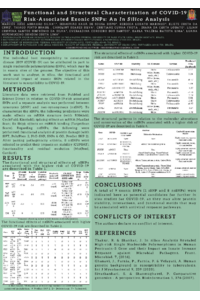
Introduction: Individual host susceptibility to coronavirus disease 2019 (COVID-19) can be attributed in part to single-nucleotide polymorphisms (SNPs), which may be exist at exonic sites of the genome. The objective of this work was to analyze, in silico, the functional and structural impact of exonic SNPs that are related to susceptibility to COVID-19 in the literature. Methods: Literature data were retrieved from PubMed and Science Direct in relation to COVID-19 risk-associated SNPs, and a separate analysis was performed between synonymous (sSNP) and non-synonymous (nsSNP) SNPs. To characterize the sSNPs, the following predictions were made: effects on mRNA structure (with RNAfold; CycleFold; Kinefold); splicing effects on mRNA (MaxEnt Scan; Ex Skip); and effects on miRNA binding (TargetScan Score). Regarding the nsSNPs, a functional analysis of protein damage (with SIFT, PolyPhen 2, PhD-SNP, SNPs&GO, Predict SNP 2) was performed. After passing the pathogenicity criteria, 8 nsSNPs were selected to predict their impacts on stability (CUPSAT), functionality, and residual evolution (MutPred, ConSurf). Results: The sample consisted of 16 exonic SNPs, 4 sSNP, and 12 nsSNP. Among the sSNPs, the SNP rs12252 of IFITM3 had the greatest potential impact on mRNA structure, alternative splicing, and miRNA binding and indicated a moderate impact on post-transcriptional regulation. Regarding the nsSNPs, the TYK2 SNP rs34536443 was predicted to be deleterious/damaging by all the tools used. The SNPs predicted to be destabilizing by CUPSAT, such as the PLSCR1 SNP rs343320, appear to have a greater negative impact on protein stability. The molecular, structural, and evolutionary impacts of each SNP were described. Conclusion: A total of nine exonic SNPs (one sSNP and eight nsSNPs) were indicated here as potential candidates for further in vivo studies for COVID-19, as they may alter protein stability, interactions, and functional motifs that may be associated with antiviral response pathways.
Keywords
COVID-19
Single Nucleotide Polymorphism
Computational Biology
Genomics
Poster
Functional and Structural Characterization of COVID-19 Risk-Associated Exonic SNPs and Identification of Novel Therapeutic Sites An In silico Analysis.pdf
A draft transcriptome of the climate resilient California native plant Ribes malvaceum
Genetic Engineering to Enhance Surfactin Production in Bacillus subtilis via Nitrogen Metabolism and Membrane Transport Pathways