Event submissions
Published
This submission belongs to the session E. Microbial Genetics and Genomics of the event The 2nd International Electronic Conference on Genes
Published date
09 Dec, 2024
Academic Editor
'%3e%3cpath%20d='M12.6657%2010.9104C12.4185%2010.325%2012.0599%209.79327%2011.6097%209.34482C11.1609%208.89508%2010.6293%208.5365%2010.0442%208.28888C10.0389%208.28626%2010.0337%208.28495%2010.0285%208.28233C10.8446%207.69279%2011.3752%206.73249%2011.3752%205.64904C11.3752%203.8542%209.92103%202.39999%208.1262%202.39999C6.33136%202.39999%204.87715%203.8542%204.87715%205.64904C4.87715%206.73249%205.40774%207.69279%206.22393%208.28364C6.21869%208.28626%206.21345%208.28757%206.20821%208.29019C5.62129%208.5378%205.09463%208.89284%204.64265%209.34613C4.1929%209.79493%203.83432%2010.3266%203.58671%2010.9117C3.34345%2011.4845%203.21226%2012.0987%203.20023%2012.7209C3.19988%2012.7349%203.20233%2012.7488%203.20744%2012.7619C3.21255%2012.7749%203.22022%2012.7867%203.22998%2012.7968C3.23975%2012.8068%203.25142%2012.8147%203.26431%2012.8202C3.2772%2012.8256%203.29105%2012.8284%203.30504%2012.8284H4.09109C4.14874%2012.8284%204.19459%2012.7825%204.1959%2012.7262C4.2221%2011.7148%204.62823%2010.7676%205.34617%2010.0497C6.08899%209.30683%207.0755%208.89808%208.1262%208.89808C9.17689%208.89808%2010.1634%209.30683%2010.9062%2010.0497C11.6242%2010.7676%2012.0303%2011.7148%2012.0565%2012.7262C12.0578%2012.7838%2012.1037%2012.8284%2012.1613%2012.8284H12.9474C12.9613%2012.8284%2012.9752%2012.8256%2012.9881%2012.8202C13.001%2012.8147%2013.0126%2012.8068%2013.0224%2012.7968C13.0322%2012.7867%2013.0398%2012.7749%2013.0449%2012.7619C13.0501%2012.7488%2013.0525%2012.7349%2013.0522%2012.7209C13.0391%2012.0947%2012.9094%2011.4855%2012.6657%2010.9104ZM8.1262%207.9024C7.52486%207.9024%206.9589%207.6679%206.53312%207.24211C6.10733%206.81633%205.87283%206.25037%205.87283%205.64904C5.87283%205.0477%206.10733%204.48174%206.53312%204.05596C6.9589%203.63018%207.52486%203.39567%208.1262%203.39567C8.72753%203.39567%209.29349%203.63018%209.71927%204.05596C10.1451%204.48174%2010.3796%205.0477%2010.3796%205.64904C10.3796%206.25037%2010.1451%206.81633%209.71927%207.24211C9.29349%207.6679%208.72753%207.9024%208.1262%207.9024Z'%20fill='%235D1EE1'/%3e%3c/g%3e%3c/svg%3e) Silvia Turroni
Silvia TurroniCitation
Xia LI, Wen Jianping, Genetic Engineering to Enhance Surfactin Production in Bacillus subtilis via Nitrogen Metabolism and Membrane Transport Pathways, in Proceedings of The 2nd International Electronic Conference on Genes, 11 December–13 December 2024, MDPI: Basel, Switzerland
Share
Email
Facebook
Twitter
LinkedIn
Genetic Engineering to Enhance Surfactin Production in Bacillus subtilis via Nitrogen Metabolism and Membrane Transport Pathways
'%3e%3cpath%20d='M12.6647%2010.9104C12.4176%2010.325%2012.0589%209.7933%2011.6088%209.34485C11.16%208.89511%2010.6283%208.53653%2010.0432%208.28891C10.038%208.28629%2010.0327%208.28498%2010.0275%208.28236C10.8437%207.69282%2011.3743%206.73252%2011.3743%205.64907C11.3743%203.85423%209.92005%202.40002%208.12522%202.40002C6.33038%202.40002%204.87618%203.85423%204.87618%205.64907C4.87618%206.73252%205.40677%207.69282%206.22296%208.28367C6.21772%208.28629%206.21248%208.2876%206.20724%208.29022C5.62031%208.53783%205.09365%208.89287%204.64167%209.34616C4.19192%209.79496%203.83334%2010.3266%203.58573%2010.9117C3.34247%2011.4846%203.21128%2012.0987%203.19925%2012.721C3.1989%2012.735%203.20135%2012.7489%203.20646%2012.7619C3.21157%2012.7749%203.21924%2012.7868%203.22901%2012.7968C3.23877%2012.8068%203.25045%2012.8148%203.26334%2012.8202C3.27623%2012.8256%203.29007%2012.8284%203.30406%2012.8284H4.09012C4.14776%2012.8284%204.19362%2012.7825%204.19493%2012.7262C4.22113%2011.7148%204.62726%2010.7676%205.34519%2010.0497C6.08802%209.30686%207.07452%208.89811%208.12522%208.89811C9.17592%208.89811%2010.1624%209.30686%2010.9052%2010.0497C11.6232%2010.7676%2012.0293%2011.7148%2012.0555%2012.7262C12.0568%2012.7839%2012.1027%2012.8284%2012.1603%2012.8284H12.9464C12.9604%2012.8284%2012.9742%2012.8256%2012.9871%2012.8202C13%2012.8148%2013.0117%2012.8068%2013.0214%2012.7968C13.0312%2012.7868%2013.0389%2012.7749%2013.044%2012.7619C13.0491%2012.7489%2013.0515%2012.735%2013.0512%2012.721C13.0381%2012.0947%2012.9084%2011.4856%2012.6647%2010.9104ZM8.12522%207.90243C7.52388%207.90243%206.95792%207.66793%206.53214%207.24215C6.10636%206.81636%205.87185%206.2504%205.87185%205.64907C5.87185%205.04773%206.10636%204.48177%206.53214%204.05599C6.95792%203.63021%207.52388%203.3957%208.12522%203.3957C8.72655%203.3957%209.29252%203.63021%209.7183%204.05599C10.1441%204.48177%2010.3786%205.04773%2010.3786%205.64907C10.3786%206.2504%2010.1441%206.81636%209.7183%207.24215C9.29252%207.66793%208.72655%207.90243%208.12522%207.90243Z'%20fill='%235D1EE1'/%3e%3c/g%3e%3c/svg%3e)
Xia LI 1,2,3
Wen Jianping 1,2,3
1. Key Laboratory of Systems Bioengineering of the Ministry of Education, Tianjin University, Tianjin, 300350, PR China
2. Frontier Science Center of the Ministry of Education, Tianjin University, Tianjin, 300350, PR China
3. Center for Chemical Science and Engineering, Tianjin University, 300350, PR China
Abstract
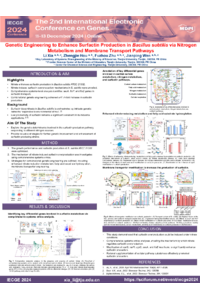
Surfactin is a highly effective biosurfactant with broad potential applications in the medical and environmental technology sectors. Its biosynthesis in Bacillus subtilis is orchestrated by intricate genetic networks responsive to environmental stimuli. This study explores the enhancement of surfactin production in Bacillus subtilis ATCC 21332 through targeted genetic modifications, particularly under nitrate-enriched conditions, resulting in a significant boost in production. Comprehensive systems-level analysis identified pivotal genetic components governing nitrogen metabolism, fatty acid biosynthesis, and membrane transport, which were experimentally validated as key to facilitating increased surfactin output. Specifically, the upregulation of genes including nitrate reductase subunit genes narG and NarH, long-chain fatty acid β-hydroxylase gene cypC, preprotein translocase subunit gene secA, and the ATPase involved in cell division, gene ftsE, proved critical in optimizing surfactin synthesis. Through systematic engineering and the combination of these gene targets, the engineered strain SURb8 exhibited remarkable improvements in surfactin yield and production efficiency. Furthermore, a tailored feeding regime, designed to align with surfactin biosynthesis pathways, elevated the final production to 14.41 g/L, a 41.4-fold increase over that of the wild-type strain. This research offers valuable insights into the genetic and metabolic regulation of surfactin biosynthesis, highlighting the potential of microbial genetic engineering to enhance biosurfactant production for industrial applications.
Keywords
Microbial genetics
Biosynthesis
Secondary metabolites
Genetic Engineering
Poster
IECGE2024-Poster for Gallery-sciforum-106648.pdf
Functional and Structural Characterization of COVID-19 Risk-Associated Exonic SNPs: An In Silico Analysis
miRNA dysregulation in the autophagy response induced by starvation in rat mammary epithelial cells and breast cancer cells