Event submissions
Published
This submission belongs to the session S3. Cardiovascular Diseases of the event The 1st International Online Conference on Clinical Reports
Published date
17 Mar, 2025
Academic Editor
'%3e%3cpath%20d='M12.6657%2010.9104C12.4185%2010.325%2012.0599%209.79327%2011.6097%209.34482C11.1609%208.89508%2010.6293%208.5365%2010.0442%208.28888C10.0389%208.28626%2010.0337%208.28495%2010.0285%208.28233C10.8446%207.69279%2011.3752%206.73249%2011.3752%205.64904C11.3752%203.8542%209.92103%202.39999%208.1262%202.39999C6.33136%202.39999%204.87715%203.8542%204.87715%205.64904C4.87715%206.73249%205.40774%207.69279%206.22393%208.28364C6.21869%208.28626%206.21345%208.28757%206.20821%208.29019C5.62129%208.5378%205.09463%208.89284%204.64265%209.34613C4.1929%209.79493%203.83432%2010.3266%203.58671%2010.9117C3.34345%2011.4845%203.21226%2012.0987%203.20023%2012.7209C3.19988%2012.7349%203.20233%2012.7488%203.20744%2012.7619C3.21255%2012.7749%203.22022%2012.7867%203.22998%2012.7968C3.23975%2012.8068%203.25142%2012.8147%203.26431%2012.8202C3.2772%2012.8256%203.29105%2012.8284%203.30504%2012.8284H4.09109C4.14874%2012.8284%204.19459%2012.7825%204.1959%2012.7262C4.2221%2011.7148%204.62823%2010.7676%205.34617%2010.0497C6.08899%209.30683%207.0755%208.89808%208.1262%208.89808C9.17689%208.89808%2010.1634%209.30683%2010.9062%2010.0497C11.6242%2010.7676%2012.0303%2011.7148%2012.0565%2012.7262C12.0578%2012.7838%2012.1037%2012.8284%2012.1613%2012.8284H12.9474C12.9613%2012.8284%2012.9752%2012.8256%2012.9881%2012.8202C13.001%2012.8147%2013.0126%2012.8068%2013.0224%2012.7968C13.0322%2012.7867%2013.0398%2012.7749%2013.0449%2012.7619C13.0501%2012.7488%2013.0525%2012.7349%2013.0522%2012.7209C13.0391%2012.0947%2012.9094%2011.4855%2012.6657%2010.9104ZM8.1262%207.9024C7.52486%207.9024%206.9589%207.6679%206.53312%207.24211C6.10733%206.81633%205.87283%206.25037%205.87283%205.64904C5.87283%205.0477%206.10733%204.48174%206.53312%204.05596C6.9589%203.63018%207.52486%203.39567%208.1262%203.39567C8.72753%203.39567%209.29349%203.63018%209.71927%204.05596C10.1451%204.48174%2010.3796%205.0477%2010.3796%205.64904C10.3796%206.25037%2010.1451%206.81633%209.71927%207.24211C9.29349%207.6679%208.72753%207.9024%208.1262%207.9024Z'%20fill='%235D1EE1'/%3e%3c/g%3e%3c/svg%3e) Takatoshi Kasai
Takatoshi KasaiCitation
Dr. Reema Joshi PhD. PT, Mansi jaykumar Bhatt PT, Impact of Aerobic Exercise on Cardiac Health in Limb–Girdle Muscular Dystrophy Type 2: A Case Study, in Proceedings of The 1st International Online Conference on Clinical Reports, 19 March–20 March 2025, MDPI: Basel, Switzerland
Share
Email
Facebook
Twitter
LinkedIn
Impact of Aerobic Exercise on Cardiac Health in Limb–Girdle Muscular Dystrophy Type 2: A Case Study
'%3e%3cpath%20d='M12.6647%2010.9104C12.4176%2010.325%2012.0589%209.7933%2011.6088%209.34485C11.16%208.89511%2010.6283%208.53653%2010.0432%208.28891C10.038%208.28629%2010.0327%208.28498%2010.0275%208.28236C10.8437%207.69282%2011.3743%206.73252%2011.3743%205.64907C11.3743%203.85423%209.92005%202.40002%208.12522%202.40002C6.33038%202.40002%204.87618%203.85423%204.87618%205.64907C4.87618%206.73252%205.40677%207.69282%206.22296%208.28367C6.21772%208.28629%206.21248%208.2876%206.20724%208.29022C5.62031%208.53783%205.09365%208.89287%204.64167%209.34616C4.19192%209.79496%203.83334%2010.3266%203.58573%2010.9117C3.34247%2011.4846%203.21128%2012.0987%203.19925%2012.721C3.1989%2012.735%203.20135%2012.7489%203.20646%2012.7619C3.21157%2012.7749%203.21924%2012.7868%203.22901%2012.7968C3.23877%2012.8068%203.25045%2012.8148%203.26334%2012.8202C3.27623%2012.8256%203.29007%2012.8284%203.30406%2012.8284H4.09012C4.14776%2012.8284%204.19362%2012.7825%204.19493%2012.7262C4.22113%2011.7148%204.62726%2010.7676%205.34519%2010.0497C6.08802%209.30686%207.07452%208.89811%208.12522%208.89811C9.17592%208.89811%2010.1624%209.30686%2010.9052%2010.0497C11.6232%2010.7676%2012.0293%2011.7148%2012.0555%2012.7262C12.0568%2012.7839%2012.1027%2012.8284%2012.1603%2012.8284H12.9464C12.9604%2012.8284%2012.9742%2012.8256%2012.9871%2012.8202C13%2012.8148%2013.0117%2012.8068%2013.0214%2012.7968C13.0312%2012.7868%2013.0389%2012.7749%2013.044%2012.7619C13.0491%2012.7489%2013.0515%2012.735%2013.0512%2012.721C13.0381%2012.0947%2012.9084%2011.4856%2012.6647%2010.9104ZM8.12522%207.90243C7.52388%207.90243%206.95792%207.66793%206.53214%207.24215C6.10636%206.81636%205.87185%206.2504%205.87185%205.64907C5.87185%205.04773%206.10636%204.48177%206.53214%204.05599C6.95792%203.63021%207.52388%203.3957%208.12522%203.3957C8.72655%203.3957%209.29252%203.63021%209.7183%204.05599C10.1441%204.48177%2010.3786%205.04773%2010.3786%205.64907C10.3786%206.2504%2010.1441%206.81636%209.7183%207.24215C9.29252%207.66793%208.72655%207.90243%208.12522%207.90243Z'%20fill='%235D1EE1'/%3e%3c/g%3e%3c/svg%3e)
Dr. Reema Joshi PhD. PT 1
Mansi jaykumar Bhatt PT 2
1. Dr. D. Y. Patil college of Physiotherapy, Dr. D. Y. Patil Vidyapeeth, Pimpri, Pune, Maharashtra, India.
2. Dr. D. Y. Patil college of Physiotherapy, Dr .D. Y. Patil Vidyapeeth, Pimpri, Pune, Maharashtra, India
Abstract
Abstract
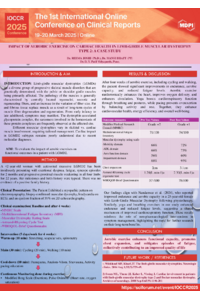
Background: Limb–girdle muscular dystrophy type 2 (LGMD2) is a group of rare, slowly progressive disorders with distinct hereditary and clinical features. LGMD2E is characterized by heart dysrhythmias, late-onset cardiomyopathy, progressive skeletal myopathy, and contractures in the neck, elbows, and ankles. This case study examines a 40-year-old female diagnosed with autosomal recessive LGMD2, presenting with exertional dyspnea, fatigue, episodes of syncope, progressive proximal muscle weakness in all four limbs, and persistent bilateral pedal oedema. Diagnostic evaluations revealed a myopathic pattern on electromyography, biopsy-confirmed muscular dystrophy, bradycardia on ECG, and an ejection fraction of 59% on 2D echocardiography. Aim: Our aim was to evaluate the impact of aerobic exercises on functional outcomes in a patient with LGMD2.Methodology: Outcome measures included the Modified Medical Research Council (MMRC) scale, Multidimensional Fatigue Scale (MFS), chest expansion (using a tape measure), and the Muscular Dystrophy Rating Scale. The Modified Borg Scale was used to assess perceived exertion during exercise testing. A four-week physical therapy intervention focused on improving aerobic capacity, reducing fatigue, increasing lung expansion, strengthening muscles, and enhancing functional status. Results: After four weeks, the patient demonstrated significant improvements in all outcome measures, including reduced fatigue levels, increased chest expansion, and enhanced functional status. These results indicate that the intervention effectively improved aerobic capacity and overall quality of life in this patient. Conclusion: Aerobic exercises are a safe and effective intervention for managing functional limitations in patients with LGMD2. Early screening and intervention are crucial to address cardiac complications, such as bradycardia, atrial fibrillation, and ventricular dysrhythmias, which are commonly associated with this condition. Further studies are recommended to validate these findings across a broader patient population.
Keywords
Keywords: Limb girdle dystrophy: Exertional Dyspnea
Fatigue
Proximal muscle weakness
Grower’s sign
Poster
IOCCR 2025 - bhatt.pdf
Epidemiological analysis of hospitalizations due to femur fracture: A study of the last 10 years of Brazilian hospitalizations
The Role of Physical Therapy in Treating Positional Torticollis and Promoting Head Control in Infants: A Case Report