Event submissions
Published
This submission belongs to the session Session E. Cellular Signaling of the event The 3rd International Online Conference on Cells
Published date
21 Mar, 2025
Academic Editor
'%3e%3cpath%20d='M12.6657%2010.9104C12.4185%2010.325%2012.0599%209.79327%2011.6097%209.34482C11.1609%208.89508%2010.6293%208.5365%2010.0442%208.28888C10.0389%208.28626%2010.0337%208.28495%2010.0285%208.28233C10.8446%207.69279%2011.3752%206.73249%2011.3752%205.64904C11.3752%203.8542%209.92103%202.39999%208.1262%202.39999C6.33136%202.39999%204.87715%203.8542%204.87715%205.64904C4.87715%206.73249%205.40774%207.69279%206.22393%208.28364C6.21869%208.28626%206.21345%208.28757%206.20821%208.29019C5.62129%208.5378%205.09463%208.89284%204.64265%209.34613C4.1929%209.79493%203.83432%2010.3266%203.58671%2010.9117C3.34345%2011.4845%203.21226%2012.0987%203.20023%2012.7209C3.19988%2012.7349%203.20233%2012.7488%203.20744%2012.7619C3.21255%2012.7749%203.22022%2012.7867%203.22998%2012.7968C3.23975%2012.8068%203.25142%2012.8147%203.26431%2012.8202C3.2772%2012.8256%203.29105%2012.8284%203.30504%2012.8284H4.09109C4.14874%2012.8284%204.19459%2012.7825%204.1959%2012.7262C4.2221%2011.7148%204.62823%2010.7676%205.34617%2010.0497C6.08899%209.30683%207.0755%208.89808%208.1262%208.89808C9.17689%208.89808%2010.1634%209.30683%2010.9062%2010.0497C11.6242%2010.7676%2012.0303%2011.7148%2012.0565%2012.7262C12.0578%2012.7838%2012.1037%2012.8284%2012.1613%2012.8284H12.9474C12.9613%2012.8284%2012.9752%2012.8256%2012.9881%2012.8202C13.001%2012.8147%2013.0126%2012.8068%2013.0224%2012.7968C13.0322%2012.7867%2013.0398%2012.7749%2013.0449%2012.7619C13.0501%2012.7488%2013.0525%2012.7349%2013.0522%2012.7209C13.0391%2012.0947%2012.9094%2011.4855%2012.6657%2010.9104ZM8.1262%207.9024C7.52486%207.9024%206.9589%207.6679%206.53312%207.24211C6.10733%206.81633%205.87283%206.25037%205.87283%205.64904C5.87283%205.0477%206.10733%204.48174%206.53312%204.05596C6.9589%203.63018%207.52486%203.39567%208.1262%203.39567C8.72753%203.39567%209.29349%203.63018%209.71927%204.05596C10.1451%204.48174%2010.3796%205.0477%2010.3796%205.64904C10.3796%206.25037%2010.1451%206.81633%209.71927%207.24211C9.29349%207.6679%208.72753%207.9024%208.1262%207.9024Z'%20fill='%235D1EE1'/%3e%3c/g%3e%3c/svg%3e) MOHAMMAD ASIM
MOHAMMAD ASIMCitation
Alessia Di Pauli, Giulia Ricci, Marco Crescenzi, Maria Addolorata Mariggiò, Caterina Morabito, Luisa Gesualdi, Serena Camerini, Casella Marialuisa, Rosanna Chianese, Marika Berardini, Francesca Ferranti, Teresa Chioccarelli, Gilda Cobellis, Angiolina Catizone, Michele Signore, (Phospho-)proteomic Signaling Responses of Human Male Germ Cell Lines to Simulated Microgravity and Hypogravity., in Proceedings of The 3rd International Online Conference on Cells, 25 March–27 March 2025, MDPI: Basel, Switzerland
Share
Email
Facebook
Twitter
LinkedIn
(Phospho-)proteomic Signaling Responses of Human Male Germ Cell Lines to Simulated Microgravity and Hypogravity.
'%3e%3cpath%20d='M12.6647%2010.9104C12.4176%2010.325%2012.0589%209.7933%2011.6088%209.34485C11.16%208.89511%2010.6283%208.53653%2010.0432%208.28891C10.038%208.28629%2010.0327%208.28498%2010.0275%208.28236C10.8437%207.69282%2011.3743%206.73252%2011.3743%205.64907C11.3743%203.85423%209.92005%202.40002%208.12522%202.40002C6.33038%202.40002%204.87618%203.85423%204.87618%205.64907C4.87618%206.73252%205.40677%207.69282%206.22296%208.28367C6.21772%208.28629%206.21248%208.2876%206.20724%208.29022C5.62031%208.53783%205.09365%208.89287%204.64167%209.34616C4.19192%209.79496%203.83334%2010.3266%203.58573%2010.9117C3.34247%2011.4846%203.21128%2012.0987%203.19925%2012.721C3.1989%2012.735%203.20135%2012.7489%203.20646%2012.7619C3.21157%2012.7749%203.21924%2012.7868%203.22901%2012.7968C3.23877%2012.8068%203.25045%2012.8148%203.26334%2012.8202C3.27623%2012.8256%203.29007%2012.8284%203.30406%2012.8284H4.09012C4.14776%2012.8284%204.19362%2012.7825%204.19493%2012.7262C4.22113%2011.7148%204.62726%2010.7676%205.34519%2010.0497C6.08802%209.30686%207.07452%208.89811%208.12522%208.89811C9.17592%208.89811%2010.1624%209.30686%2010.9052%2010.0497C11.6232%2010.7676%2012.0293%2011.7148%2012.0555%2012.7262C12.0568%2012.7839%2012.1027%2012.8284%2012.1603%2012.8284H12.9464C12.9604%2012.8284%2012.9742%2012.8256%2012.9871%2012.8202C13%2012.8148%2013.0117%2012.8068%2013.0214%2012.7968C13.0312%2012.7868%2013.0389%2012.7749%2013.044%2012.7619C13.0491%2012.7489%2013.0515%2012.735%2013.0512%2012.721C13.0381%2012.0947%2012.9084%2011.4856%2012.6647%2010.9104ZM8.12522%207.90243C7.52388%207.90243%206.95792%207.66793%206.53214%207.24215C6.10636%206.81636%205.87185%206.2504%205.87185%205.64907C5.87185%205.04773%206.10636%204.48177%206.53214%204.05599C6.95792%203.63021%207.52388%203.3957%208.12522%203.3957C8.72655%203.3957%209.29252%203.63021%209.7183%204.05599C10.1441%204.48177%2010.3786%205.04773%2010.3786%205.64907C10.3786%206.2504%2010.1441%206.81636%209.7183%207.24215C9.29252%207.66793%208.72655%207.90243%208.12522%207.90243Z'%20fill='%235D1EE1'/%3e%3c/g%3e%3c/svg%3e)
Alessia Di Pauli 1

Giulia Ricci 2
Marco Crescenzi 3

Maria Addolorata Mariggiò 4

Caterina Morabito 4
Luisa Gesualdi 1
Serena Camerini 3
Casella Marialuisa 3
Rosanna Chianese 2
Marika Berardini 1

Francesca Ferranti 5
Teresa Chioccarelli 2
Gilda Cobellis 2
Angiolina Catizone 1
Michele Signore 3
1. Department of Anatomy, Histology, Forensic-Medicine and Orthopedics, Section of Histology and Embryology, "Sapienza" University of Rome, 00161 Rome, Italy.
2. Department of Experimental Medicine, Università degli Studi della Campania "Luigi Vanvitelli", 80138 Naples, Italy.
3. Core Facilities, ISS Istituto Superiore di Sanità, 00161 Rome, Italy.
4. Department of Neuroscience, Imaging and Clinical Sciences-CAST, "G. d'Annunzio" University of Chieti-Pescara, 66013 Chieti, Italy.
5. Human Spaceflight and Scientific Research Unit, Italian Space Agency, 00133 Rome, Italy.
Abstract
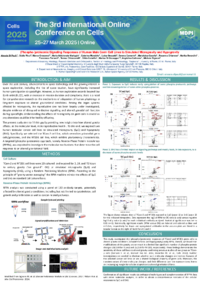
Introduction: Access to space has significantly increased over the last decade, and with this comes the need for comprehensive knowledge about the effects exerted by altered gravitational conditions on human physiology and reproductive health. However, it should be highlighted that our knowledge about the effects of altered gravitational force on germ cells is still very poor. In this study, we exploited Reverse-Phase Protein microArrays (RPPAs), a biased (phospho-)proteomic approach, to investigate the impact of simulated microgravity (SμG) and hypogravity (ShG) on two human male germ cell lines, TCam-2 and NT2D1. Methods: TCam-2 and NT2D1 cell lines were exposed to SμG and ShG conditions using a Random Positioning Machine for 3, 24, and 72 hours. RPPA analysis was conducted using a panel of 130 antibodies selected to investigate a broad number of pathways potentially affected by altered gravity conditions. Results: The data analysis revealed that the exposure of both TCam-2 and NT2D1 cells to altered gravity induced significant (phospho-)proteomic changes. In particular, SμG induced early-phase alterations (3–24 hours), mostly characterized by the upregulation of some key regulators of signaling pathways, whereas longer SμG exposure (72 hours) resulted in the downregulation of other signaling proteins. ShG elicited minor changes, mostly characterized by reduced protein expression. The key pathways affected included cytoskeletal dynamics, proliferation, apoptosis, and autophagy. Notably, cell viability was not significantly impacted, suggesting compensating adaptation mechanisms to altered gravitational conditions. Conclusions: These findings indicate that (phospho-)proteomic responses to simulated gravity conditions were transient and non-persistent, demonstrating that human male germ cells exhibit resilience and adaptative capacity to cope with altered gravitational environments. This study provides valuable preliminary insights into the cellular and molecular mechanisms involved in gravity sensing and adaptation, which is crucial for developing countermeasures to ensure reproductive health and functionality during long-duration space missions for astronauts but also for the health of their future offspring.
Keywords
simulated microgravity
simulated hypogravity
RPPA
TCam-2 cells
NT2D1 cells
Poster
poster_cells_DiPauli_2025_final.pdf
Unlocking the Potential of Non-Neuronal Cell-Derived Extracellular Vesicles in Pain Relief and Neuroprotection
Alpha-ketoglutarate dehydrogenase (KGDH): an update on its redox regulation and importance in generating mitochondrial reactive oxygen species (mtROS) in hepatocytes.