Event submissions
Published
This submission belongs to the session S3. Antimicrobial Agents and Resistance of the event The 3rd International Electronic Conference on Microbiology
Published date
31 Mar, 2025
Academic Editor
'%3e%3cpath%20d='M12.6657%2010.9104C12.4185%2010.325%2012.0599%209.79327%2011.6097%209.34482C11.1609%208.89508%2010.6293%208.5365%2010.0442%208.28888C10.0389%208.28626%2010.0337%208.28495%2010.0285%208.28233C10.8446%207.69279%2011.3752%206.73249%2011.3752%205.64904C11.3752%203.8542%209.92103%202.39999%208.1262%202.39999C6.33136%202.39999%204.87715%203.8542%204.87715%205.64904C4.87715%206.73249%205.40774%207.69279%206.22393%208.28364C6.21869%208.28626%206.21345%208.28757%206.20821%208.29019C5.62129%208.5378%205.09463%208.89284%204.64265%209.34613C4.1929%209.79493%203.83432%2010.3266%203.58671%2010.9117C3.34345%2011.4845%203.21226%2012.0987%203.20023%2012.7209C3.19988%2012.7349%203.20233%2012.7488%203.20744%2012.7619C3.21255%2012.7749%203.22022%2012.7867%203.22998%2012.7968C3.23975%2012.8068%203.25142%2012.8147%203.26431%2012.8202C3.2772%2012.8256%203.29105%2012.8284%203.30504%2012.8284H4.09109C4.14874%2012.8284%204.19459%2012.7825%204.1959%2012.7262C4.2221%2011.7148%204.62823%2010.7676%205.34617%2010.0497C6.08899%209.30683%207.0755%208.89808%208.1262%208.89808C9.17689%208.89808%2010.1634%209.30683%2010.9062%2010.0497C11.6242%2010.7676%2012.0303%2011.7148%2012.0565%2012.7262C12.0578%2012.7838%2012.1037%2012.8284%2012.1613%2012.8284H12.9474C12.9613%2012.8284%2012.9752%2012.8256%2012.9881%2012.8202C13.001%2012.8147%2013.0126%2012.8068%2013.0224%2012.7968C13.0322%2012.7867%2013.0398%2012.7749%2013.0449%2012.7619C13.0501%2012.7488%2013.0525%2012.7349%2013.0522%2012.7209C13.0391%2012.0947%2012.9094%2011.4855%2012.6657%2010.9104ZM8.1262%207.9024C7.52486%207.9024%206.9589%207.6679%206.53312%207.24211C6.10733%206.81633%205.87283%206.25037%205.87283%205.64904C5.87283%205.0477%206.10733%204.48174%206.53312%204.05596C6.9589%203.63018%207.52486%203.39567%208.1262%203.39567C8.72753%203.39567%209.29349%203.63018%209.71927%204.05596C10.1451%204.48174%2010.3796%205.0477%2010.3796%205.64904C10.3796%206.25037%2010.1451%206.81633%209.71927%207.24211C9.29349%207.6679%208.72753%207.9024%208.1262%207.9024Z'%20fill='%235D1EE1'/%3e%3c/g%3e%3c/svg%3e) Nico Jehmlich
Nico JehmlichCitation
Mfundo Magagula, Thabiso Eric Motaung, Zukile Mbita, Khumiso Dithebe, Exploring the biopotential of secondary metabolites derived from fungal endophytes of Kirkia acuminata stems for drug discovery, in Proceedings of The 3rd International Electronic Conference on Microbiology, 1 April–3 April 2025, MDPI: Basel, Switzerland
Share
Email
Facebook
Twitter
LinkedIn
Exploring the biopotential of secondary metabolites derived from fungal endophytes of Kirkia acuminata stems for drug discovery
'%3e%3cpath%20d='M12.6647%2010.9104C12.4176%2010.325%2012.0589%209.7933%2011.6088%209.34485C11.16%208.89511%2010.6283%208.53653%2010.0432%208.28891C10.038%208.28629%2010.0327%208.28498%2010.0275%208.28236C10.8437%207.69282%2011.3743%206.73252%2011.3743%205.64907C11.3743%203.85423%209.92005%202.40002%208.12522%202.40002C6.33038%202.40002%204.87618%203.85423%204.87618%205.64907C4.87618%206.73252%205.40677%207.69282%206.22296%208.28367C6.21772%208.28629%206.21248%208.2876%206.20724%208.29022C5.62031%208.53783%205.09365%208.89287%204.64167%209.34616C4.19192%209.79496%203.83334%2010.3266%203.58573%2010.9117C3.34247%2011.4846%203.21128%2012.0987%203.19925%2012.721C3.1989%2012.735%203.20135%2012.7489%203.20646%2012.7619C3.21157%2012.7749%203.21924%2012.7868%203.22901%2012.7968C3.23877%2012.8068%203.25045%2012.8148%203.26334%2012.8202C3.27623%2012.8256%203.29007%2012.8284%203.30406%2012.8284H4.09012C4.14776%2012.8284%204.19362%2012.7825%204.19493%2012.7262C4.22113%2011.7148%204.62726%2010.7676%205.34519%2010.0497C6.08802%209.30686%207.07452%208.89811%208.12522%208.89811C9.17592%208.89811%2010.1624%209.30686%2010.9052%2010.0497C11.6232%2010.7676%2012.0293%2011.7148%2012.0555%2012.7262C12.0568%2012.7839%2012.1027%2012.8284%2012.1603%2012.8284H12.9464C12.9604%2012.8284%2012.9742%2012.8256%2012.9871%2012.8202C13%2012.8148%2013.0117%2012.8068%2013.0214%2012.7968C13.0312%2012.7868%2013.0389%2012.7749%2013.044%2012.7619C13.0491%2012.7489%2013.0515%2012.735%2013.0512%2012.721C13.0381%2012.0947%2012.9084%2011.4856%2012.6647%2010.9104ZM8.12522%207.90243C7.52388%207.90243%206.95792%207.66793%206.53214%207.24215C6.10636%206.81636%205.87185%206.2504%205.87185%205.64907C5.87185%205.04773%206.10636%204.48177%206.53214%204.05599C6.95792%203.63021%207.52388%203.3957%208.12522%203.3957C8.72655%203.3957%209.29252%203.63021%209.7183%204.05599C10.1441%204.48177%2010.3786%205.04773%2010.3786%205.64907C10.3786%206.2504%2010.1441%206.81636%209.7183%207.24215C9.29252%207.66793%208.72655%207.90243%208.12522%207.90243Z'%20fill='%235D1EE1'/%3e%3c/g%3e%3c/svg%3e)
Mfundo Magagula 1
Thabiso Eric Motaung 2,3
Zukile Mbita 1
Khumiso Dithebe 1
1. University of Limpopo, Department of Biochemistry, Microbiology and Biotechnology, Private Bag X1106, Sovenga 0727, Polokwane, Limpopo, South Africa
2. University of Pretoria, Department of Biochemistry, Genetics and Microbiology, Private Bag X20, Hatfield 0028, Pretoria, Gauteng, South Africa
3. University of Pretoria, Forestry and Agricultural Biotechnology Institute, Hatfield 0083, Pretoria, Gauteng, South AfricaUniversity of Pretoria, Forestry and Agricultural Biotechnology Institute, Hatfield 0083, Pretoria, Gauteng, South Africa
Abstract
Antimicrobial resistance (AMR) is a global threat that has led to nearly incurable ailments, with prolonged disease occurrences being linked to cancer development. Fungal endophytes from medicinal plants produce diverse natural compounds that can combat the progression of AMR pathogens. Kirkia acuminata is an overharvested African medicinal plant that is used to treat various ailments, such as diarrhoea, toothache and thrush; however, there is little knowledge on the biological potential of its fungal endophytes. Thus, the current study aimed to assess the antimicrobial, cytotoxicity and anticancer properties of fungal endophytes associated with K. acuminata stems. Culturable fungal endophytes from surface-sterilised stems of K. acuminata were identified through sequencing of the internal transcribed spacer (ITS) region. Ethyl acetate extracts of the isolates were assessed for their antimicrobial activity using the broth microdilution assay. The 3-(4,5-dimethylthiazol-2-yl)-2,5-diphenyltetrazolium bromide (MTT) assay was used to determine the cytotoxic profiles of the crude extracts against non-cancerous human embryonic kidney (HEK-293) cells. Moreover, the alamarBlue assay was used to screen the anticancer activity of the non-cytotoxic extracts against cervical cancer ME-180 and melanoma A375 cancerous cells. A total of 18 morphologically distinct isolates distributed among the genera Diaporthe, Neofusicoccum and Pseudofusicoccum were obtained. Seventeen out of the eighteen isolates possessed inhibitory activity against Candida albicans, Enterococcus faecalis, Escherichia coli, Pseudomonas aeruginosa and Staphylococcus aureus, with overall MIC values between 0.31 and 2.5 mg/mL. However, only four isolates, D. macadamiae KaS-4, D. neotheicola KaS-6, N. parvum KaS-3 and P. olivaceum KaS-5, were non-cytotoxic against the non-cancerous HEK-293 cells and exhibited moderate inhibitory activity against the ME-180 and A375 cancerous cells. Thus, this study highlights the potential of fungal endophytes from K. acuminata in producing safe natural compounds with antimicrobial and anticancer action for drug discovery.
Keywords
Fungal endophytes
Antimicrobial activity
Anticancer activity
Cytotoxicity
Kirkia acuminata
Poster
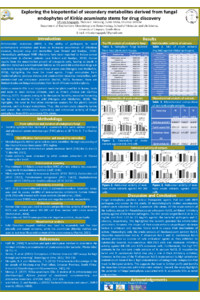
sciforum_115519_S3_slides_ECM2025_CONFERENCE_POSTER_MAGAGULA_MFUNDO_30_MARCH_2025.pdf
Analysis of Soil Biological Activity in the Surroundings of Sfântu Gheorghe in Covasna
Celery (Apium graveolens) seed extracts: A natural and effective strategy against Helicobacter pylori infection.