Event submissions
Published
This submission belongs to the session S3. Antimicrobial Agents and Resistance of the event The 3rd International Electronic Conference on Microbiology
Published date
31 Mar, 2025
Academic Editor
'%3e%3cpath%20d='M12.6657%2010.9104C12.4185%2010.325%2012.0599%209.79327%2011.6097%209.34482C11.1609%208.89508%2010.6293%208.5365%2010.0442%208.28888C10.0389%208.28626%2010.0337%208.28495%2010.0285%208.28233C10.8446%207.69279%2011.3752%206.73249%2011.3752%205.64904C11.3752%203.8542%209.92103%202.39999%208.1262%202.39999C6.33136%202.39999%204.87715%203.8542%204.87715%205.64904C4.87715%206.73249%205.40774%207.69279%206.22393%208.28364C6.21869%208.28626%206.21345%208.28757%206.20821%208.29019C5.62129%208.5378%205.09463%208.89284%204.64265%209.34613C4.1929%209.79493%203.83432%2010.3266%203.58671%2010.9117C3.34345%2011.4845%203.21226%2012.0987%203.20023%2012.7209C3.19988%2012.7349%203.20233%2012.7488%203.20744%2012.7619C3.21255%2012.7749%203.22022%2012.7867%203.22998%2012.7968C3.23975%2012.8068%203.25142%2012.8147%203.26431%2012.8202C3.2772%2012.8256%203.29105%2012.8284%203.30504%2012.8284H4.09109C4.14874%2012.8284%204.19459%2012.7825%204.1959%2012.7262C4.2221%2011.7148%204.62823%2010.7676%205.34617%2010.0497C6.08899%209.30683%207.0755%208.89808%208.1262%208.89808C9.17689%208.89808%2010.1634%209.30683%2010.9062%2010.0497C11.6242%2010.7676%2012.0303%2011.7148%2012.0565%2012.7262C12.0578%2012.7838%2012.1037%2012.8284%2012.1613%2012.8284H12.9474C12.9613%2012.8284%2012.9752%2012.8256%2012.9881%2012.8202C13.001%2012.8147%2013.0126%2012.8068%2013.0224%2012.7968C13.0322%2012.7867%2013.0398%2012.7749%2013.0449%2012.7619C13.0501%2012.7488%2013.0525%2012.7349%2013.0522%2012.7209C13.0391%2012.0947%2012.9094%2011.4855%2012.6657%2010.9104ZM8.1262%207.9024C7.52486%207.9024%206.9589%207.6679%206.53312%207.24211C6.10733%206.81633%205.87283%206.25037%205.87283%205.64904C5.87283%205.0477%206.10733%204.48174%206.53312%204.05596C6.9589%203.63018%207.52486%203.39567%208.1262%203.39567C8.72753%203.39567%209.29349%203.63018%209.71927%204.05596C10.1451%204.48174%2010.3796%205.0477%2010.3796%205.64904C10.3796%206.25037%2010.1451%206.81633%209.71927%207.24211C9.29349%207.6679%208.72753%207.9024%208.1262%207.9024Z'%20fill='%235D1EE1'/%3e%3c/g%3e%3c/svg%3e) Nico Jehmlich
Nico JehmlichCitation
Martyna Kasela, Weronika Słotwińska, Sylwia Andrzejczuk, Agnieszka Grzegorczyk, Silent mupirocin resistance in methicillin-resistant Staphylococcus aureus, in Proceedings of The 3rd International Electronic Conference on Microbiology, 1 April–3 April 2025, MDPI: Basel, Switzerland
Share
Email
Facebook
Twitter
LinkedIn
Silent mupirocin resistance in methicillin-resistant Staphylococcus aureus
'%3e%3cpath%20d='M12.6647%2010.9104C12.4176%2010.325%2012.0589%209.7933%2011.6088%209.34485C11.16%208.89511%2010.6283%208.53653%2010.0432%208.28891C10.038%208.28629%2010.0327%208.28498%2010.0275%208.28236C10.8437%207.69282%2011.3743%206.73252%2011.3743%205.64907C11.3743%203.85423%209.92005%202.40002%208.12522%202.40002C6.33038%202.40002%204.87618%203.85423%204.87618%205.64907C4.87618%206.73252%205.40677%207.69282%206.22296%208.28367C6.21772%208.28629%206.21248%208.2876%206.20724%208.29022C5.62031%208.53783%205.09365%208.89287%204.64167%209.34616C4.19192%209.79496%203.83334%2010.3266%203.58573%2010.9117C3.34247%2011.4846%203.21128%2012.0987%203.19925%2012.721C3.1989%2012.735%203.20135%2012.7489%203.20646%2012.7619C3.21157%2012.7749%203.21924%2012.7868%203.22901%2012.7968C3.23877%2012.8068%203.25045%2012.8148%203.26334%2012.8202C3.27623%2012.8256%203.29007%2012.8284%203.30406%2012.8284H4.09012C4.14776%2012.8284%204.19362%2012.7825%204.19493%2012.7262C4.22113%2011.7148%204.62726%2010.7676%205.34519%2010.0497C6.08802%209.30686%207.07452%208.89811%208.12522%208.89811C9.17592%208.89811%2010.1624%209.30686%2010.9052%2010.0497C11.6232%2010.7676%2012.0293%2011.7148%2012.0555%2012.7262C12.0568%2012.7839%2012.1027%2012.8284%2012.1603%2012.8284H12.9464C12.9604%2012.8284%2012.9742%2012.8256%2012.9871%2012.8202C13%2012.8148%2013.0117%2012.8068%2013.0214%2012.7968C13.0312%2012.7868%2013.0389%2012.7749%2013.044%2012.7619C13.0491%2012.7489%2013.0515%2012.735%2013.0512%2012.721C13.0381%2012.0947%2012.9084%2011.4856%2012.6647%2010.9104ZM8.12522%207.90243C7.52388%207.90243%206.95792%207.66793%206.53214%207.24215C6.10636%206.81636%205.87185%206.2504%205.87185%205.64907C5.87185%205.04773%206.10636%204.48177%206.53214%204.05599C6.95792%203.63021%207.52388%203.3957%208.12522%203.3957C8.72655%203.3957%209.29252%203.63021%209.7183%204.05599C10.1441%204.48177%2010.3786%205.04773%2010.3786%205.64907C10.3786%206.2504%2010.1441%206.81636%209.7183%207.24215C9.29252%207.66793%208.72655%207.90243%208.12522%207.90243Z'%20fill='%235D1EE1'/%3e%3c/g%3e%3c/svg%3e)
Martyna Kasela 1
Weronika Słotwińska 2

Sylwia Andrzejczuk 1
Agnieszka Grzegorczyk 1
1. Department of Pharmaceutical Microbiology, Medical University of Lublin, 20-093 Lublin, Poland
2. Student’s Scientific Circle at the Department of Pharmaceutical Microbiology, Medical University of Lublin, 20-093 Lublin, Poland
Abstract
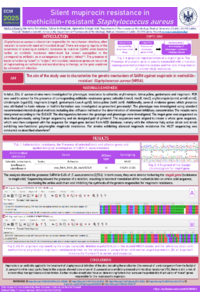
Staphylococcus aureus, including methicillin-resistant strains (MRSA), is a bacterium responsible for multiple types of human infections. The discrepancy between phenotypic and genotypic resistance is called silencing of antibiotic resistance by mutation (SARM), while the genes are called silent or cryptic. The presence of SARM bacteria carries a risk of implementing an ineffective antimicrobial drug in therapy, as the gene would not be activated until therapy. This study aimed to determine the frequency of SARM and its genetic mechanisms. The virulence and sequence type of the SARM strains were also characterized.
In total, 334 S. aureus strains were investigated for phenotypic resistance to cefoxitin, erythromycin, tetracycline, gentamycin, and mupirocin. PCR was used to screen for the presence of corresponding antibiotic-resistance genes. SARM isolates were further characterized by the detection of genes encoding toxins, adhesins, types of SCCmec cassette, and genotyping with MLST. Silenced genes were sequenced to determine the genetic defect and its consequences for protein translation.
The analysis showed the presence of SARM in 0.6% of S. aureus strains (2/334). In both cases, they were strains harbouring the mupA gene (resistance to mupirocin). Sequencing showed the presence of a deletion, resulting in the incorrect translation of the nucleotide into an amino acid sequence, shortening the amino acid chain and inhibiting the synthesis of the protein responsible for mupirocin resistance.
Mupirocin is an antibiotic applied in the treatment of staphylococcal infection of the skin, including the eradication (the removal of a microorganism from the body) of S. aureus from the nasal cavity. Despite the fact that the analysis showed a low share of SARM (<1%), there is still a risk of antimicrobial therapy failure and reinfection. Further studies should also focus on determining factors that increase the probability of activation of silent genes responsible for resistance to mupirocin.
Keywords
Staphylococcus aureus
MRSA
SARM
cryptic genes
silent genes
mupirocin
Poster
microroganisms 2025 poster.pdf
Listeria monocytogenes isolated from fresh pork meat commercialised in La Plata, Buenos Aires, Argentina
A reclamation strategy to stabilize degraded riverbanks: prospective benefits of using plant growth-stimulating bacteria associated with the riparian plant Salvia procurrens