Event submissions
Published
This submission belongs to the session S5. Natural and Synthetic Antioxidants and Antioxidant Enzyme Systems of the event The 2nd International Electronic Conference on Antioxidants
Published date
04 Apr, 2025
Academic Editor
'%3e%3cpath%20d='M12.6657%2010.9104C12.4185%2010.325%2012.0599%209.79327%2011.6097%209.34482C11.1609%208.89508%2010.6293%208.5365%2010.0442%208.28888C10.0389%208.28626%2010.0337%208.28495%2010.0285%208.28233C10.8446%207.69279%2011.3752%206.73249%2011.3752%205.64904C11.3752%203.8542%209.92103%202.39999%208.1262%202.39999C6.33136%202.39999%204.87715%203.8542%204.87715%205.64904C4.87715%206.73249%205.40774%207.69279%206.22393%208.28364C6.21869%208.28626%206.21345%208.28757%206.20821%208.29019C5.62129%208.5378%205.09463%208.89284%204.64265%209.34613C4.1929%209.79493%203.83432%2010.3266%203.58671%2010.9117C3.34345%2011.4845%203.21226%2012.0987%203.20023%2012.7209C3.19988%2012.7349%203.20233%2012.7488%203.20744%2012.7619C3.21255%2012.7749%203.22022%2012.7867%203.22998%2012.7968C3.23975%2012.8068%203.25142%2012.8147%203.26431%2012.8202C3.2772%2012.8256%203.29105%2012.8284%203.30504%2012.8284H4.09109C4.14874%2012.8284%204.19459%2012.7825%204.1959%2012.7262C4.2221%2011.7148%204.62823%2010.7676%205.34617%2010.0497C6.08899%209.30683%207.0755%208.89808%208.1262%208.89808C9.17689%208.89808%2010.1634%209.30683%2010.9062%2010.0497C11.6242%2010.7676%2012.0303%2011.7148%2012.0565%2012.7262C12.0578%2012.7838%2012.1037%2012.8284%2012.1613%2012.8284H12.9474C12.9613%2012.8284%2012.9752%2012.8256%2012.9881%2012.8202C13.001%2012.8147%2013.0126%2012.8068%2013.0224%2012.7968C13.0322%2012.7867%2013.0398%2012.7749%2013.0449%2012.7619C13.0501%2012.7488%2013.0525%2012.7349%2013.0522%2012.7209C13.0391%2012.0947%2012.9094%2011.4855%2012.6657%2010.9104ZM8.1262%207.9024C7.52486%207.9024%206.9589%207.6679%206.53312%207.24211C6.10733%206.81633%205.87283%206.25037%205.87283%205.64904C5.87283%205.0477%206.10733%204.48174%206.53312%204.05596C6.9589%203.63018%207.52486%203.39567%208.1262%203.39567C8.72753%203.39567%209.29349%203.63018%209.71927%204.05596C10.1451%204.48174%2010.3796%205.0477%2010.3796%205.64904C10.3796%206.25037%2010.1451%206.81633%209.71927%207.24211C9.29349%207.6679%208.72753%207.9024%208.1262%207.9024Z'%20fill='%235D1EE1'/%3e%3c/g%3e%3c/svg%3e) Mario Allegra
Mario AllegraCitation
Ana Olívia Serra Jorge, F. Chamorro, M. Carpena, J. Echave, E. N. Yuksek, M. Beatriz P. P. Oliveira, M.A. Prieto, Protective Antioxidants in Seafood: Supporting Health and Combating Disease, in Proceedings of The 2nd International Electronic Conference on Antioxidants, 7 April–9 April 2025, MDPI: Basel, Switzerland
Share
Email
Facebook
Twitter
LinkedIn
Protective Antioxidants in Seafood: Supporting Health and Combating Disease
'%3e%3cpath%20d='M12.6647%2010.9104C12.4176%2010.325%2012.0589%209.7933%2011.6088%209.34485C11.16%208.89511%2010.6283%208.53653%2010.0432%208.28891C10.038%208.28629%2010.0327%208.28498%2010.0275%208.28236C10.8437%207.69282%2011.3743%206.73252%2011.3743%205.64907C11.3743%203.85423%209.92005%202.40002%208.12522%202.40002C6.33038%202.40002%204.87618%203.85423%204.87618%205.64907C4.87618%206.73252%205.40677%207.69282%206.22296%208.28367C6.21772%208.28629%206.21248%208.2876%206.20724%208.29022C5.62031%208.53783%205.09365%208.89287%204.64167%209.34616C4.19192%209.79496%203.83334%2010.3266%203.58573%2010.9117C3.34247%2011.4846%203.21128%2012.0987%203.19925%2012.721C3.1989%2012.735%203.20135%2012.7489%203.20646%2012.7619C3.21157%2012.7749%203.21924%2012.7868%203.22901%2012.7968C3.23877%2012.8068%203.25045%2012.8148%203.26334%2012.8202C3.27623%2012.8256%203.29007%2012.8284%203.30406%2012.8284H4.09012C4.14776%2012.8284%204.19362%2012.7825%204.19493%2012.7262C4.22113%2011.7148%204.62726%2010.7676%205.34519%2010.0497C6.08802%209.30686%207.07452%208.89811%208.12522%208.89811C9.17592%208.89811%2010.1624%209.30686%2010.9052%2010.0497C11.6232%2010.7676%2012.0293%2011.7148%2012.0555%2012.7262C12.0568%2012.7839%2012.1027%2012.8284%2012.1603%2012.8284H12.9464C12.9604%2012.8284%2012.9742%2012.8256%2012.9871%2012.8202C13%2012.8148%2013.0117%2012.8068%2013.0214%2012.7968C13.0312%2012.7868%2013.0389%2012.7749%2013.044%2012.7619C13.0491%2012.7489%2013.0515%2012.735%2013.0512%2012.721C13.0381%2012.0947%2012.9084%2011.4856%2012.6647%2010.9104ZM8.12522%207.90243C7.52388%207.90243%206.95792%207.66793%206.53214%207.24215C6.10636%206.81636%205.87185%206.2504%205.87185%205.64907C5.87185%205.04773%206.10636%204.48177%206.53214%204.05599C6.95792%203.63021%207.52388%203.3957%208.12522%203.3957C8.72655%203.3957%209.29252%203.63021%209.7183%204.05599C10.1441%204.48177%2010.3786%205.04773%2010.3786%205.64907C10.3786%206.2504%2010.1441%206.81636%209.7183%207.24215C9.29252%207.66793%208.72655%207.90243%208.12522%207.90243Z'%20fill='%235D1EE1'/%3e%3c/g%3e%3c/svg%3e)
Ana Olívia Serra Jorge 1

F. Chamorro 2

M. Carpena 2

J. Echave 2,3

E. N. Yuksek 2

M. Beatriz P. P. Oliveira 4

M.A. Prieto 2
1. REQUIMTE/LAQV, Department of Chemical Sciences, Faculty of Pharmacy, University of Porto, R. Jorge Viterbo Ferreira 228, 4050-313 Porto, Portugal
2. Universidade de Vigo, Nutrition and Bromatology Group, Department of Analytical Chemistry and Food Science, Instituto de Agroecoloxía e Alimentación (IAA) – CITEXVI, 36310 Vigo, Spain.
3. CIMO, LA SusTEC, Instituto Politécnico de Bragança, Campus de Santa Apolónia, 5300- 253 Bragança, Portugal
4. LAQV@REQUIMTE, Department of Chemical Sciences, Faculdade de Farmácia, Universidade do Porto, R. Jorge Viterbo Ferreira 228, 4050-313, Porto, Portugal.
Abstract
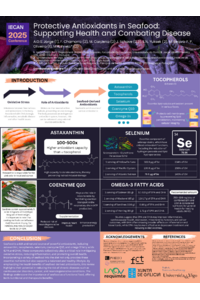
Antioxidants from seafood play a crucial role in promoting human health by providing a natural source of compounds that mitigate oxidative stress. Oxidative stress, usually as a result of antioxidant imbalance, is strongly linked with DNA damage, inflammation, metabolic diseases, and other hazardous events. This intricate process can be ameliorated by endogenous antioxidant enzymes and molecules, but also by intake of antioxidants naturally present in food. Seafood is rich in bioactive antioxidants like astaxanthin, tocopherols, selenium, coenzyme Q10, glutathione, and omega-3 fatty acids, all of which have demonstrated significant potential in reducing cellular oxidative damage.
Some antioxidants in fish, such as astaxanthin, tocopherols, and selenium, collaborate in mitigating oxidative stress by neutralizing free radicals. This action helps to reduce cellular damage, thereby lowering the risk of chronic diseases such as cancer, cardiovascular diseases, and neurodegenerative disorders. Astaxanthin, a carotenoid found in certain fish species like salmon and trout, is known for its superior antioxidant capacity, surpassing vitamin E and other carotenoids. Tocopherols (vitamin E compounds) also contribute to the prevention of lipid oxidation in cell membranes, enhancing cellular integrity and function. Selenium, an essential trace mineral in fish, is a component of selenoproteins with critical antioxidant functions, protecting against oxidative damage and supporting immune function. Additional antioxidants such as coenzyme Q10, found in fish like sardines and mackerel, contribute to cellular energy production while neutralizing free radicals. Glutathione, present in various types of seafood, supports detoxification pathways and bolsters cellular antioxidant defense systems.
This review synthesizes the mechanisms, health benefits, and dietary implications of seafood-derived antioxidants, providing insights into their potential for enhancing human health.
Keywords
Seafood
Fish
antioxidants
astaxanthin
Selenium
Poster
POSTER_protective antioxidants in seafood.pdf
Oxidative Stress, Inflammation, and Obesity: Insights into Mechanisms and Therapeutic Targets
The Role of Oxidative Stress in T2DM-Associated CAD: Pathways and Biomarkers for Clinical Advancements, Early Diagnosis, and Prognosis