Event submissions
Published
This submission belongs to the session E. Biocatalysis of the event The 3rd International Electronic Conference on Catalysis Sciences
Published date
21 Apr, 2025
Academic Editor
'%3e%3cpath%20d='M12.6657%2010.9104C12.4185%2010.325%2012.0599%209.79327%2011.6097%209.34482C11.1609%208.89508%2010.6293%208.5365%2010.0442%208.28888C10.0389%208.28626%2010.0337%208.28495%2010.0285%208.28233C10.8446%207.69279%2011.3752%206.73249%2011.3752%205.64904C11.3752%203.8542%209.92103%202.39999%208.1262%202.39999C6.33136%202.39999%204.87715%203.8542%204.87715%205.64904C4.87715%206.73249%205.40774%207.69279%206.22393%208.28364C6.21869%208.28626%206.21345%208.28757%206.20821%208.29019C5.62129%208.5378%205.09463%208.89284%204.64265%209.34613C4.1929%209.79493%203.83432%2010.3266%203.58671%2010.9117C3.34345%2011.4845%203.21226%2012.0987%203.20023%2012.7209C3.19988%2012.7349%203.20233%2012.7488%203.20744%2012.7619C3.21255%2012.7749%203.22022%2012.7867%203.22998%2012.7968C3.23975%2012.8068%203.25142%2012.8147%203.26431%2012.8202C3.2772%2012.8256%203.29105%2012.8284%203.30504%2012.8284H4.09109C4.14874%2012.8284%204.19459%2012.7825%204.1959%2012.7262C4.2221%2011.7148%204.62823%2010.7676%205.34617%2010.0497C6.08899%209.30683%207.0755%208.89808%208.1262%208.89808C9.17689%208.89808%2010.1634%209.30683%2010.9062%2010.0497C11.6242%2010.7676%2012.0303%2011.7148%2012.0565%2012.7262C12.0578%2012.7838%2012.1037%2012.8284%2012.1613%2012.8284H12.9474C12.9613%2012.8284%2012.9752%2012.8256%2012.9881%2012.8202C13.001%2012.8147%2013.0126%2012.8068%2013.0224%2012.7968C13.0322%2012.7867%2013.0398%2012.7749%2013.0449%2012.7619C13.0501%2012.7488%2013.0525%2012.7349%2013.0522%2012.7209C13.0391%2012.0947%2012.9094%2011.4855%2012.6657%2010.9104ZM8.1262%207.9024C7.52486%207.9024%206.9589%207.6679%206.53312%207.24211C6.10733%206.81633%205.87283%206.25037%205.87283%205.64904C5.87283%205.0477%206.10733%204.48174%206.53312%204.05596C6.9589%203.63018%207.52486%203.39567%208.1262%203.39567C8.72753%203.39567%209.29349%203.63018%209.71927%204.05596C10.1451%204.48174%2010.3796%205.0477%2010.3796%205.64904C10.3796%206.25037%2010.1451%206.81633%209.71927%207.24211C9.29349%207.6679%208.72753%207.9024%208.1262%207.9024Z'%20fill='%235D1EE1'/%3e%3c/g%3e%3c/svg%3e) Frank Hollmann
Frank HollmannCitation
Jyoti Papola, Rahul Pradhan, Akhila Pinnuri, Anil Kumar Yadav, Role of biocatalysts in biofuel production from lignocellulosic material, in Proceedings of The 3rd International Electronic Conference on Catalysis Sciences, 23 April–25 April 2025, MDPI: Basel, Switzerland
Share
Email
Facebook
Twitter
LinkedIn
Role of biocatalysts in biofuel production from lignocellulosic material
'%3e%3cpath%20d='M12.6647%2010.9104C12.4176%2010.325%2012.0589%209.7933%2011.6088%209.34485C11.16%208.89511%2010.6283%208.53653%2010.0432%208.28891C10.038%208.28629%2010.0327%208.28498%2010.0275%208.28236C10.8437%207.69282%2011.3743%206.73252%2011.3743%205.64907C11.3743%203.85423%209.92005%202.40002%208.12522%202.40002C6.33038%202.40002%204.87618%203.85423%204.87618%205.64907C4.87618%206.73252%205.40677%207.69282%206.22296%208.28367C6.21772%208.28629%206.21248%208.2876%206.20724%208.29022C5.62031%208.53783%205.09365%208.89287%204.64167%209.34616C4.19192%209.79496%203.83334%2010.3266%203.58573%2010.9117C3.34247%2011.4846%203.21128%2012.0987%203.19925%2012.721C3.1989%2012.735%203.20135%2012.7489%203.20646%2012.7619C3.21157%2012.7749%203.21924%2012.7868%203.22901%2012.7968C3.23877%2012.8068%203.25045%2012.8148%203.26334%2012.8202C3.27623%2012.8256%203.29007%2012.8284%203.30406%2012.8284H4.09012C4.14776%2012.8284%204.19362%2012.7825%204.19493%2012.7262C4.22113%2011.7148%204.62726%2010.7676%205.34519%2010.0497C6.08802%209.30686%207.07452%208.89811%208.12522%208.89811C9.17592%208.89811%2010.1624%209.30686%2010.9052%2010.0497C11.6232%2010.7676%2012.0293%2011.7148%2012.0555%2012.7262C12.0568%2012.7839%2012.1027%2012.8284%2012.1603%2012.8284H12.9464C12.9604%2012.8284%2012.9742%2012.8256%2012.9871%2012.8202C13%2012.8148%2013.0117%2012.8068%2013.0214%2012.7968C13.0312%2012.7868%2013.0389%2012.7749%2013.044%2012.7619C13.0491%2012.7489%2013.0515%2012.735%2013.0512%2012.721C13.0381%2012.0947%2012.9084%2011.4856%2012.6647%2010.9104ZM8.12522%207.90243C7.52388%207.90243%206.95792%207.66793%206.53214%207.24215C6.10636%206.81636%205.87185%206.2504%205.87185%205.64907C5.87185%205.04773%206.10636%204.48177%206.53214%204.05599C6.95792%203.63021%207.52388%203.3957%208.12522%203.3957C8.72655%203.3957%209.29252%203.63021%209.7183%204.05599C10.1441%204.48177%2010.3786%205.04773%2010.3786%205.64907C10.3786%206.2504%2010.1441%206.81636%209.7183%207.24215C9.29252%207.66793%208.72655%207.90243%208.12522%207.90243Z'%20fill='%235D1EE1'/%3e%3c/g%3e%3c/svg%3e)
Jyoti Papola 1
Rahul Pradhan 2
Akhila Pinnuri 3
Anil Kumar Yadav 4
1. Wood Properties and Processing Division, Institute of Wood Science and Technology, Bengaluru, Bengaluru, Karnataka, 560003, India
2. Silviculture and Forest Management Division, ICFRE- Institute of Wood Science and Technology, Bengaluru
3. Silviculture and Forest Management Division, ICFRE- Institute of Wood Science and Technology, Bengaluru,
4. Silviculture, Forest Management and Agroforestry Division, ICFRE- Tropical Forest Research Institute, Jabalpur
Abstract
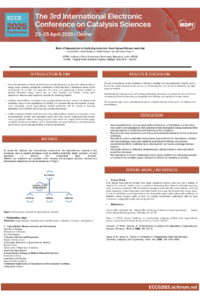
Woodchips serve as a renewable and important readily available by-product of the forestry and timber sectors that can be utilized as biofuels through several methods, one of which is biocatalysis. The recent developments in biocatalysis have greatly increased the efficiency of converting wood chips into usable biofuels. Biocatalytic techniques utilize enzymes, microorganisms, and biocatalysts to decompose the intricate lignocellulosic structure of wood chips into fermentable sugars, bioethanol, biobutanol, or other forms of biofuels. The woodchips are primarily composed of cellulose, hemicellulose, and lignin, which are intricate polymers that are converted into biofuels. Prior to the biocatalysis process, woodchips typically undergo a pre-treatment process to break the lignin and other structural elements, allowing the cellulose and hemicellulose to unbind for better enzymatic breakdown. Some researchers are concentrating on producing biocatalysts which are capable of degrading both cellulose and lignin at the same time, which improves the overall process. For instance, modified enzymes or fungi such as Trichoderma reesei or species of Penicillium are utilized to improve cellulose hydrolysis, while microbes that degrade lignin are being modified for effective lignin decomposition. Enzymatic reactions play a crucial role in enhancing the efficiency of this conversion, and advancements in the development of biocatalysts are further enhancing the economic and technical viability of using woodchips as a biofuel source. This study examines the significance of biocatalysis in enhancing the conversion of wood chips into biofuels, emphasizing key enzyme systems such as cellulases and lignin-degrading enzymes that aid in the breakdown of cellulose, hemicellulose, and lignin components.
Keywords
Biocatalysis
Wood Chips
Biofuels
Enzymatic Conversion
Lignin Degradation.
Poster
Jyoti Papola pdf.pdf
Oxidation of Malachite Green by Illite Impregnated with Iron/Indium
A novel xyloglucanase from the white rot fungus Abortiporus biennis and its potential role as an accessory biocatalyst in the enzymatic degradation of xyloglucan-contianing substrates