Event submissions
Published
This submission belongs to the session H. Optical and Photonic Biosensors of the event The 5th International Electronic Conference on Biosensors
Published date
02 May, 2025
Academic Editor
'%3e%3cpath%20d='M12.6657%2010.9104C12.4185%2010.325%2012.0599%209.79327%2011.6097%209.34482C11.1609%208.89508%2010.6293%208.5365%2010.0442%208.28888C10.0389%208.28626%2010.0337%208.28495%2010.0285%208.28233C10.8446%207.69279%2011.3752%206.73249%2011.3752%205.64904C11.3752%203.8542%209.92103%202.39999%208.1262%202.39999C6.33136%202.39999%204.87715%203.8542%204.87715%205.64904C4.87715%206.73249%205.40774%207.69279%206.22393%208.28364C6.21869%208.28626%206.21345%208.28757%206.20821%208.29019C5.62129%208.5378%205.09463%208.89284%204.64265%209.34613C4.1929%209.79493%203.83432%2010.3266%203.58671%2010.9117C3.34345%2011.4845%203.21226%2012.0987%203.20023%2012.7209C3.19988%2012.7349%203.20233%2012.7488%203.20744%2012.7619C3.21255%2012.7749%203.22022%2012.7867%203.22998%2012.7968C3.23975%2012.8068%203.25142%2012.8147%203.26431%2012.8202C3.2772%2012.8256%203.29105%2012.8284%203.30504%2012.8284H4.09109C4.14874%2012.8284%204.19459%2012.7825%204.1959%2012.7262C4.2221%2011.7148%204.62823%2010.7676%205.34617%2010.0497C6.08899%209.30683%207.0755%208.89808%208.1262%208.89808C9.17689%208.89808%2010.1634%209.30683%2010.9062%2010.0497C11.6242%2010.7676%2012.0303%2011.7148%2012.0565%2012.7262C12.0578%2012.7838%2012.1037%2012.8284%2012.1613%2012.8284H12.9474C12.9613%2012.8284%2012.9752%2012.8256%2012.9881%2012.8202C13.001%2012.8147%2013.0126%2012.8068%2013.0224%2012.7968C13.0322%2012.7867%2013.0398%2012.7749%2013.0449%2012.7619C13.0501%2012.7488%2013.0525%2012.7349%2013.0522%2012.7209C13.0391%2012.0947%2012.9094%2011.4855%2012.6657%2010.9104ZM8.1262%207.9024C7.52486%207.9024%206.9589%207.6679%206.53312%207.24211C6.10733%206.81633%205.87283%206.25037%205.87283%205.64904C5.87283%205.0477%206.10733%204.48174%206.53312%204.05596C6.9589%203.63018%207.52486%203.39567%208.1262%203.39567C8.72753%203.39567%209.29349%203.63018%209.71927%204.05596C10.1451%204.48174%2010.3796%205.0477%2010.3796%205.64904C10.3796%206.25037%2010.1451%206.81633%209.71927%207.24211C9.29349%207.6679%208.72753%207.9024%208.1262%207.9024Z'%20fill='%235D1EE1'/%3e%3c/g%3e%3c/svg%3e) Chun-yang Zhang
Chun-yang ZhangCitation
Mostafa Abdallah, Cosmo Trono, Niccolo Marcucci, Ambra Giannetti, Francesco Baldini, Andreas Lesch, Simona Scarano, Sara Tombelli, Fiber gratings coupled with polymers for biosensing, in Proceedings of The 5th International Electronic Conference on Biosensors, 26 May–28 May 2025, MDPI: Basel, Switzerland
Share
Email
Facebook
Twitter
LinkedIn
Fiber gratings coupled with polymers for biosensing
'%3e%3cpath%20d='M12.6647%2010.9104C12.4176%2010.325%2012.0589%209.7933%2011.6088%209.34485C11.16%208.89511%2010.6283%208.53653%2010.0432%208.28891C10.038%208.28629%2010.0327%208.28498%2010.0275%208.28236C10.8437%207.69282%2011.3743%206.73252%2011.3743%205.64907C11.3743%203.85423%209.92005%202.40002%208.12522%202.40002C6.33038%202.40002%204.87618%203.85423%204.87618%205.64907C4.87618%206.73252%205.40677%207.69282%206.22296%208.28367C6.21772%208.28629%206.21248%208.2876%206.20724%208.29022C5.62031%208.53783%205.09365%208.89287%204.64167%209.34616C4.19192%209.79496%203.83334%2010.3266%203.58573%2010.9117C3.34247%2011.4846%203.21128%2012.0987%203.19925%2012.721C3.1989%2012.735%203.20135%2012.7489%203.20646%2012.7619C3.21157%2012.7749%203.21924%2012.7868%203.22901%2012.7968C3.23877%2012.8068%203.25045%2012.8148%203.26334%2012.8202C3.27623%2012.8256%203.29007%2012.8284%203.30406%2012.8284H4.09012C4.14776%2012.8284%204.19362%2012.7825%204.19493%2012.7262C4.22113%2011.7148%204.62726%2010.7676%205.34519%2010.0497C6.08802%209.30686%207.07452%208.89811%208.12522%208.89811C9.17592%208.89811%2010.1624%209.30686%2010.9052%2010.0497C11.6232%2010.7676%2012.0293%2011.7148%2012.0555%2012.7262C12.0568%2012.7839%2012.1027%2012.8284%2012.1603%2012.8284H12.9464C12.9604%2012.8284%2012.9742%2012.8256%2012.9871%2012.8202C13%2012.8148%2013.0117%2012.8068%2013.0214%2012.7968C13.0312%2012.7868%2013.0389%2012.7749%2013.044%2012.7619C13.0491%2012.7489%2013.0515%2012.735%2013.0512%2012.721C13.0381%2012.0947%2012.9084%2011.4856%2012.6647%2010.9104ZM8.12522%207.90243C7.52388%207.90243%206.95792%207.66793%206.53214%207.24215C6.10636%206.81636%205.87185%206.2504%205.87185%205.64907C5.87185%205.04773%206.10636%204.48177%206.53214%204.05599C6.95792%203.63021%207.52388%203.3957%208.12522%203.3957C8.72655%203.3957%209.29252%203.63021%209.7183%204.05599C10.1441%204.48177%2010.3786%205.04773%2010.3786%205.64907C10.3786%206.2504%2010.1441%206.81636%209.7183%207.24215C9.29252%207.66793%208.72655%207.90243%208.12522%207.90243Z'%20fill='%235D1EE1'/%3e%3c/g%3e%3c/svg%3e)
Mostafa Abdallah 1

Cosmo Trono 1
Niccolo Marcucci 1

Ambra Giannetti 1

Francesco Baldini 1
Andreas Lesch 2

Simona Scarano 3

Sara Tombelli 1
1. Institute of Applied Physics “Nello Carrara”- CNR, Sesto Fiorentino, Florence, Italy
2. University of Bologna, Department of Industrial Chemistry "Toso Montanari", Bologna, Italy
3. Department of Chemistry 'Ugo Schiff', University of Florence, Sesto Fiorentino, Florence, Italy
Abstract
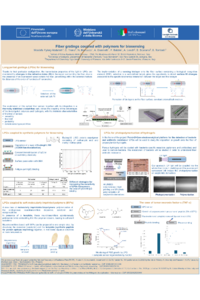
Long-period gratings (LPGs) have attracted increased attention for label-free biosensing; their structure allows for the transmission characteristics of light in these sensors to be modified by variations in the refractive index of the solution in contact with the fiber. This results from an evanescent wave arising from the fiber, which propagates into the external medium over distances of several hundred nanometers.
The implementation of a specialized biolayer on the fiber surface, composed of a biological recognition element (BRE) that is selective for the chosen target, enables the detection of surface refractive index changes resulting from the unique biochemical interaction between the target and the BRE. The same approach can be applied to investigate the deposition or growth of hydrogels and polymers, including novel soft molecularly imprinted polymers (MIPs) derived from neurotransmitters.
The application of these sensitive and adaptable fiber optic sensors has facilitated a comprehensive characterization of the photo-polymerization of acrylamide to produce polyacrylamide (PA) hydrogels; these polymers are used to create a functional and porous layer for the immobilization of antibodies and aptamers for bacterial capture. This aims to analyze the antibiotic resistance of the specific collected microorganisms. The utilization of optical fiber sensors and their integration into specifically constructed, thermally stabilized microfluidic systems harnesses the advantages of the investigated polymers and hydrogels combined with the essential characteristics of LPG sensors, particularly their versatility, cost-effectiveness, and portability.
Acknowledgments:
We acknowledge financial support under the National Recovery and Resilience Plan (PNRR), Mission 4, Component 2, Investment 1.1, Call for tender No. 104 published on 2.2.2022 by the Italian Ministry of University and Research (MUR), funded by the European Union – NextGenerationEU– Projects 202259W5FY_PE4_PRIN2022 Point-Of-Care electroanalytical platform for the detection of bacteria and antibiotic resistance – CUP B53D23013430006, and 2022JRKETK_PE7_PRIN2022 Versatile hybrid in-fiBer Optical-electrocHemical systEMs for wIdely Applicable biosensing – CUP B53D23002670006.
S.T., C.T., and S.S. also acknowledge financial support under the National Recovery and Resilience Plan (PNRR), Mission 4, Component 2, Investment 1.1, Call for tender No. 1409 published on 14.9.2022 by the Italian Ministry of University and Research (MUR), funded by the European Union – NextGenerationEU– Project Title P20227PWE5.PE4 PRIN2022PNRR Discovering the SEcret woRld of pOlyseroTONin for green molecular ImprINting and its application in bioanalytics – CUP B53D23025260001- Grant Assignment Decree No. 1386 adopted on 01/09/2023 by the Italian Ministry of Ministry of University and Research (MUR).
Keywords
Optical sensing
fiber grating
polymer
Poster
Poster Abdallah Fytory.pdf
Whole-Cell Fiber-Optical Biosensor for Detecting P. aeruginosa Via Secreted Quorum-Sensing Molecule Using Bioluminescent Bioreporters
Mid-infrared sensing with dual-band, tunable, polarization-insensitive L-shaped metasurfaces