Event submissions
Published
This submission belongs to the session S5. Pest Management, Pesticide Resistance, and Toxicology of the event The 2nd International Electronic Conference on Entomology
Published date
17 May, 2025
Academic Editor
'%3e%3cpath%20d='M12.6657%2010.9104C12.4185%2010.325%2012.0599%209.79327%2011.6097%209.34482C11.1609%208.89508%2010.6293%208.5365%2010.0442%208.28888C10.0389%208.28626%2010.0337%208.28495%2010.0285%208.28233C10.8446%207.69279%2011.3752%206.73249%2011.3752%205.64904C11.3752%203.8542%209.92103%202.39999%208.1262%202.39999C6.33136%202.39999%204.87715%203.8542%204.87715%205.64904C4.87715%206.73249%205.40774%207.69279%206.22393%208.28364C6.21869%208.28626%206.21345%208.28757%206.20821%208.29019C5.62129%208.5378%205.09463%208.89284%204.64265%209.34613C4.1929%209.79493%203.83432%2010.3266%203.58671%2010.9117C3.34345%2011.4845%203.21226%2012.0987%203.20023%2012.7209C3.19988%2012.7349%203.20233%2012.7488%203.20744%2012.7619C3.21255%2012.7749%203.22022%2012.7867%203.22998%2012.7968C3.23975%2012.8068%203.25142%2012.8147%203.26431%2012.8202C3.2772%2012.8256%203.29105%2012.8284%203.30504%2012.8284H4.09109C4.14874%2012.8284%204.19459%2012.7825%204.1959%2012.7262C4.2221%2011.7148%204.62823%2010.7676%205.34617%2010.0497C6.08899%209.30683%207.0755%208.89808%208.1262%208.89808C9.17689%208.89808%2010.1634%209.30683%2010.9062%2010.0497C11.6242%2010.7676%2012.0303%2011.7148%2012.0565%2012.7262C12.0578%2012.7838%2012.1037%2012.8284%2012.1613%2012.8284H12.9474C12.9613%2012.8284%2012.9752%2012.8256%2012.9881%2012.8202C13.001%2012.8147%2013.0126%2012.8068%2013.0224%2012.7968C13.0322%2012.7867%2013.0398%2012.7749%2013.0449%2012.7619C13.0501%2012.7488%2013.0525%2012.7349%2013.0522%2012.7209C13.0391%2012.0947%2012.9094%2011.4855%2012.6657%2010.9104ZM8.1262%207.9024C7.52486%207.9024%206.9589%207.6679%206.53312%207.24211C6.10733%206.81633%205.87283%206.25037%205.87283%205.64904C5.87283%205.0477%206.10733%204.48174%206.53312%204.05596C6.9589%203.63018%207.52486%203.39567%208.1262%203.39567C8.72753%203.39567%209.29349%203.63018%209.71927%204.05596C10.1451%204.48174%2010.3796%205.0477%2010.3796%205.64904C10.3796%206.25037%2010.1451%206.81633%209.71927%207.24211C9.29349%207.6679%208.72753%207.9024%208.1262%207.9024Z'%20fill='%235D1EE1'/%3e%3c/g%3e%3c/svg%3e) Louis Hesler
Louis HeslerCitation
Gerardo Irigoyen Bordarampe, María Daniela Tejedor, Mariana Inés Manetti, Jorge Alberto Zavala, Differential responses of three stink bugs species to soybean defenses: Insights into the impact on digestive enzymes, in Proceedings of The 2nd International Electronic Conference on Entomology, 19 May–21 May 2025, MDPI: Basel, Switzerland
Share
Email
Facebook
Twitter
LinkedIn
Differential responses of three stink bugs species to soybean defenses: Insights into the impact on digestive enzymes
'%3e%3cpath%20d='M12.6647%2010.9104C12.4176%2010.325%2012.0589%209.7933%2011.6088%209.34485C11.16%208.89511%2010.6283%208.53653%2010.0432%208.28891C10.038%208.28629%2010.0327%208.28498%2010.0275%208.28236C10.8437%207.69282%2011.3743%206.73252%2011.3743%205.64907C11.3743%203.85423%209.92005%202.40002%208.12522%202.40002C6.33038%202.40002%204.87618%203.85423%204.87618%205.64907C4.87618%206.73252%205.40677%207.69282%206.22296%208.28367C6.21772%208.28629%206.21248%208.2876%206.20724%208.29022C5.62031%208.53783%205.09365%208.89287%204.64167%209.34616C4.19192%209.79496%203.83334%2010.3266%203.58573%2010.9117C3.34247%2011.4846%203.21128%2012.0987%203.19925%2012.721C3.1989%2012.735%203.20135%2012.7489%203.20646%2012.7619C3.21157%2012.7749%203.21924%2012.7868%203.22901%2012.7968C3.23877%2012.8068%203.25045%2012.8148%203.26334%2012.8202C3.27623%2012.8256%203.29007%2012.8284%203.30406%2012.8284H4.09012C4.14776%2012.8284%204.19362%2012.7825%204.19493%2012.7262C4.22113%2011.7148%204.62726%2010.7676%205.34519%2010.0497C6.08802%209.30686%207.07452%208.89811%208.12522%208.89811C9.17592%208.89811%2010.1624%209.30686%2010.9052%2010.0497C11.6232%2010.7676%2012.0293%2011.7148%2012.0555%2012.7262C12.0568%2012.7839%2012.1027%2012.8284%2012.1603%2012.8284H12.9464C12.9604%2012.8284%2012.9742%2012.8256%2012.9871%2012.8202C13%2012.8148%2013.0117%2012.8068%2013.0214%2012.7968C13.0312%2012.7868%2013.0389%2012.7749%2013.044%2012.7619C13.0491%2012.7489%2013.0515%2012.735%2013.0512%2012.721C13.0381%2012.0947%2012.9084%2011.4856%2012.6647%2010.9104ZM8.12522%207.90243C7.52388%207.90243%206.95792%207.66793%206.53214%207.24215C6.10636%206.81636%205.87185%206.2504%205.87185%205.64907C5.87185%205.04773%206.10636%204.48177%206.53214%204.05599C6.95792%203.63021%207.52388%203.3957%208.12522%203.3957C8.72655%203.3957%209.29252%203.63021%209.7183%204.05599C10.1441%204.48177%2010.3786%205.04773%2010.3786%205.64907C10.3786%206.2504%2010.1441%206.81636%209.7183%207.24215C9.29252%207.66793%208.72655%207.90243%208.12522%207.90243Z'%20fill='%235D1EE1'/%3e%3c/g%3e%3c/svg%3e)
Gerardo Irigoyen Bordarampe 1
María Daniela Tejedor 1
Mariana Inés Manetti 2

Jorge Alberto Zavala 3
1. 1 Institute of Agricultural and Environmental Biosciences Research (INBA-CONICET), CABA, Argentina;
2 Department of Biochemestry FAUBA (School of Agriculture of the University of Buenos Aires), CABA, Argentina. CP: C1417DSE
2. 1 Institute of Agricultural and Environmental Biosciences Research (INBA-CONICET), CABA, Argentina;
2 Department of Biochemestry FAUBA (School of Agriculture of the University of Buenos Aires), CABA, Argentina. CP: C1417DSE
3. 1 Institute of Agricultural and Environmental Biosciences Research (INBA-CONICET), CABA, Argentina;
2 Department of Biochemestry FAUBA (School of Agriculture of the University of Buenos Aires), CABA, Argentina;
3 Department of Zoology FAUBA , CABA, Ar
Abstract
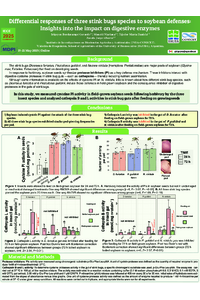
The stink bugs Diceraeus furcatus, Piezodorus guildinii, and Nezara viridula (Hemiptera: Pentatomidae) are major pests of soybean (Glycine max; Fabales: Fabaceae) that feed on developing seeds. In response to herbivory, soybean plants synthesize protease inhibitors (PI) as a key defense mechanism. These inhibitors interact with digestive cysteine proteases in stink bug guts —such as cathepsins— thereby reducing nutrient assimilation. Because herbivory induces cysteine PI in soybean seeds, studying this regulation is important to decrease stink bug damage. Although some information is available on the effects of cysteine PI on N. viridula, little is known about how different stink bug species induce these defenses in field-grown soybean. In this study, we measured cysteine PI activity in soybean seeds following herbivory by D. furcatus, P. guildinii, and N. viridula. We compared cysteine PI activity between damaged and undamaged seeds at 24 and 72 hours post-feeding. We also analyzed cathepsin B and L activities in stink bug guts after feeding on growing seeds, with boiled seeds as controls, and recorded pod piercings to determine feeding behavior. Our results showed that cysteine PI activity increased significantly after herbivory but remained low in undamaged controls. Despite this increased defense, all stink bugs exhibited similar pod-piercing frequencies, approximately 25 piercings per pod. We observed that cathepsin B activity was inhibited in P. guildinii and N. viridula but not in D. furcatus, whereas cathepsin L activity was inhibited in D. furcatus and P. guildinii but not in N. viridula. Our findings reveal species-specific interactions between soybean defenses and stink bug digestive enzymes. Field-grown soybean plants recognize herbivory and induce cysteine PI as a defense strategy, but the efficacy of these inhibitors depends on the pest species. This insight could guide the development of targeted pest management strategies adjusted to specific stink bug species.
Keywords
Plant-insect interactions
Pentatomidae pests
Digestive proteases
Poster
GerardoIrigoyenBordarampe_Insects2025_Poster.pdf
Microbial Profiling of Apis mellifera: Biochemical and Molecular Insights on bacteria from Dead Brood, pupa, and comb
Prec-WINE-Farm: Sustainable Viticulture through Precision Agriculture