Event submissions
Published
This submission belongs to the session S5. Pest Management, Pesticide Resistance, and Toxicology of the event The 2nd International Electronic Conference on Entomology
Published date
17 May, 2025
Academic Editor
'%3e%3cpath%20d='M12.6657%2010.9104C12.4185%2010.325%2012.0599%209.79327%2011.6097%209.34482C11.1609%208.89508%2010.6293%208.5365%2010.0442%208.28888C10.0389%208.28626%2010.0337%208.28495%2010.0285%208.28233C10.8446%207.69279%2011.3752%206.73249%2011.3752%205.64904C11.3752%203.8542%209.92103%202.39999%208.1262%202.39999C6.33136%202.39999%204.87715%203.8542%204.87715%205.64904C4.87715%206.73249%205.40774%207.69279%206.22393%208.28364C6.21869%208.28626%206.21345%208.28757%206.20821%208.29019C5.62129%208.5378%205.09463%208.89284%204.64265%209.34613C4.1929%209.79493%203.83432%2010.3266%203.58671%2010.9117C3.34345%2011.4845%203.21226%2012.0987%203.20023%2012.7209C3.19988%2012.7349%203.20233%2012.7488%203.20744%2012.7619C3.21255%2012.7749%203.22022%2012.7867%203.22998%2012.7968C3.23975%2012.8068%203.25142%2012.8147%203.26431%2012.8202C3.2772%2012.8256%203.29105%2012.8284%203.30504%2012.8284H4.09109C4.14874%2012.8284%204.19459%2012.7825%204.1959%2012.7262C4.2221%2011.7148%204.62823%2010.7676%205.34617%2010.0497C6.08899%209.30683%207.0755%208.89808%208.1262%208.89808C9.17689%208.89808%2010.1634%209.30683%2010.9062%2010.0497C11.6242%2010.7676%2012.0303%2011.7148%2012.0565%2012.7262C12.0578%2012.7838%2012.1037%2012.8284%2012.1613%2012.8284H12.9474C12.9613%2012.8284%2012.9752%2012.8256%2012.9881%2012.8202C13.001%2012.8147%2013.0126%2012.8068%2013.0224%2012.7968C13.0322%2012.7867%2013.0398%2012.7749%2013.0449%2012.7619C13.0501%2012.7488%2013.0525%2012.7349%2013.0522%2012.7209C13.0391%2012.0947%2012.9094%2011.4855%2012.6657%2010.9104ZM8.1262%207.9024C7.52486%207.9024%206.9589%207.6679%206.53312%207.24211C6.10733%206.81633%205.87283%206.25037%205.87283%205.64904C5.87283%205.0477%206.10733%204.48174%206.53312%204.05596C6.9589%203.63018%207.52486%203.39567%208.1262%203.39567C8.72753%203.39567%209.29349%203.63018%209.71927%204.05596C10.1451%204.48174%2010.3796%205.0477%2010.3796%205.64904C10.3796%206.25037%2010.1451%206.81633%209.71927%207.24211C9.29349%207.6679%208.72753%207.9024%208.1262%207.9024Z'%20fill='%235D1EE1'/%3e%3c/g%3e%3c/svg%3e) Louis Hesler
Louis HeslerCitation
Camila Menéndez, María Daniela Tejedor, Mariana Manetti, Jorge Alberto Zavala, The systemic defenses of soybean seeds within pods: the role of protease inhibitors against Nezara viridula (Hemiptera: Pentatomidae), in Proceedings of The 2nd International Electronic Conference on Entomology, 19 May–21 May 2025, MDPI: Basel, Switzerland
Share
Email
Facebook
Twitter
LinkedIn
The systemic defenses of soybean seeds within pods: the role of protease inhibitors against Nezara viridula (Hemiptera: Pentatomidae)
'%3e%3cpath%20d='M12.6647%2010.9104C12.4176%2010.325%2012.0589%209.7933%2011.6088%209.34485C11.16%208.89511%2010.6283%208.53653%2010.0432%208.28891C10.038%208.28629%2010.0327%208.28498%2010.0275%208.28236C10.8437%207.69282%2011.3743%206.73252%2011.3743%205.64907C11.3743%203.85423%209.92005%202.40002%208.12522%202.40002C6.33038%202.40002%204.87618%203.85423%204.87618%205.64907C4.87618%206.73252%205.40677%207.69282%206.22296%208.28367C6.21772%208.28629%206.21248%208.2876%206.20724%208.29022C5.62031%208.53783%205.09365%208.89287%204.64167%209.34616C4.19192%209.79496%203.83334%2010.3266%203.58573%2010.9117C3.34247%2011.4846%203.21128%2012.0987%203.19925%2012.721C3.1989%2012.735%203.20135%2012.7489%203.20646%2012.7619C3.21157%2012.7749%203.21924%2012.7868%203.22901%2012.7968C3.23877%2012.8068%203.25045%2012.8148%203.26334%2012.8202C3.27623%2012.8256%203.29007%2012.8284%203.30406%2012.8284H4.09012C4.14776%2012.8284%204.19362%2012.7825%204.19493%2012.7262C4.22113%2011.7148%204.62726%2010.7676%205.34519%2010.0497C6.08802%209.30686%207.07452%208.89811%208.12522%208.89811C9.17592%208.89811%2010.1624%209.30686%2010.9052%2010.0497C11.6232%2010.7676%2012.0293%2011.7148%2012.0555%2012.7262C12.0568%2012.7839%2012.1027%2012.8284%2012.1603%2012.8284H12.9464C12.9604%2012.8284%2012.9742%2012.8256%2012.9871%2012.8202C13%2012.8148%2013.0117%2012.8068%2013.0214%2012.7968C13.0312%2012.7868%2013.0389%2012.7749%2013.044%2012.7619C13.0491%2012.7489%2013.0515%2012.735%2013.0512%2012.721C13.0381%2012.0947%2012.9084%2011.4856%2012.6647%2010.9104ZM8.12522%207.90243C7.52388%207.90243%206.95792%207.66793%206.53214%207.24215C6.10636%206.81636%205.87185%206.2504%205.87185%205.64907C5.87185%205.04773%206.10636%204.48177%206.53214%204.05599C6.95792%203.63021%207.52388%203.3957%208.12522%203.3957C8.72655%203.3957%209.29252%203.63021%209.7183%204.05599C10.1441%204.48177%2010.3786%205.04773%2010.3786%205.64907C10.3786%206.2504%2010.1441%206.81636%209.7183%207.24215C9.29252%207.66793%208.72655%207.90243%208.12522%207.90243Z'%20fill='%235D1EE1'/%3e%3c/g%3e%3c/svg%3e)
Camila Menéndez 1,2
María Daniela Tejedor 1,2
Mariana Manetti 1,2

Jorge Alberto Zavala 1,2,3
1. Department of Biochemistry, Faculty of Agronomy, University of Buenos Aires, Buenos Aires City, Argentina.
2. Institute of Agricultural and Environmental Biosciences Research (INBA-CONICET), Buenos Aires City, Argentina.
3. Department of Agricultural Zoology, Faculty of Agronomy, University of Buenos Aires, Buenos Aires City, Argentina.
Abstract
Soybean is the main oilseed crop in Argentina, accounting for nearly half of the country's production. The stink bug complex, particularly the southern green stink bug (Nezara viridula), significantly affects soybean yields. Leveraging the natural resistance of plants can be important to reduce insecticide applications. Among soybean’s defenses are protease inhibitors (PIs), which deactivate digestive cysteine proteases in the gut of N. viridula and are induced in pods and seeds by herbivory. While many studies have explored local defense responses to insect damage, less is known about systemic mechanisms that enhance resistance in undamaged seeds. This study evaluated the systemic PI activity of seeds from the same pod of field-grown soybean cv. Williams 82 and stink bug responses to PI levels. Aluminum foil covered two of the three seeds in selected pods to identify the targeted seed. A starved adult stink bug was confined to each pod (excluding controls) within a mesh bag to feed on the uncovered seed. After 24 h, this stink bug and the foil were removed, and a second starved stink bug was introduced. The first seed pierced by this stink bug was recorded. Additionally, the gut protease activity in dissected stink bugs and the PI activity of attacked and unattacked seeds (24 and 72 h) were determined. Herbivory increased PI activity in both attacked and unattacked seeds within the same pod. Stink bugs feeding on these seeds exhibited elevated gut protease activity. Furthermore, choice experiments revealed that N. viridula preferred to feed on unattacked seeds. These findings suggest that soybean plants respond systemically to herbivory by synthesizing PIs, even in undamaged seeds. This systemic response alters feeding preferences of N. viridula by affecting the activity of their gut proteases, highlighting the potential of PIs in pest management strategies.
Keywords
plant-insect interactions
stink bug
defensive compounds
systemic induction
gut protease activity
Poster
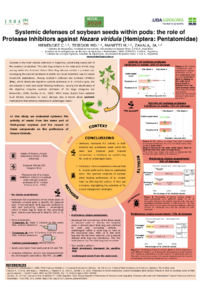
Poster Conference of Entomology Menéndez.pdf
Effect of tube diameter and tube colour on flight ability of laboratory-reared Melon fly, Zeugodacus cucurbitae (Diptera: Tephritidae)
A Comparative Analysis of Insect Succession on Chicken Carrion in Indoor and Outdoor Environments