Event submissions
Published
This submission belongs to the session S4. Biodiversity, Climate Change, Conservation, Ecology, and Evolution of the event The 2nd International Electronic Conference on Entomology
Published date
17 May, 2025
Academic Editor
'%3e%3cpath%20d='M12.6657%2010.9104C12.4185%2010.325%2012.0599%209.79327%2011.6097%209.34482C11.1609%208.89508%2010.6293%208.5365%2010.0442%208.28888C10.0389%208.28626%2010.0337%208.28495%2010.0285%208.28233C10.8446%207.69279%2011.3752%206.73249%2011.3752%205.64904C11.3752%203.8542%209.92103%202.39999%208.1262%202.39999C6.33136%202.39999%204.87715%203.8542%204.87715%205.64904C4.87715%206.73249%205.40774%207.69279%206.22393%208.28364C6.21869%208.28626%206.21345%208.28757%206.20821%208.29019C5.62129%208.5378%205.09463%208.89284%204.64265%209.34613C4.1929%209.79493%203.83432%2010.3266%203.58671%2010.9117C3.34345%2011.4845%203.21226%2012.0987%203.20023%2012.7209C3.19988%2012.7349%203.20233%2012.7488%203.20744%2012.7619C3.21255%2012.7749%203.22022%2012.7867%203.22998%2012.7968C3.23975%2012.8068%203.25142%2012.8147%203.26431%2012.8202C3.2772%2012.8256%203.29105%2012.8284%203.30504%2012.8284H4.09109C4.14874%2012.8284%204.19459%2012.7825%204.1959%2012.7262C4.2221%2011.7148%204.62823%2010.7676%205.34617%2010.0497C6.08899%209.30683%207.0755%208.89808%208.1262%208.89808C9.17689%208.89808%2010.1634%209.30683%2010.9062%2010.0497C11.6242%2010.7676%2012.0303%2011.7148%2012.0565%2012.7262C12.0578%2012.7838%2012.1037%2012.8284%2012.1613%2012.8284H12.9474C12.9613%2012.8284%2012.9752%2012.8256%2012.9881%2012.8202C13.001%2012.8147%2013.0126%2012.8068%2013.0224%2012.7968C13.0322%2012.7867%2013.0398%2012.7749%2013.0449%2012.7619C13.0501%2012.7488%2013.0525%2012.7349%2013.0522%2012.7209C13.0391%2012.0947%2012.9094%2011.4855%2012.6657%2010.9104ZM8.1262%207.9024C7.52486%207.9024%206.9589%207.6679%206.53312%207.24211C6.10733%206.81633%205.87283%206.25037%205.87283%205.64904C5.87283%205.0477%206.10733%204.48174%206.53312%204.05596C6.9589%203.63018%207.52486%203.39567%208.1262%203.39567C8.72753%203.39567%209.29349%203.63018%209.71927%204.05596C10.1451%204.48174%2010.3796%205.0477%2010.3796%205.64904C10.3796%206.25037%2010.1451%206.81633%209.71927%207.24211C9.29349%207.6679%208.72753%207.9024%208.1262%207.9024Z'%20fill='%235D1EE1'/%3e%3c/g%3e%3c/svg%3e) António Soares
António SoaresCitation
Pratiksha Vishnu Mestry, Shivani Kulkarni, Tejaswini Pachpor, Ankur Patwardhan, Pollination ecology of butterflies in tropical plants of Western Ghats of India, in Proceedings of The 2nd International Electronic Conference on Entomology, 19 May–21 May 2025, MDPI: Basel, Switzerland
Share
Email
Facebook
Twitter
LinkedIn
Pollination ecology of butterflies in tropical plants of Western Ghats of India
'%3e%3cpath%20d='M12.6647%2010.9104C12.4176%2010.325%2012.0589%209.7933%2011.6088%209.34485C11.16%208.89511%2010.6283%208.53653%2010.0432%208.28891C10.038%208.28629%2010.0327%208.28498%2010.0275%208.28236C10.8437%207.69282%2011.3743%206.73252%2011.3743%205.64907C11.3743%203.85423%209.92005%202.40002%208.12522%202.40002C6.33038%202.40002%204.87618%203.85423%204.87618%205.64907C4.87618%206.73252%205.40677%207.69282%206.22296%208.28367C6.21772%208.28629%206.21248%208.2876%206.20724%208.29022C5.62031%208.53783%205.09365%208.89287%204.64167%209.34616C4.19192%209.79496%203.83334%2010.3266%203.58573%2010.9117C3.34247%2011.4846%203.21128%2012.0987%203.19925%2012.721C3.1989%2012.735%203.20135%2012.7489%203.20646%2012.7619C3.21157%2012.7749%203.21924%2012.7868%203.22901%2012.7968C3.23877%2012.8068%203.25045%2012.8148%203.26334%2012.8202C3.27623%2012.8256%203.29007%2012.8284%203.30406%2012.8284H4.09012C4.14776%2012.8284%204.19362%2012.7825%204.19493%2012.7262C4.22113%2011.7148%204.62726%2010.7676%205.34519%2010.0497C6.08802%209.30686%207.07452%208.89811%208.12522%208.89811C9.17592%208.89811%2010.1624%209.30686%2010.9052%2010.0497C11.6232%2010.7676%2012.0293%2011.7148%2012.0555%2012.7262C12.0568%2012.7839%2012.1027%2012.8284%2012.1603%2012.8284H12.9464C12.9604%2012.8284%2012.9742%2012.8256%2012.9871%2012.8202C13%2012.8148%2013.0117%2012.8068%2013.0214%2012.7968C13.0312%2012.7868%2013.0389%2012.7749%2013.044%2012.7619C13.0491%2012.7489%2013.0515%2012.735%2013.0512%2012.721C13.0381%2012.0947%2012.9084%2011.4856%2012.6647%2010.9104ZM8.12522%207.90243C7.52388%207.90243%206.95792%207.66793%206.53214%207.24215C6.10636%206.81636%205.87185%206.2504%205.87185%205.64907C5.87185%205.04773%206.10636%204.48177%206.53214%204.05599C6.95792%203.63021%207.52388%203.3957%208.12522%203.3957C8.72655%203.3957%209.29252%203.63021%209.7183%204.05599C10.1441%204.48177%2010.3786%205.04773%2010.3786%205.64907C10.3786%206.2504%2010.1441%206.81636%209.7183%207.24215C9.29252%207.66793%208.72655%207.90243%208.12522%207.90243Z'%20fill='%235D1EE1'/%3e%3c/g%3e%3c/svg%3e)
Pratiksha Vishnu Mestry 1
Shivani Kulkarni 2
Tejaswini Pachpor 3
Ankur Patwardhan 4
1. Research and Action in Natural Wealth Administration (RANWA), 16 Swastishree Society, Ganeshnagar, Kothrud, Pune - 411052, Maharashtra, India.
2. Annasaheb Kulkarni Department of Biodiversity, M.E.S. Abasaheb Garware College, Pune-411004, Maharashtra, India
3. Department of Bioscience and Technology, Dr Vishwanath Karad’s MIT World Peace University, Pune-411038, Maharashtra, India
4. Research and Action in Natural Wealth Administration (RANWA), 16 Swastishree Society, Ganeshnagar, Kothrud, Pune - 411052, Maharashtra, India.
Annasaheb Kulkarni Department of Biodiversity, M.E.S. Abasaheb Garware College, Pune-411004, Maharashtra, India
Abstract
Pollinators' visits to flowers are guided by various factors, with nectar availability being one of them. Butterflies remain underexplored with respect to their contribution to pollination. Extensive field observations were conducted to gain insights into the floral morphology of 23 plant species from the northern Western Ghats (a globally recognized and threatened biodiversity hotspot), which are frequently visited by butterflies. Plants were observed during their peak flowering season. Parameters such as the pollen shape, apertural characters, and exine ornamentation were studied. In total, 91 butterfly species foraging on the 23 plant species were encountered. The Nymphalidae family, with 28 species, was the most abundant, followed by members of Lycaenidae (22), Hesperiidae (20), Papilionidae (11), and Pieridae (10). Plain tiger butterfly (Danus chryssipus) was recorded visiting eight different plant species, the highest amongst all the butterfly species. The highest average nectar quantity was recorded in Psydrax dicoccos (1.27 μl/flower). The maximum number of butterfly visitors (56 different species) were observed to be foraging on Ligustrum robustum subsp. perrottetii, which is an endemic tree species, followed by Mappia nimmoniana, which attracted 44 butterfly species. Butterflies were captured using swipe nets, and their bodies were screened for any pollen load. Pollens of an isopolar nature were predominant, while 12 species exhibited a monad dispersal unit. Triaperturate pollens was the most common type with a tricolpate aperture condition. The present study highlights the possible role of butterflies as contributors to pollination.
Keywords
Western Ghats
biodiversity hotspot
butterflies
floral visitors
standing nectar crop
Poster
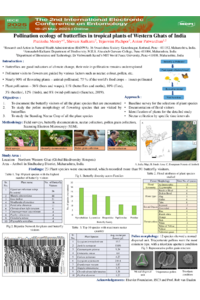
IECE Conference Poster_Pratiksha Mestry.pdf
Evaluation of nano- and hydrogel formulations of some selected synthetic insecticides against fall armyworm Spodoptera frugiperda (Lepidoptera: Noctuidae)
Ecological preferences and new data on distribution of perlid stonefly Dinocras megacephala (Klapálek, 1907) in Serbia