Event submissions
Published
This submission belongs to the session S1. Morphology and Systematics of the event The 2nd International Electronic Conference on Entomology
Published date
17 May, 2025
Academic Editor
'%3e%3cpath%20d='M12.6657%2010.9104C12.4185%2010.325%2012.0599%209.79327%2011.6097%209.34482C11.1609%208.89508%2010.6293%208.5365%2010.0442%208.28888C10.0389%208.28626%2010.0337%208.28495%2010.0285%208.28233C10.8446%207.69279%2011.3752%206.73249%2011.3752%205.64904C11.3752%203.8542%209.92103%202.39999%208.1262%202.39999C6.33136%202.39999%204.87715%203.8542%204.87715%205.64904C4.87715%206.73249%205.40774%207.69279%206.22393%208.28364C6.21869%208.28626%206.21345%208.28757%206.20821%208.29019C5.62129%208.5378%205.09463%208.89284%204.64265%209.34613C4.1929%209.79493%203.83432%2010.3266%203.58671%2010.9117C3.34345%2011.4845%203.21226%2012.0987%203.20023%2012.7209C3.19988%2012.7349%203.20233%2012.7488%203.20744%2012.7619C3.21255%2012.7749%203.22022%2012.7867%203.22998%2012.7968C3.23975%2012.8068%203.25142%2012.8147%203.26431%2012.8202C3.2772%2012.8256%203.29105%2012.8284%203.30504%2012.8284H4.09109C4.14874%2012.8284%204.19459%2012.7825%204.1959%2012.7262C4.2221%2011.7148%204.62823%2010.7676%205.34617%2010.0497C6.08899%209.30683%207.0755%208.89808%208.1262%208.89808C9.17689%208.89808%2010.1634%209.30683%2010.9062%2010.0497C11.6242%2010.7676%2012.0303%2011.7148%2012.0565%2012.7262C12.0578%2012.7838%2012.1037%2012.8284%2012.1613%2012.8284H12.9474C12.9613%2012.8284%2012.9752%2012.8256%2012.9881%2012.8202C13.001%2012.8147%2013.0126%2012.8068%2013.0224%2012.7968C13.0322%2012.7867%2013.0398%2012.7749%2013.0449%2012.7619C13.0501%2012.7488%2013.0525%2012.7349%2013.0522%2012.7209C13.0391%2012.0947%2012.9094%2011.4855%2012.6657%2010.9104ZM8.1262%207.9024C7.52486%207.9024%206.9589%207.6679%206.53312%207.24211C6.10733%206.81633%205.87283%206.25037%205.87283%205.64904C5.87283%205.0477%206.10733%204.48174%206.53312%204.05596C6.9589%203.63018%207.52486%203.39567%208.1262%203.39567C8.72753%203.39567%209.29349%203.63018%209.71927%204.05596C10.1451%204.48174%2010.3796%205.0477%2010.3796%205.64904C10.3796%206.25037%2010.1451%206.81633%209.71927%207.24211C9.29349%207.6679%208.72753%207.9024%208.1262%207.9024Z'%20fill='%235D1EE1'/%3e%3c/g%3e%3c/svg%3e) Nickolas Kavallieratos
Nickolas KavallieratosCitation
RAHANA P A, C F BINOY, Forensic Identification of Sarcophagidae Species in Central Kerala, India: Application of Wing Morphometrics and Male Genitalia Analysis, in Proceedings of The 2nd International Electronic Conference on Entomology, 19 May–21 May 2025, MDPI: Basel, Switzerland
Share
Email
Facebook
Twitter
LinkedIn
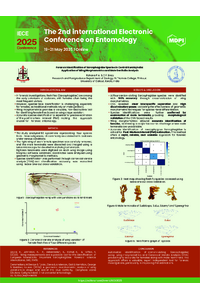
Forensic Identification of Sarcophagidae Species in Central Kerala, India: Application of Wing Morphometrics and Male Genitalia Analysis
'%3e%3cpath%20d='M12.6647%2010.9104C12.4176%2010.325%2012.0589%209.7933%2011.6088%209.34485C11.16%208.89511%2010.6283%208.53653%2010.0432%208.28891C10.038%208.28629%2010.0327%208.28498%2010.0275%208.28236C10.8437%207.69282%2011.3743%206.73252%2011.3743%205.64907C11.3743%203.85423%209.92005%202.40002%208.12522%202.40002C6.33038%202.40002%204.87618%203.85423%204.87618%205.64907C4.87618%206.73252%205.40677%207.69282%206.22296%208.28367C6.21772%208.28629%206.21248%208.2876%206.20724%208.29022C5.62031%208.53783%205.09365%208.89287%204.64167%209.34616C4.19192%209.79496%203.83334%2010.3266%203.58573%2010.9117C3.34247%2011.4846%203.21128%2012.0987%203.19925%2012.721C3.1989%2012.735%203.20135%2012.7489%203.20646%2012.7619C3.21157%2012.7749%203.21924%2012.7868%203.22901%2012.7968C3.23877%2012.8068%203.25045%2012.8148%203.26334%2012.8202C3.27623%2012.8256%203.29007%2012.8284%203.30406%2012.8284H4.09012C4.14776%2012.8284%204.19362%2012.7825%204.19493%2012.7262C4.22113%2011.7148%204.62726%2010.7676%205.34519%2010.0497C6.08802%209.30686%207.07452%208.89811%208.12522%208.89811C9.17592%208.89811%2010.1624%209.30686%2010.9052%2010.0497C11.6232%2010.7676%2012.0293%2011.7148%2012.0555%2012.7262C12.0568%2012.7839%2012.1027%2012.8284%2012.1603%2012.8284H12.9464C12.9604%2012.8284%2012.9742%2012.8256%2012.9871%2012.8202C13%2012.8148%2013.0117%2012.8068%2013.0214%2012.7968C13.0312%2012.7868%2013.0389%2012.7749%2013.044%2012.7619C13.0491%2012.7489%2013.0515%2012.735%2013.0512%2012.721C13.0381%2012.0947%2012.9084%2011.4856%2012.6647%2010.9104ZM8.12522%207.90243C7.52388%207.90243%206.95792%207.66793%206.53214%207.24215C6.10636%206.81636%205.87185%206.2504%205.87185%205.64907C5.87185%205.04773%206.10636%204.48177%206.53214%204.05599C6.95792%203.63021%207.52388%203.3957%208.12522%203.3957C8.72655%203.3957%209.29252%203.63021%209.7183%204.05599C10.1441%204.48177%2010.3786%205.04773%2010.3786%205.64907C10.3786%206.2504%2010.1441%206.81636%209.7183%207.24215C9.29252%207.66793%208.72655%207.90243%208.12522%207.90243Z'%20fill='%235D1EE1'/%3e%3c/g%3e%3c/svg%3e)
RAHANA P A 1
C F BINOY 2
1. Research Scholar, Department of Zoology,St.Thomas College, Thrissur, University of Calicut, Kerala,India
2. Professor, Department of Zoology. St.Thomas College, Thrissur, University of Calicut, Kerala,India
Abstract
Insects that are drawn to carrion serve a significant role in the examination of entomological evidence, facilitating legal and criminal investigations and estimation of the minimum postmortem interval (PMI). Flesh flies (Diptera: Sarcophagidae), which are the predominant necrophagous insects, utilize vertebrate tissue as a breeding site, exhibit larviparous reproduction, and complete their entire life cycle on the carrion itself, which is forensically important. Flesh flies are similar in appearance, making identification reliant on male genitalia; however, carrion-attracted flies are predominantly female and challenging to identify using taxonomic keys; wing morphometric analysis was thus implemented. The flies were collected utilizing 50 grams of decomposed beef liver as a baiting agent. Females were permitted to larviposit, and their larvae were subsequently transferred to individual rearing cages. The emerging F1 progeny of both sexes were euthanized with acetone. The male terminalia were dissected after immersion in 10% KOH, while the female wings were separated, mounted on clean slides, and photographed with a Leica microscope. Morphometric analysis was performed using MorphoJ 1.08 software. The study identified four predominant species of Sarcophagidae in Central Kerala: Sarcophaga albiceps, S. dux, S. karnyi, and S. peregrina, which are present year-round and are not specific to any particular geographic region. The male terminalia exhibited distinguishable features; however, S. karnyi and S. peregrina demonstrated variations in the inner forceps and fifth sternite. Principal Component Analysis (PCA) of wing morphology revealed four distinct clusters, encapsulated within ellipses and distinctly separated. Although S. karnyi and S. peregrina exhibited minor overlap, they remained distinguishable. Wing morphometric analysis provides a dependable methodology for the identification of female flies in forensic contexts, particularly in Central Kerala, and is also instrumental for the estimation of PMI, which is contingent upon species specificity.
Keywords
Sarcophagidae
Forensic entomology
terminalia
wing
Morphometry
Kerala
Poster
poster.pdf
Urban terraces and backyard gardens for pollinators: Nero’s Fiddle or Noah’s Ark?
Potential of Dittrichia viscosa as a biopesticide for controlling Bradysia sp. in nurseries of aromatic plants