Event submissions
Published
This submission belongs to the session S4. Novel Antimicrobial Agents: Discovery, Design, Synthesis and Action of the event The 4th International Electronic Conference on Antibiotics
Published date
19 May, 2025
Academic Editor
'%3e%3cpath%20d='M12.6657%2010.9104C12.4185%2010.325%2012.0599%209.79327%2011.6097%209.34482C11.1609%208.89508%2010.6293%208.5365%2010.0442%208.28888C10.0389%208.28626%2010.0337%208.28495%2010.0285%208.28233C10.8446%207.69279%2011.3752%206.73249%2011.3752%205.64904C11.3752%203.8542%209.92103%202.39999%208.1262%202.39999C6.33136%202.39999%204.87715%203.8542%204.87715%205.64904C4.87715%206.73249%205.40774%207.69279%206.22393%208.28364C6.21869%208.28626%206.21345%208.28757%206.20821%208.29019C5.62129%208.5378%205.09463%208.89284%204.64265%209.34613C4.1929%209.79493%203.83432%2010.3266%203.58671%2010.9117C3.34345%2011.4845%203.21226%2012.0987%203.20023%2012.7209C3.19988%2012.7349%203.20233%2012.7488%203.20744%2012.7619C3.21255%2012.7749%203.22022%2012.7867%203.22998%2012.7968C3.23975%2012.8068%203.25142%2012.8147%203.26431%2012.8202C3.2772%2012.8256%203.29105%2012.8284%203.30504%2012.8284H4.09109C4.14874%2012.8284%204.19459%2012.7825%204.1959%2012.7262C4.2221%2011.7148%204.62823%2010.7676%205.34617%2010.0497C6.08899%209.30683%207.0755%208.89808%208.1262%208.89808C9.17689%208.89808%2010.1634%209.30683%2010.9062%2010.0497C11.6242%2010.7676%2012.0303%2011.7148%2012.0565%2012.7262C12.0578%2012.7838%2012.1037%2012.8284%2012.1613%2012.8284H12.9474C12.9613%2012.8284%2012.9752%2012.8256%2012.9881%2012.8202C13.001%2012.8147%2013.0126%2012.8068%2013.0224%2012.7968C13.0322%2012.7867%2013.0398%2012.7749%2013.0449%2012.7619C13.0501%2012.7488%2013.0525%2012.7349%2013.0522%2012.7209C13.0391%2012.0947%2012.9094%2011.4855%2012.6657%2010.9104ZM8.1262%207.9024C7.52486%207.9024%206.9589%207.6679%206.53312%207.24211C6.10733%206.81633%205.87283%206.25037%205.87283%205.64904C5.87283%205.0477%206.10733%204.48174%206.53312%204.05596C6.9589%203.63018%207.52486%203.39567%208.1262%203.39567C8.72753%203.39567%209.29349%203.63018%209.71927%204.05596C10.1451%204.48174%2010.3796%205.0477%2010.3796%205.64904C10.3796%206.25037%2010.1451%206.81633%209.71927%207.24211C9.29349%207.6679%208.72753%207.9024%208.1262%207.9024Z'%20fill='%235D1EE1'/%3e%3c/g%3e%3c/svg%3e) Manuel Simões
Manuel SimõesCitation
Yahor Ivashchanka, Anna Hering, Alina Kastsevich, Justyna Stefanowicz-Hajduk, Rafał Hałasa, Study on the activity of blackberry (Rubus caesius L.) extracts against MRSA, in Proceedings of The 4th International Electronic Conference on Antibiotics, 21 May–23 May 2025, MDPI: Basel, Switzerland
Share
Email
Facebook
Twitter
LinkedIn
Study on the activity of blackberry (Rubus caesius L.) extracts against MRSA
'%3e%3cpath%20d='M12.6647%2010.9104C12.4176%2010.325%2012.0589%209.7933%2011.6088%209.34485C11.16%208.89511%2010.6283%208.53653%2010.0432%208.28891C10.038%208.28629%2010.0327%208.28498%2010.0275%208.28236C10.8437%207.69282%2011.3743%206.73252%2011.3743%205.64907C11.3743%203.85423%209.92005%202.40002%208.12522%202.40002C6.33038%202.40002%204.87618%203.85423%204.87618%205.64907C4.87618%206.73252%205.40677%207.69282%206.22296%208.28367C6.21772%208.28629%206.21248%208.2876%206.20724%208.29022C5.62031%208.53783%205.09365%208.89287%204.64167%209.34616C4.19192%209.79496%203.83334%2010.3266%203.58573%2010.9117C3.34247%2011.4846%203.21128%2012.0987%203.19925%2012.721C3.1989%2012.735%203.20135%2012.7489%203.20646%2012.7619C3.21157%2012.7749%203.21924%2012.7868%203.22901%2012.7968C3.23877%2012.8068%203.25045%2012.8148%203.26334%2012.8202C3.27623%2012.8256%203.29007%2012.8284%203.30406%2012.8284H4.09012C4.14776%2012.8284%204.19362%2012.7825%204.19493%2012.7262C4.22113%2011.7148%204.62726%2010.7676%205.34519%2010.0497C6.08802%209.30686%207.07452%208.89811%208.12522%208.89811C9.17592%208.89811%2010.1624%209.30686%2010.9052%2010.0497C11.6232%2010.7676%2012.0293%2011.7148%2012.0555%2012.7262C12.0568%2012.7839%2012.1027%2012.8284%2012.1603%2012.8284H12.9464C12.9604%2012.8284%2012.9742%2012.8256%2012.9871%2012.8202C13%2012.8148%2013.0117%2012.8068%2013.0214%2012.7968C13.0312%2012.7868%2013.0389%2012.7749%2013.044%2012.7619C13.0491%2012.7489%2013.0515%2012.735%2013.0512%2012.721C13.0381%2012.0947%2012.9084%2011.4856%2012.6647%2010.9104ZM8.12522%207.90243C7.52388%207.90243%206.95792%207.66793%206.53214%207.24215C6.10636%206.81636%205.87185%206.2504%205.87185%205.64907C5.87185%205.04773%206.10636%204.48177%206.53214%204.05599C6.95792%203.63021%207.52388%203.3957%208.12522%203.3957C8.72655%203.3957%209.29252%203.63021%209.7183%204.05599C10.1441%204.48177%2010.3786%205.04773%2010.3786%205.64907C10.3786%206.2504%2010.1441%206.81636%209.7183%207.24215C9.29252%207.66793%208.72655%207.90243%208.12522%207.90243Z'%20fill='%235D1EE1'/%3e%3c/g%3e%3c/svg%3e)
Yahor Ivashchanka 1

Anna Hering 2
Alina Kastsevich 1

Justyna Stefanowicz-Hajduk 2
Rafał Hałasa 3
1. Faculty of Pharmacy, Medical University of Gdansk, Al. Gen. Hallera 107, 80-416 Gdansk, Poland
2. Department of Biology and Pharmaceutical Botany, Medical University of Gdansk, Al. Gen. J. Hallera 107, 80-416 Gdansk, Poland
3. Department of Pharmaceutical Microbiology, Medical University of Gdansk, Al. Gen. Hallera 107, 80-416 Gdansk, Poland
Abstract
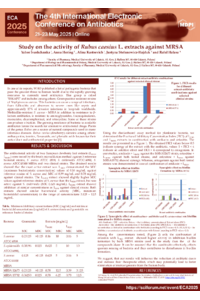
In one of its reports, the WHO published a list of the pathogenic bacteria that pose the greatest threat to human health due to their rapidly growing resistance to currently used antibiotics. This group is called "ESKAPE" and includes, among others, Gram-positive, resistant strains of Staphylococcus aureus. This bacterium can cause a range of infections, from folliculitis and abscesses to severe cases like sepsis, and causes approximately 15% of invasive infections in hospitals worldwide. Methicillin-resistant S. aureus (MRSA), in addition to resistance to β-lactam antibiotics, is resistant to aminoglycosides, fluoroquinolones, macrolides, chloramphenicol, and tetracycline. Some strains can produce a biofilm. The growing resistance of bacteria to available antibiotics forces us to search for alternative antibacterial drugs. Plants of the genus Rubus are a source of natural compounds used in many infectious diseases. Rubus caesius (dewberry) contains, among others, anthocyanins, tannins, flavonoids, and phenolic acids known for their antioxidant and antibacterial properties [1]. However, there are no reports on the antibacterial activity of blackberry leaves (LH2O, LEtOH) against S. aureus. The activity of the extracts was tested in vitro on reference strains of S. aureus and clinical strains of MRSA (MIC 0.16 - 3.125 mg/ml, MBC 0.78 - 6.25 mg/ml). We studied the interactions of amikacin and cefoxitin with the tested R. caesius extracts and their effect on the inhibition of biofilms produced by clinical strains of MRSA. We show that the extracts tested have a bactericidal effect on clinical strains and inhibit biofilm formation. We suggest that our results will influence a reduction in antibiotic doses and increase their therapeutic effect, which may potentially lead to a faster elimination of microorganisms from the human body.
Reference:
Hering, A.; et al. Polyphenolic Characterization, Antioxidant, Antihyaluronidase and Antimicrobial Activity of Young Leaves and Stem Extracts from Rubus caesius L. Molecules 2022, 27, 6181. https://doi.org/10.3390/ molecules27196181
Keywords
Antibacterial Activity Bacterial Antibiotic Resistance Antimicrobial Susceptibility Testing Biofilm Formation
Poster
Poster 2025 Poster2 do wgrania.pdf
High Risk of Pathogen and Antibiotic Resistance Transfer in Live Seafood Wet Markets
Detection of proteins involved in antimicrobial resistance (AMR) in Bovine Milk bacterial consortia through proteomics and mass spectrometry