Event submissions
Published
This submission belongs to the session S4. Novel Antimicrobial Agents: Discovery, Design, Synthesis and Action of the event The 4th International Electronic Conference on Antibiotics
Published date
19 May, 2025
Academic Editor
'%3e%3cpath%20d='M12.6657%2010.9104C12.4185%2010.325%2012.0599%209.79327%2011.6097%209.34482C11.1609%208.89508%2010.6293%208.5365%2010.0442%208.28888C10.0389%208.28626%2010.0337%208.28495%2010.0285%208.28233C10.8446%207.69279%2011.3752%206.73249%2011.3752%205.64904C11.3752%203.8542%209.92103%202.39999%208.1262%202.39999C6.33136%202.39999%204.87715%203.8542%204.87715%205.64904C4.87715%206.73249%205.40774%207.69279%206.22393%208.28364C6.21869%208.28626%206.21345%208.28757%206.20821%208.29019C5.62129%208.5378%205.09463%208.89284%204.64265%209.34613C4.1929%209.79493%203.83432%2010.3266%203.58671%2010.9117C3.34345%2011.4845%203.21226%2012.0987%203.20023%2012.7209C3.19988%2012.7349%203.20233%2012.7488%203.20744%2012.7619C3.21255%2012.7749%203.22022%2012.7867%203.22998%2012.7968C3.23975%2012.8068%203.25142%2012.8147%203.26431%2012.8202C3.2772%2012.8256%203.29105%2012.8284%203.30504%2012.8284H4.09109C4.14874%2012.8284%204.19459%2012.7825%204.1959%2012.7262C4.2221%2011.7148%204.62823%2010.7676%205.34617%2010.0497C6.08899%209.30683%207.0755%208.89808%208.1262%208.89808C9.17689%208.89808%2010.1634%209.30683%2010.9062%2010.0497C11.6242%2010.7676%2012.0303%2011.7148%2012.0565%2012.7262C12.0578%2012.7838%2012.1037%2012.8284%2012.1613%2012.8284H12.9474C12.9613%2012.8284%2012.9752%2012.8256%2012.9881%2012.8202C13.001%2012.8147%2013.0126%2012.8068%2013.0224%2012.7968C13.0322%2012.7867%2013.0398%2012.7749%2013.0449%2012.7619C13.0501%2012.7488%2013.0525%2012.7349%2013.0522%2012.7209C13.0391%2012.0947%2012.9094%2011.4855%2012.6657%2010.9104ZM8.1262%207.9024C7.52486%207.9024%206.9589%207.6679%206.53312%207.24211C6.10733%206.81633%205.87283%206.25037%205.87283%205.64904C5.87283%205.0477%206.10733%204.48174%206.53312%204.05596C6.9589%203.63018%207.52486%203.39567%208.1262%203.39567C8.72753%203.39567%209.29349%203.63018%209.71927%204.05596C10.1451%204.48174%2010.3796%205.0477%2010.3796%205.64904C10.3796%206.25037%2010.1451%206.81633%209.71927%207.24211C9.29349%207.6679%208.72753%207.9024%208.1262%207.9024Z'%20fill='%235D1EE1'/%3e%3c/g%3e%3c/svg%3e) Jordi Vila
Jordi VilaCitation
Aygun Israyilova, Fargana Alizada, Alakbar Huseynzada, Ulviyya Hasanova, Antibacterial Activity Screening Of an Imine Compound Synthesized Using a Cinnamaldehyde Derivative Against Staphylococcus Aureus Strains, in Proceedings of The 4th International Electronic Conference on Antibiotics, 21 May–23 May 2025, MDPI: Basel, Switzerland
Share
Email
Facebook
Twitter
LinkedIn
Antibacterial Activity Screening Of an Imine Compound Synthesized Using a Cinnamaldehyde Derivative Against Staphylococcus Aureus Strains
'%3e%3cpath%20d='M12.6647%2010.9104C12.4176%2010.325%2012.0589%209.7933%2011.6088%209.34485C11.16%208.89511%2010.6283%208.53653%2010.0432%208.28891C10.038%208.28629%2010.0327%208.28498%2010.0275%208.28236C10.8437%207.69282%2011.3743%206.73252%2011.3743%205.64907C11.3743%203.85423%209.92005%202.40002%208.12522%202.40002C6.33038%202.40002%204.87618%203.85423%204.87618%205.64907C4.87618%206.73252%205.40677%207.69282%206.22296%208.28367C6.21772%208.28629%206.21248%208.2876%206.20724%208.29022C5.62031%208.53783%205.09365%208.89287%204.64167%209.34616C4.19192%209.79496%203.83334%2010.3266%203.58573%2010.9117C3.34247%2011.4846%203.21128%2012.0987%203.19925%2012.721C3.1989%2012.735%203.20135%2012.7489%203.20646%2012.7619C3.21157%2012.7749%203.21924%2012.7868%203.22901%2012.7968C3.23877%2012.8068%203.25045%2012.8148%203.26334%2012.8202C3.27623%2012.8256%203.29007%2012.8284%203.30406%2012.8284H4.09012C4.14776%2012.8284%204.19362%2012.7825%204.19493%2012.7262C4.22113%2011.7148%204.62726%2010.7676%205.34519%2010.0497C6.08802%209.30686%207.07452%208.89811%208.12522%208.89811C9.17592%208.89811%2010.1624%209.30686%2010.9052%2010.0497C11.6232%2010.7676%2012.0293%2011.7148%2012.0555%2012.7262C12.0568%2012.7839%2012.1027%2012.8284%2012.1603%2012.8284H12.9464C12.9604%2012.8284%2012.9742%2012.8256%2012.9871%2012.8202C13%2012.8148%2013.0117%2012.8068%2013.0214%2012.7968C13.0312%2012.7868%2013.0389%2012.7749%2013.044%2012.7619C13.0491%2012.7489%2013.0515%2012.735%2013.0512%2012.721C13.0381%2012.0947%2012.9084%2011.4856%2012.6647%2010.9104ZM8.12522%207.90243C7.52388%207.90243%206.95792%207.66793%206.53214%207.24215C6.10636%206.81636%205.87185%206.2504%205.87185%205.64907C5.87185%205.04773%206.10636%204.48177%206.53214%204.05599C6.95792%203.63021%207.52388%203.3957%208.12522%203.3957C8.72655%203.3957%209.29252%203.63021%209.7183%204.05599C10.1441%204.48177%2010.3786%205.04773%2010.3786%205.64907C10.3786%206.2504%2010.1441%206.81636%209.7183%207.24215C9.29252%207.66793%208.72655%207.90243%208.12522%207.90243Z'%20fill='%235D1EE1'/%3e%3c/g%3e%3c/svg%3e)
Aygun Israyilova 1
Fargana Alizada 2,3
Alakbar Huseynzada 4
Ulviyya Hasanova 5
1. Laboratory of Microbiology, Center of Excellence, Baku State University, Baku, Azerbaijan
2. Institute of Petrochemical Processes of Ministry of Education and Science of Azerbaijan Republic, K. avenue 30, AZ 1025, Baku, Azerbaijan
3. GPOGC SRI, Azerbaijan State Oil and Industry University, Baku, Azerbaijan
4. ICRL, Baku State University, Z. Khalilov 23, AZ 1148, Baku, Azerbaijan
5. ICESCO Biomedical Materials Department, Baku State University, Z. Khalilov 23, Baku, AZ 1148, Azerbaijan
Abstract
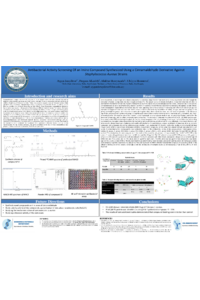
Imine pharmacophore groups offer the advantage of serving as the foundation for various drug representatives. Examples include furazolidone for bacterial or protozoal diarrhea, nitrofurantoin for uncomplicated urinary tract infections, and imbruvica for chronic lymphocytic leukemia and mantle cell lymphoma. Cinnamaldehyde, a major constituent of cinnamon oil, is an aromatic compound with a benzene ring and an aldehyde group attached to an unsaturated C=C bond at both ends. Studies on cinnamaldehyde have shown that it exhibits a broad range of biological activities. A novel imine compound, created using trans-cinnamaldehyde and polyamines such as tris (2-aminoethyl) amine (compound 5), was synthesized. The antibacterial activity of the compound was tested against clinical isolates (S. aureus, S. aureus ATCC 6538, S. aureus ATCC 25923, S. aureus UAMS-1, and S. aureus UAMS -929) using the two-fold microdilution method. The obtained results were compared with the results of the ampicillin and gentamicin. It was revealed that the MIC of F2-112B in the case of S. aureus (8 μg/mL) were lower than the MIC of ampicillin (16 μg/mL). The MIC value of compound F2-112B was equal (16 μg/ml) to ampicillin in the case of S. aureus ATCC 6538. According to the results, compared with other strains, compound 5 showed similar activities against UAMS-929 and ATCC 25923, and its MIC values were 64 µg/ml for each strain. The MIC value was 128 µg/ml when compound 5 was tested against the S. aureus strain UAMS-1. We also examined the potential binding mode between compound 5 and bacterially derived target proteins and carried out a protein–ligand docking simulation. The docking results for PBP2a (5M18) indicated that compound 5 successfully binds to the allosteric binding site of the protein, which aligns with the binding site of Cefepime, demonstrating a high binding affinity of -8.42 Kcal/mol.
Keywords
imine group
schiff bases
antimicrobial activity
cinnamic aldehyde
in silico studies
Poster
Poster 2025 Aygun Israyilova.pdf
Correlation of in vitro antibiogram with in vivo anti-pathogenic efficacy of different antibiotics against three gram-negative bacterial pathogens in the Caenorhabditis elegans infection model
Evaluation of Antimicrobial Resistance in Magdalena, Colombia: Findings from a Retrospective Descriptive Study