Event submissions
Published
This submission belongs to the session S2. Abiotic and Biotic Stress of the event The 2nd International Electronic Conference on Horticulturae
Published date
23 May, 2025
Academic Editor
'%3e%3cpath%20d='M12.6657%2010.9104C12.4185%2010.325%2012.0599%209.79327%2011.6097%209.34482C11.1609%208.89508%2010.6293%208.5365%2010.0442%208.28888C10.0389%208.28626%2010.0337%208.28495%2010.0285%208.28233C10.8446%207.69279%2011.3752%206.73249%2011.3752%205.64904C11.3752%203.8542%209.92103%202.39999%208.1262%202.39999C6.33136%202.39999%204.87715%203.8542%204.87715%205.64904C4.87715%206.73249%205.40774%207.69279%206.22393%208.28364C6.21869%208.28626%206.21345%208.28757%206.20821%208.29019C5.62129%208.5378%205.09463%208.89284%204.64265%209.34613C4.1929%209.79493%203.83432%2010.3266%203.58671%2010.9117C3.34345%2011.4845%203.21226%2012.0987%203.20023%2012.7209C3.19988%2012.7349%203.20233%2012.7488%203.20744%2012.7619C3.21255%2012.7749%203.22022%2012.7867%203.22998%2012.7968C3.23975%2012.8068%203.25142%2012.8147%203.26431%2012.8202C3.2772%2012.8256%203.29105%2012.8284%203.30504%2012.8284H4.09109C4.14874%2012.8284%204.19459%2012.7825%204.1959%2012.7262C4.2221%2011.7148%204.62823%2010.7676%205.34617%2010.0497C6.08899%209.30683%207.0755%208.89808%208.1262%208.89808C9.17689%208.89808%2010.1634%209.30683%2010.9062%2010.0497C11.6242%2010.7676%2012.0303%2011.7148%2012.0565%2012.7262C12.0578%2012.7838%2012.1037%2012.8284%2012.1613%2012.8284H12.9474C12.9613%2012.8284%2012.9752%2012.8256%2012.9881%2012.8202C13.001%2012.8147%2013.0126%2012.8068%2013.0224%2012.7968C13.0322%2012.7867%2013.0398%2012.7749%2013.0449%2012.7619C13.0501%2012.7488%2013.0525%2012.7349%2013.0522%2012.7209C13.0391%2012.0947%2012.9094%2011.4855%2012.6657%2010.9104ZM8.1262%207.9024C7.52486%207.9024%206.9589%207.6679%206.53312%207.24211C6.10733%206.81633%205.87283%206.25037%205.87283%205.64904C5.87283%205.0477%206.10733%204.48174%206.53312%204.05596C6.9589%203.63018%207.52486%203.39567%208.1262%203.39567C8.72753%203.39567%209.29349%203.63018%209.71927%204.05596C10.1451%204.48174%2010.3796%205.0477%2010.3796%205.64904C10.3796%206.25037%2010.1451%206.81633%209.71927%207.24211C9.29349%207.6679%208.72753%207.9024%208.1262%207.9024Z'%20fill='%235D1EE1'/%3e%3c/g%3e%3c/svg%3e) Antonio Ferrante
Antonio FerranteCitation
Chiara Pastacaldi, Dario Gaudioso, Cosimo Beltrami, Benedetta Gunnella, Stefania Tegli, Ozone and plant defenses: a new strategy to protect plant health?, in Proceedings of The 2nd International Electronic Conference on Horticulturae, 27 May–29 May 2025, MDPI: Basel, Switzerland
Share
Email
Facebook
Twitter
LinkedIn
Ozone and plant defenses: a new strategy to protect plant health?
'%3e%3cpath%20d='M12.6647%2010.9104C12.4176%2010.325%2012.0589%209.7933%2011.6088%209.34485C11.16%208.89511%2010.6283%208.53653%2010.0432%208.28891C10.038%208.28629%2010.0327%208.28498%2010.0275%208.28236C10.8437%207.69282%2011.3743%206.73252%2011.3743%205.64907C11.3743%203.85423%209.92005%202.40002%208.12522%202.40002C6.33038%202.40002%204.87618%203.85423%204.87618%205.64907C4.87618%206.73252%205.40677%207.69282%206.22296%208.28367C6.21772%208.28629%206.21248%208.2876%206.20724%208.29022C5.62031%208.53783%205.09365%208.89287%204.64167%209.34616C4.19192%209.79496%203.83334%2010.3266%203.58573%2010.9117C3.34247%2011.4846%203.21128%2012.0987%203.19925%2012.721C3.1989%2012.735%203.20135%2012.7489%203.20646%2012.7619C3.21157%2012.7749%203.21924%2012.7868%203.22901%2012.7968C3.23877%2012.8068%203.25045%2012.8148%203.26334%2012.8202C3.27623%2012.8256%203.29007%2012.8284%203.30406%2012.8284H4.09012C4.14776%2012.8284%204.19362%2012.7825%204.19493%2012.7262C4.22113%2011.7148%204.62726%2010.7676%205.34519%2010.0497C6.08802%209.30686%207.07452%208.89811%208.12522%208.89811C9.17592%208.89811%2010.1624%209.30686%2010.9052%2010.0497C11.6232%2010.7676%2012.0293%2011.7148%2012.0555%2012.7262C12.0568%2012.7839%2012.1027%2012.8284%2012.1603%2012.8284H12.9464C12.9604%2012.8284%2012.9742%2012.8256%2012.9871%2012.8202C13%2012.8148%2013.0117%2012.8068%2013.0214%2012.7968C13.0312%2012.7868%2013.0389%2012.7749%2013.044%2012.7619C13.0491%2012.7489%2013.0515%2012.735%2013.0512%2012.721C13.0381%2012.0947%2012.9084%2011.4856%2012.6647%2010.9104ZM8.12522%207.90243C7.52388%207.90243%206.95792%207.66793%206.53214%207.24215C6.10636%206.81636%205.87185%206.2504%205.87185%205.64907C5.87185%205.04773%206.10636%204.48177%206.53214%204.05599C6.95792%203.63021%207.52388%203.3957%208.12522%203.3957C8.72655%203.3957%209.29252%203.63021%209.7183%204.05599C10.1441%204.48177%2010.3786%205.04773%2010.3786%205.64907C10.3786%206.2504%2010.1441%206.81636%209.7183%207.24215C9.29252%207.66793%208.72655%207.90243%208.12522%207.90243Z'%20fill='%235D1EE1'/%3e%3c/g%3e%3c/svg%3e)
Chiara Pastacaldi 1,2

Dario Gaudioso 1
Cosimo Beltrami 1
Benedetta Gunnella 1

Stefania Tegli 1,2
1. Laboratorio di Patologia Vegetale Molecolare, Dipartimento di Scienze e Tecnologie Agrarie, Alimentari, Ambientali e Forestali (DAGRI), Università degli Studi di Firenze, Florence, Italy
2. Joint Lab Ozone Plant Health, DAGRI, Università degli Studi di Firenze, Florence, Italy
Abstract
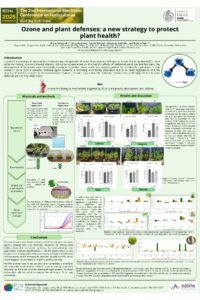
In a world increasingly threatened by climate change, the agricultural sector faces several challenges in keeping up with the rising demand for food while minimizing its environmental impacts. With growing awareness of the harmful effects of traditional pesticides and fertilizers, the development of innovative and eco-friendly strategies to protect plant health has become pivotal for sustainable agriculture. In this scenario, ozone (O3), a powerful oxidizing agent, presents a promising eco-friendly alternative due to its rapid degradation and the fact that it does not release harmful residues into the environment. However, despite its potential, the molecular mechanisms underlying the role of O3 in plant defenses are not fully understood.
This study aimed to investigate the bioactivity of O3 on the growth, development, and defense responses of plants. Specifically, O3 was applied as ozonated water to the soil of plants grown in pots in field experiments. The model plant Nicotiana tabacum and agronomically important crops such as tomato, lettuce, and bean were included in this study. Furthermore, O3 was directly applied to the nutrient solution of hydroponically grown lettuce. Several physiological parameters were assessed, including plant weight, chlorophyll content, and stomatal conductance, to evaluate the effects of O3 on plant growth. Moreover, differences in the expression of specific defense-related genes, including those involved in the auxin and salicylic acid (SA) pathways, were evaluated in O3-treated plants and compared to untreated control plants. The analysis of these physiological parameters revealed that the effects of O3 were species-specific, with varying responses among the plant species tested. Additionally, gene expression analysis revealed that the O3 treatment led to significant changes in hormonal and defense signaling pathways. Notably, O3 induced plant defenses, primarily through the activation of pathogenesis-related (PR) proteins and the SA pathway. Overall, these findings provide valuable insights into the potential of O3 as an elicitor of plant defense mechanisms, which could enhance plants' resistance to both biotic and abiotic stresses.
Keywords
ozone
sustainable agriculture
plant health
ozonated water
hydroponic cultivation
Poster
Poster_IECHO2025.pdf
Metabolic changes in Brassica rapa L. subsp. sylvestris during postharvest storage
Exploring plant expression of alkaloid related genes in Dendromecon rigida and the plant’s relationship with rootzone microbes