Event submissions
Published
This submission belongs to the session S9. Air Pollution Control of the event The 7th International Electronic Conference on Atmospheric Sciences
Published date
30 May, 2025
Academic Editor
'%3e%3cpath%20d='M12.6657%2010.9104C12.4185%2010.325%2012.0599%209.79327%2011.6097%209.34482C11.1609%208.89508%2010.6293%208.5365%2010.0442%208.28888C10.0389%208.28626%2010.0337%208.28495%2010.0285%208.28233C10.8446%207.69279%2011.3752%206.73249%2011.3752%205.64904C11.3752%203.8542%209.92103%202.39999%208.1262%202.39999C6.33136%202.39999%204.87715%203.8542%204.87715%205.64904C4.87715%206.73249%205.40774%207.69279%206.22393%208.28364C6.21869%208.28626%206.21345%208.28757%206.20821%208.29019C5.62129%208.5378%205.09463%208.89284%204.64265%209.34613C4.1929%209.79493%203.83432%2010.3266%203.58671%2010.9117C3.34345%2011.4845%203.21226%2012.0987%203.20023%2012.7209C3.19988%2012.7349%203.20233%2012.7488%203.20744%2012.7619C3.21255%2012.7749%203.22022%2012.7867%203.22998%2012.7968C3.23975%2012.8068%203.25142%2012.8147%203.26431%2012.8202C3.2772%2012.8256%203.29105%2012.8284%203.30504%2012.8284H4.09109C4.14874%2012.8284%204.19459%2012.7825%204.1959%2012.7262C4.2221%2011.7148%204.62823%2010.7676%205.34617%2010.0497C6.08899%209.30683%207.0755%208.89808%208.1262%208.89808C9.17689%208.89808%2010.1634%209.30683%2010.9062%2010.0497C11.6242%2010.7676%2012.0303%2011.7148%2012.0565%2012.7262C12.0578%2012.7838%2012.1037%2012.8284%2012.1613%2012.8284H12.9474C12.9613%2012.8284%2012.9752%2012.8256%2012.9881%2012.8202C13.001%2012.8147%2013.0126%2012.8068%2013.0224%2012.7968C13.0322%2012.7867%2013.0398%2012.7749%2013.0449%2012.7619C13.0501%2012.7488%2013.0525%2012.7349%2013.0522%2012.7209C13.0391%2012.0947%2012.9094%2011.4855%2012.6657%2010.9104ZM8.1262%207.9024C7.52486%207.9024%206.9589%207.6679%206.53312%207.24211C6.10733%206.81633%205.87283%206.25037%205.87283%205.64904C5.87283%205.0477%206.10733%204.48174%206.53312%204.05596C6.9589%203.63018%207.52486%203.39567%208.1262%203.39567C8.72753%203.39567%209.29349%203.63018%209.71927%204.05596C10.1451%204.48174%2010.3796%205.0477%2010.3796%205.64904C10.3796%206.25037%2010.1451%206.81633%209.71927%207.24211C9.29349%207.6679%208.72753%207.9024%208.1262%207.9024Z'%20fill='%235D1EE1'/%3e%3c/g%3e%3c/svg%3e) Pasquale Avino
Pasquale AvinoCitation
Samuel Aires Master Lazaro, Xiangyu Li, Vanessa Fathia Baba, REDUCING CARBON DIOXIDE (CO₂) EMISSIONS IN RESIDENTIAL BUILDINGS THROUGH ENVELOPE RENOVATION, in Proceedings of The 7th International Electronic Conference on Atmospheric Sciences, 4 June–6 June 2025, MDPI: Basel, Switzerland
Share
Email
Facebook
Twitter
LinkedIn
REDUCING CARBON DIOXIDE (CO2) EMISSIONS IN RESIDENTIAL BUILDINGS THROUGH ENVELOPE RENOVATION

Samuel Aires Master Lazaro 1
'%3e%3cpath%20d='M12.6647%2010.9104C12.4176%2010.325%2012.0589%209.7933%2011.6088%209.34485C11.16%208.89511%2010.6283%208.53653%2010.0432%208.28891C10.038%208.28629%2010.0327%208.28498%2010.0275%208.28236C10.8437%207.69282%2011.3743%206.73252%2011.3743%205.64907C11.3743%203.85423%209.92005%202.40002%208.12522%202.40002C6.33038%202.40002%204.87618%203.85423%204.87618%205.64907C4.87618%206.73252%205.40677%207.69282%206.22296%208.28367C6.21772%208.28629%206.21248%208.2876%206.20724%208.29022C5.62031%208.53783%205.09365%208.89287%204.64167%209.34616C4.19192%209.79496%203.83334%2010.3266%203.58573%2010.9117C3.34247%2011.4846%203.21128%2012.0987%203.19925%2012.721C3.1989%2012.735%203.20135%2012.7489%203.20646%2012.7619C3.21157%2012.7749%203.21924%2012.7868%203.22901%2012.7968C3.23877%2012.8068%203.25045%2012.8148%203.26334%2012.8202C3.27623%2012.8256%203.29007%2012.8284%203.30406%2012.8284H4.09012C4.14776%2012.8284%204.19362%2012.7825%204.19493%2012.7262C4.22113%2011.7148%204.62726%2010.7676%205.34519%2010.0497C6.08802%209.30686%207.07452%208.89811%208.12522%208.89811C9.17592%208.89811%2010.1624%209.30686%2010.9052%2010.0497C11.6232%2010.7676%2012.0293%2011.7148%2012.0555%2012.7262C12.0568%2012.7839%2012.1027%2012.8284%2012.1603%2012.8284H12.9464C12.9604%2012.8284%2012.9742%2012.8256%2012.9871%2012.8202C13%2012.8148%2013.0117%2012.8068%2013.0214%2012.7968C13.0312%2012.7868%2013.0389%2012.7749%2013.044%2012.7619C13.0491%2012.7489%2013.0515%2012.735%2013.0512%2012.721C13.0381%2012.0947%2012.9084%2011.4856%2012.6647%2010.9104ZM8.12522%207.90243C7.52388%207.90243%206.95792%207.66793%206.53214%207.24215C6.10636%206.81636%205.87185%206.2504%205.87185%205.64907C5.87185%205.04773%206.10636%204.48177%206.53214%204.05599C6.95792%203.63021%207.52388%203.3957%208.12522%203.3957C8.72655%203.3957%209.29252%203.63021%209.7183%204.05599C10.1441%204.48177%2010.3786%205.04773%2010.3786%205.64907C10.3786%206.2504%2010.1441%206.81636%209.7183%207.24215C9.29252%207.66793%208.72655%207.90243%208.12522%207.90243Z'%20fill='%235D1EE1'/%3e%3c/g%3e%3c/svg%3e)
Xiangyu Li 1
Vanessa Fathia Baba 2
1. College of Civil Engineering, Taiyuan University of Technology, No. 79 West Street Yingze, Taiyuan 030024, Shanxi, PR China
2. College of Economics & Management, Taiyuan University of Technology, No. 79 West Street Yingze, Taiyuan 030024, Shanxi, PR China
Abstract
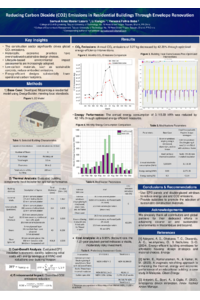
The construction sector significantly influences environmental development and is a significant source of carbon dioxide (CO2) emissions worldwide. Over the years, the sector's decision-making procedures have frequently prioritised economic concerns over sustainability. Nonetheless, recently, there has been growing recognition of the importance of evaluating the environmental impacts at every stage of a building's lifecycle, from the design process to its demolition. This study uses Design Builder software to simulate a base case residential building in Mozambique, aiming to identify the most impactful design parameters for reducing its CO2 emissions while reducing its energy consumption. By analysing data from both the base case and modified design schemes, this research reveals that employing 95 mm thick foamed expanded polystyrene (EPS) panels for roofing and double glazing of 6 mm/13 mm within an air/wood frame for exterior windows can reduce the energy consumption by 42.14% and decrease CO2 emissions by 42.20% compared to these values in conventional construction designs. These results emphasise how crucial it is to use alternative building materials to reduce energy consumption and lessen the environmental impact of residential buildings. This study also urges stakeholders to embrace progressive policies and practices that promote sustainable growth in the industry and push for a paradigm change that strikes a balance between environmental and economic viability.
Keywords
simulation
carbon dioxide emission reduction rate
construction sector
energy consumption
alternative building materials
Poster
sciforum-110805.pdf
And for those outside the center of the Gaussian? An analysis of the needs and potential responses for elderly and disabled people living in the urban system
Evaluation of an integrated low-cost pyranometer system for application in household installations